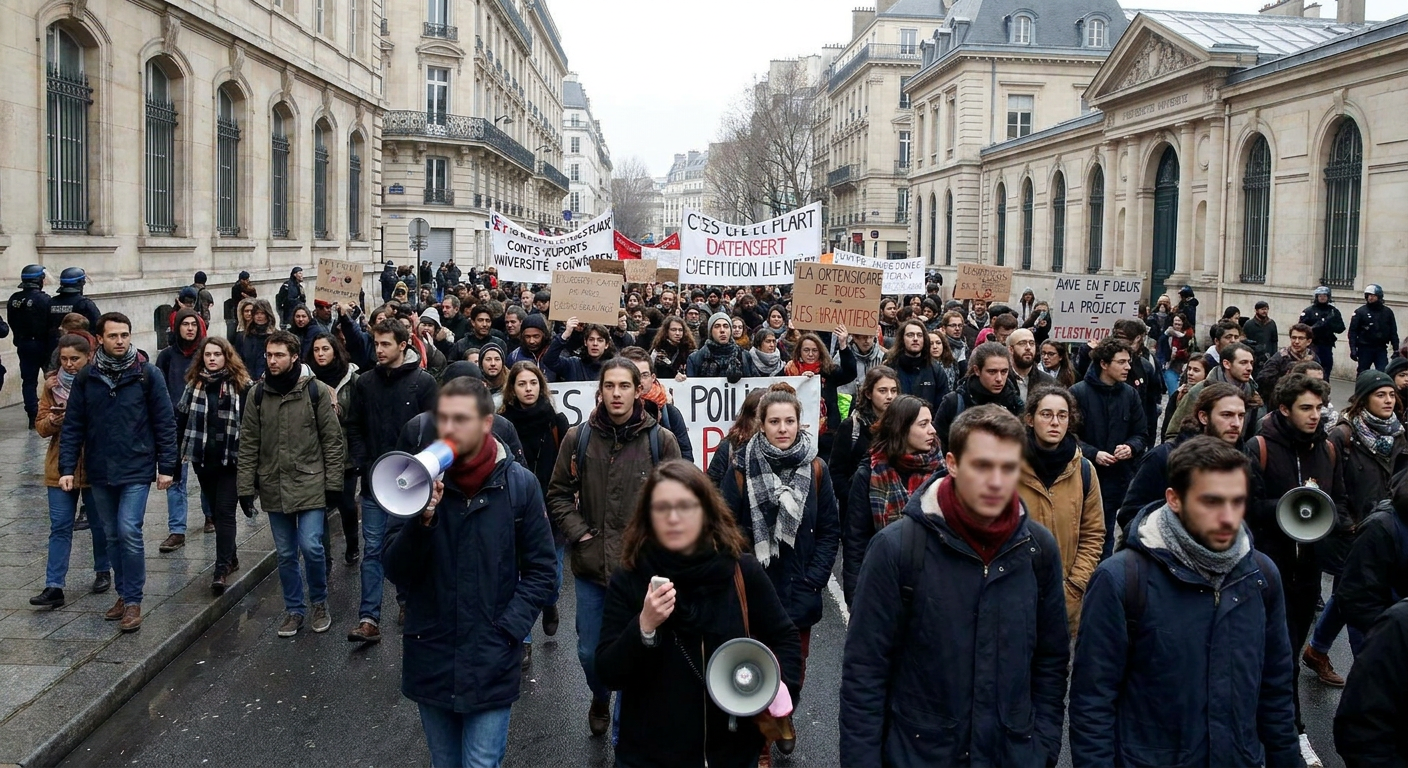
Hundreds of protest marches took place across France as student-led demonstrations expanded to include labor unions and public sector workers. While many of the gatherings remained peaceful, several cities experienced outbreaks of violence, including arson and the destruction of property. The demonstrations, which have lasted for approximately one month, were originally focused on education resources but now encompass broader concerns regarding the cost of living and income inequality.
The movement began with students requesting increased funding, additional teachers, and repairs to school buildings. In recent weeks, this group has been joined by firefighters, hospital staff, and social workers. Protesters interviewed in Paris cited high prices, low wages, and a widening gap between the wealthy and the working class as primary motivations for their participation.
In Paris, Lille, and Marseille, some participants set fire to cars and trash cans, smashed store windows, and entered government buildings. Video footage showed individuals in Marseille using metal barricades to break into the city hall, where a marble bust of Marianne, a national symbol, was destroyed. In response to the unrest, police utilized tear gas and physical charges. Some participants, such as 21-year-old Elliot Seigneur, stated that police aggression and the prohibition of protective equipment contributed to the escalation of violence.
The political response to the unrest has fallen along party lines as the country approaches a presidential election in less than six months. The French Prime Minister attributed the violence to what he termed radical far-left groups. Conversely, the France Unbowed party, led by Jean-Luc Melenchon, placed responsibility on the government and police tactics. Marine Le Pen cited a breakdown in order and called for increased police presence and stricter penalties for lawbreakers.
For some French households, these events manifest as physical hazards in urban centers and potential disruptions to public services. Students report that their day-to-day education is hampered by dilapidated facilities, while workers like social worker Julie Billat report that stagnant wages are insufficient to meet rising costs. The concrete changes noticed by citizens include the visible presence of tear gas and military-style police equipment in public squares, as well as the destruction of infrastructure like bike stands and storefronts. These conditions have led analysts to suggest a significant political fracture among the youth population.
The ongoing unrest sets a precedent for how the French government manages civil disobedience ahead of the upcoming national election. The outcome of these protests could influence future policy on public sector wages and education funding, as well as the legal rights of protesters to carry protective gear. What happens next depends on the government's response to the demand for resources and the scheduled presidential election, which is less than six months away. No specific dates for new negotiations or court proceedings were reported.