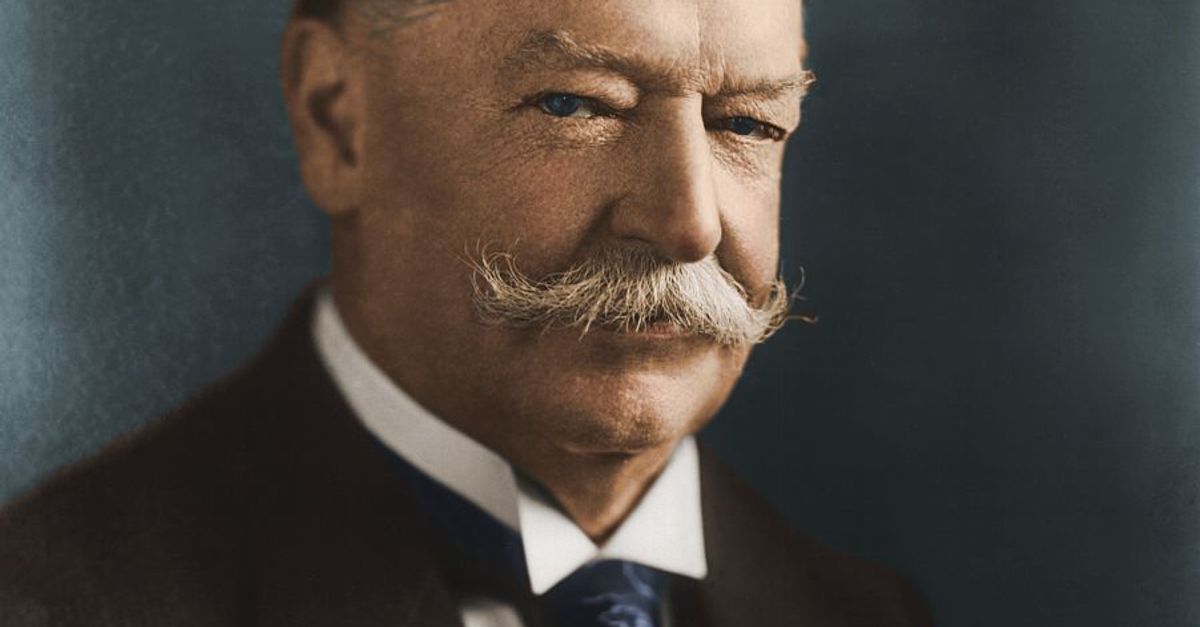
William Howard Taft, the only person in U.S. history to serve as both president and chief justice, underwent a significant physical transformation later in life, according to records from his presidency and judicial tenure. While frequently remembered for his weight during his time in the White House, Taft achieved a weight loss of approximately 100 pounds between his peak and the end of his life, returning to a weight of 244 pounds by the summer of 1929.
Taft’s weight fluctuated throughout his public career, which began with his appointment as solicitor general at age 32. By 1905, while serving as secretary of war, Taft weighed 314 pounds. During his presidency from 1909 to 1913, his weight peaked at 354 pounds in 1909, an increase attributed in part to the stress of office and the care of his wife after she suffered a stroke. After leaving the White House and later becoming chief justice in 1921, Taft adopted a physical regimen that included walking 3.5 miles to work and following a diet recommended by Dr. Nathaniel Yorke-Davies that emphasized lean meats and vegetables while avoiding sugar and carbohydrates.
As chief justice, Taft lobbied Congress for the Judiciary Act of 1925, which gave the Supreme Court discretion over its docket to clear a backlog of cases. He also secured funding for the construction of a standalone Supreme Court building, though he died in March 1930 before its completion in 1935. Taft’s judicial legacy includes the 1926 decision in *Myers v. United States*, which affirmed the president's authority to remove executive officers, a precedent cited in recent Supreme Court rulings.
For the public and federal employees, Taft’s push for a standalone Supreme Court building moved the third branch of government out of the U.S. Capitol. Prior to 1935, justices worked from their private homes and met in the Capitol's basement. The construction of the current Supreme Court building established a distinct physical space for the judiciary. Additionally, Taft's weight loss during his 60s and 70s has been cited by Chief Justice John Roberts as an example of prioritizing health to maintain professional effectiveness.
Looking ahead, Taft's judicial precedents continue to influence legal rights. The Supreme Court recently relied on his 1920s rulings to decide cases involving presidential removal power and parental rights, such as the March 2026 decision in *Mirabelli v. Bonta*. While Taft’s physical transformation was largely out of the public eye due to the lack of cameras in the court at the time, his administrative and legal decisions remain the framework for the current Supreme Court's operations.