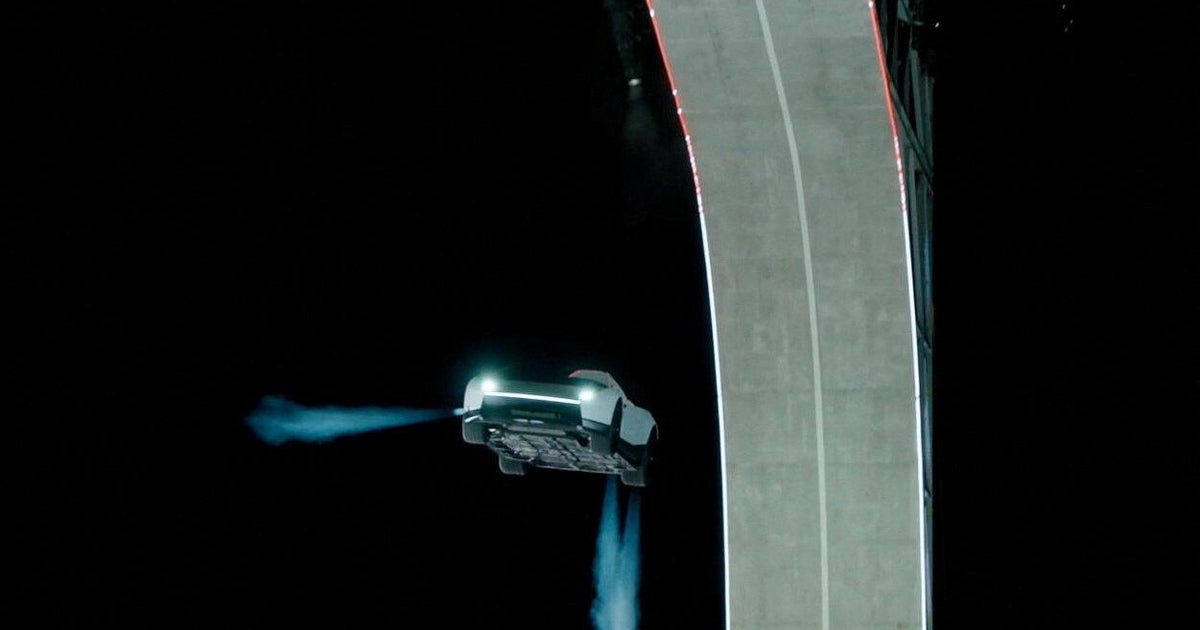
Tesla and SpaceX CEO Elon Musk recently demonstrated a prototype of a new Tesla Roadster model that includes a rocket-based flight system. The vehicle, which Musk stated was developed in collaboration between his two companies, is scheduled to enter production in 2028 after approximately a decade of delays.
During a demonstration on a Thursday, the vehicle launched from a ramp, traveled upside down along a curved surface, and performed a midair rotation before landing on its wheels. Musk described the vehicle as a \"flying car\" that utilizes ultra-high-pressure air tanks. While a standard version of the Roadster is available for reservation, the company website indicates that the flight-capable model will be offered by invitation only.
The Department of Transportation (DOT) currently lacks a clear regulatory framework for a vehicle with these capabilities. A senior DOT official expressed skepticism regarding the vehicle's ability to achieve sustained flight and noted that oversight responsibilities remain undefined. The Federal Aviation Administration (FAA), which regulates aircraft, stated that the Tesla vehicle does not currently meet the agency's definition of an aircraft.
Safety oversight for standard road vehicles typically falls under the National Highway Traffic Safety Administration (NHTSA). This agency generally delegates safety certification to the manufacturers themselves. Tesla’s website clarifies that the flying model has not received approval for use on public roads. CBS News reached out to both NHTSA and Tesla for comment on regulatory coordination, but did not receive immediate responses.
The scale of this impact involves a production timeline that is already ten years behind its original schedule. For the individual consumer, a $5,000 deposit represents a significant upfront cost for a product that has not yet secured the necessary legal certifications to operate in public spaces. Furthermore, the "invitation only" nature of the flight system indicates a limited initial rollout, but the precedent it sets could force federal agencies to redefine jurisdictional boundaries that have separated road travel from air travel for decades.
The day-to-day experience for these drivers would involve navigating conflicting sets of rules. If the FAA maintains that the vehicle is not an aircraft, the driver might not require a pilot’s license, but they would also lack the legal right to use controlled airspace. Conversely, if the NHTSA does not certify the flight hardware for road safety, the vehicle could be barred from highways. What happens next depends on the production start date in 2028 and whether Tesla or federal regulators initiate a formal certification process before that time. Currently, no specific court dates or legislative deadlines have been set to address these regulatory gaps.