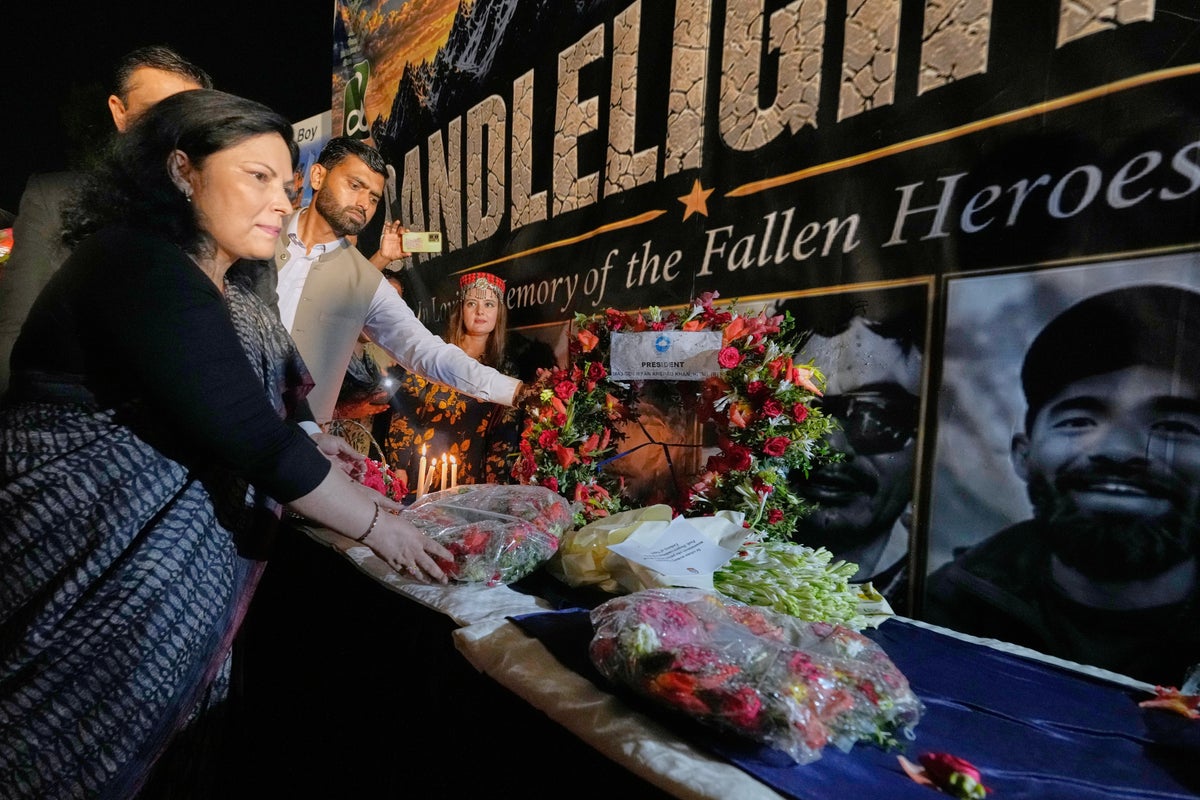
Search teams in northern Pakistan located the remains of American climber Mallory Geis on Friday, according to officials. Geis was the final missing member of a 10-person international expedition that was swept away by an avalanche on Broad Peak. Irfan Arshad Khan, president of the Alpine Club of Pakistan, stated that local volunteers discovered the remains during search operations on the mountain.
The 10-member climbing team, led by British-Nepali mountaineer Nirmal Purja, lost contact with base camp on July 30. Authorities subsequently concluded that all members of the party had died. The expedition included individuals from Nepal, Oman, Pakistan, China, Britain, and the United States. Geis was attempting to climb an 8,000-meter peak in Pakistan for the first time.
Rescuers located four bodies on Friday but were only able to recover three—Geis, Omani climber Nathira Ahmed, and Nepalese climber Bahadur Gurung—due to severe weather that prevented search-and-rescue helicopters from flying. Earlier in the week, ground teams found the remains of Purja and three other climbers: Wang Zhong, Nima Sherpa, and Kili Pemba Sherpa. The body of Pakistani climber Sohail Sakhi was discovered by volunteers on Thursday.
Professional climbers and trekking companies will notice the impact through increased scrutiny of safety protocols on Broad Peak, the world's 12th-highest mountain at 8,051 meters (26,414 feet). The loss of prominent figures like Nirmal Purja, who was featured in the Netflix documentary "14 Peaks: Nothing Is Impossible," and Sohail Sakhi, a geographer and guide for the company Moving Mountains, removes highly experienced personnel from the industry. The cost of such disasters is reflected in the extensive deployment of military personnel, civilian rescuers, and Sherpas who must navigate extreme altitudes and rapidly changing weather conditions during recovery missions.
The incident sets a precedent for how search operations are conducted in the Karakoram range, particularly concerning the coordination between military and volunteer teams. The knock-on effects include potential changes in how expedition companies manage risks during avalanche-prone periods in northern Pakistan. Future policy regarding climbing permits or rescue requirements may be influenced by the findings of this recovery operation. As of Friday, authorities hoped to transport Sakhi's body to a regional air base if weather conditions permitted, though specific dates for the final repatriation of all recovered remains have not been reported.