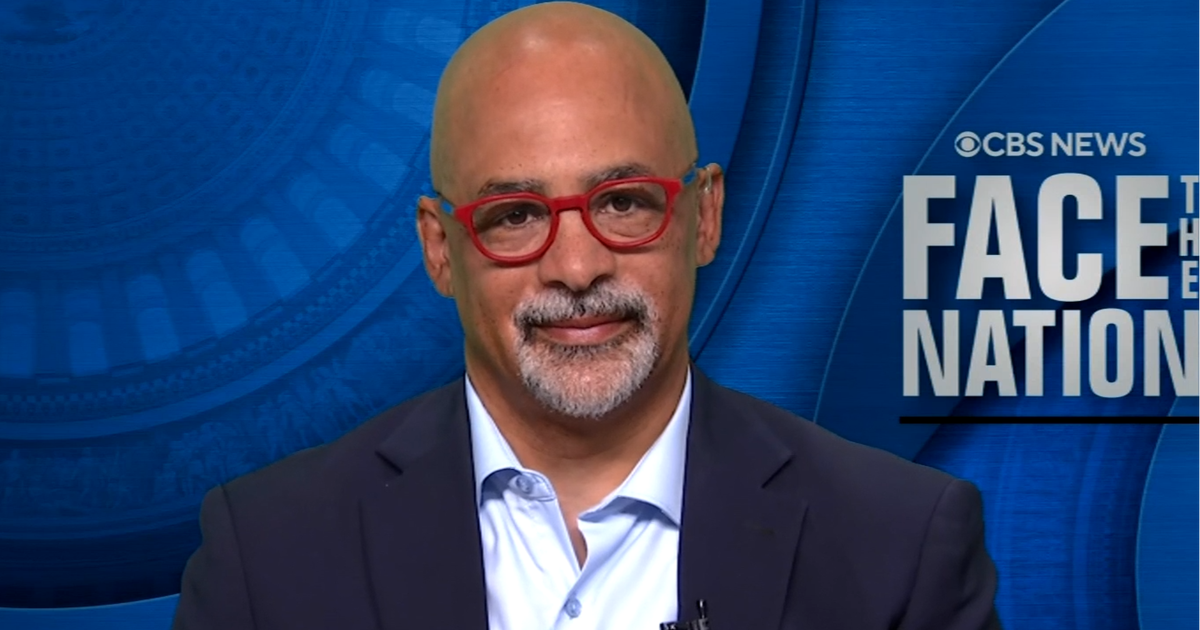
Pennsylvania State Representative Chris Rabb, the Democratic nominee for the state's third congressional district, discussed the role of democratic socialism within the Democratic Party during a televised interview on Sunday. Rabb, a member of the Democratic Socialists of America (DSA), argued that the United States already operates as a mixture of capitalism and social programs rather than a purely free-market system.
The interview followed a segment with Kentucky Governor Andy Beshear (D), who characterized socialism as a "failed experiment." Rabb responded by citing Social Security, Medicare, Medicaid, public education, and the interstate highway system as examples of successful programs that would not exist in a purely capitalistic market. He stated that his campaign focused on issues such as living wages and healthcare as a human right rather than ideological labels.
A CBS News poll released the same day indicated that while a majority of Democrats view socialism positively, only 35% of all Americans share that view. Rabb attributed this gap to a lack of context in polling definitions, asserting that voters in his district supported him because he positioned himself as a fighter for working people. He noted that he won his four-person primary by 14 points without the topic of socialism becoming a central focus.
Rabb also addressed strategic disagreements within the party, responding to comments from former Ambassador Rahm Emanuel, who argued that Democrats must win Republican-leaning districts to achieve policy goals like a minimum wage increase. Rabb countered that the party should focus on "exhausted and disaffected" voters in heavily Democratic districts who currently do not participate in elections, rather than trying to win over voters who oppose core progressive values.
When asked about a recent DSA statement commemorating the 100th birthday of Fidel Castro, Rabb stated he was "not concerned" with how the organization is construed by others. He emphasized his interest in finding common ground through "bold policies" such as addressing the housing needs of veterans and the rise of a "trillionaire class." Regarding his future in Congress, Rabb declined to commit to a vote for Hakeem Jeffries as Speaker, stating he would wait until a Democratic majority is secured and he has met with Jeffries personally.
For residents in these districts, this approach emphasizes changes to daily costs such as housing and medical bills. The candidate’s platform advocates for a living wage and universal health care, which, if enacted, would directly alter the monthly take-home pay and insurance premiums for millions of workers and Medicaid enrollees. Rabb's rejection of centrist strategies suggests that legislative priorities for a potential Democratic House majority would lean toward structural economic changes rather than incremental adjustments to existing markets.
The outcome of this intra-party debate will be determined by the results of the general election on November 3. If candidates aligned with the DSA and progressive wings win by significant margins, it sets a precedent for future primary challengers against centrist incumbents. Conversely, if the party fails to secure a majority or if progressive candidates underperform in general elections, it may validate the "institutionalist" approach advocated by figures like Rahm Emanuel. The next leadership vote for Speaker of the House is scheduled for January, following the seating of the new Congress.