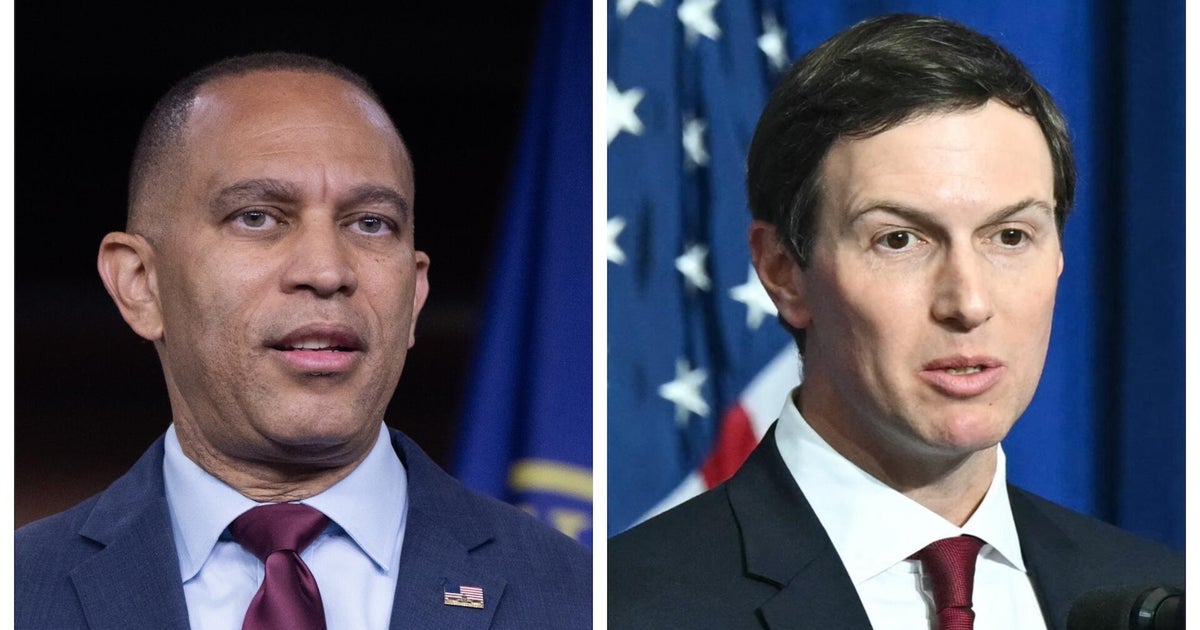
House Minority Leader Hakeem Jeffries (D-NY) and Jared Kushner, an adviser and son-in-law to President Donald Trump, recently held a private meeting in New York City. A source familiar with the details confirmed the meeting, which took place less than three months before the upcoming midterm elections. The discussion reportedly covered several policy areas, including housing, immigration, and the cost of living.
The meeting occurs as Democrats attempt to regain control of the House of Representatives in the November elections. If successful, Rep. Jeffries is in line to potentially become the next Speaker of the House. Although Kushner holds no formal White House role, he serves as an adviser to the president on overseas diplomatic negotiations. The two men previously collaborated on criminal justice reform legislation during the president's first term in office.
In a statement following reports of the meeting, Rep. Jeffries did not explicitly confirm the discussion but criticized Republican governing styles, stating that Democrats would not tolerate a "my-way-or-the-highway approach." House Speaker Mike Johnson (R-LA) told Fox News that he learned of the meeting through media reports and noted that Kushner is not directly involved in the day-to-day operations of the White House.
President Trump and Rep. Jeffries have exchanged public criticisms during this term, with the president using social media to insult the Democratic leader's intelligence and Jeffries previously calling the president "the dumbest president ever." However, in a recent interview with Punchbowl News, the president suggested he could work with Rep. Jeffries, describing him as a "nice guy" and suggesting they would "probably get along very well."
For the average citizen, the concrete day-to-day change resulting from such a meeting is not yet visible in paychecks or bills. Instead, the significance lies in the potential for future bipartisan cooperation or friction. If the "common ground" discussed on housing and immigration leads to legislation, renters, homeowners, and immigrant families could see changes in federal assistance or legal status. However, the source indicates that Rep. Jeffries remains committed to "forceful opposition" against what he describes as extremist approaches, suggesting that legislative outcomes remain uncertain.
The knock-on effects of this interaction could influence how the House operates after the November midterms. A precedent for cooperation exists from their past work on criminal justice reform, yet the current political climate remains characterized by sharp rhetoric from both the president and the Minority Leader. What happens next depends on the election results; if Democrats win the majority, Rep. Jeffries would transition from Minority Leader to Speaker, fundamentally changing his negotiating power with the White House. The next major milestone for both parties is the November election, where control of the House will be decided.