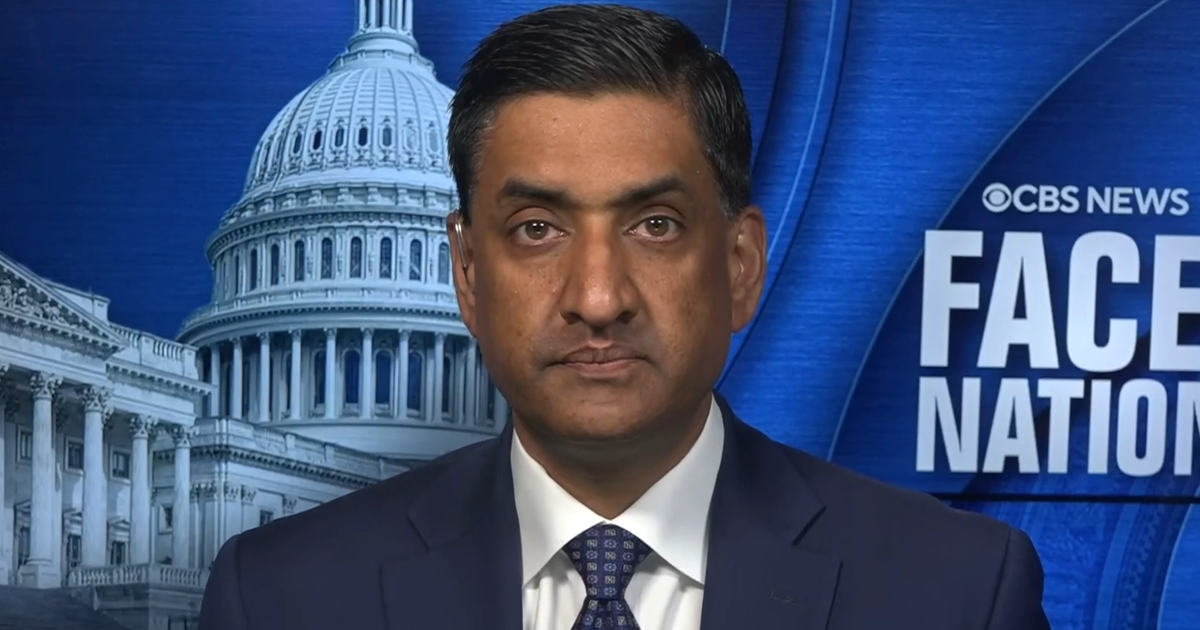
Rep. Ro Khanna (D-CA) called for an international agreement between the United States and China to establish safety standards for artificial intelligence during an interview aired on September 20, 2026. Khanna, who serves as the ranking Democrat on the House Select Committee on the Strategic Competition Between the United States and the Chinese Communist Party, proposed that President Donald Trump and Chinese leader Xi Jinping prioritize AI guardrails at an upcoming summit.
The proposal follows warnings from the Federal Bureau of Investigation (FBI), the National Security Agency (NSA), and the Cybersecurity and Infrastructure Security Agency (CISA) that China-based firms are copying American AI technology. Bloomberg reports indicate China intends to spend $300 billion over the next five years to construct state-operated data centers. Khanna stated that he had sent letters to Chinese firms including DeepSeek and Alibaba seeking information on their safety protocols, though he noted they have not yet responded.
Khanna advocated for an international agreement that would ban "recursive self-improving AI" and include safeguards against the use of AI in developing biological or nuclear weapons. He also proposed the creation of a new independent federal agency to regulate AI, comparing its potential function to that of the Food and Drug Administration (FDA). This proposal follows President Trump’s recent social media post about plans to create an "AI Force" and an "AI czar."
Khanna stated that new international standards should include monitoring of data centers to verify whether hardware is being used for training or inference. These regulations would involve independent technical experts from universities overseeing safety checks, similar to the management of aviation or nuclear energy.
The debate over these negotiations occurs as American academics and business travelers face risks in China, as illustrated by the case of Min Zin, a scholar and constituent of Khanna’s who has been detained for 100 days. Secretary of State Marco Rubio has designated Zin as wrongfully detained. Khanna also noted that the House China Committee held a hearing on human rights abuses involving the Uyghur population last week to inform the summit agenda.
The proposed AI agency would move oversight into a civilian regulatory framework. Khanna argued that Washington has regulated complex sectors like aviation and electricity before, and that safety standards should be overseen by independent experts rather than solely by private CEOs.