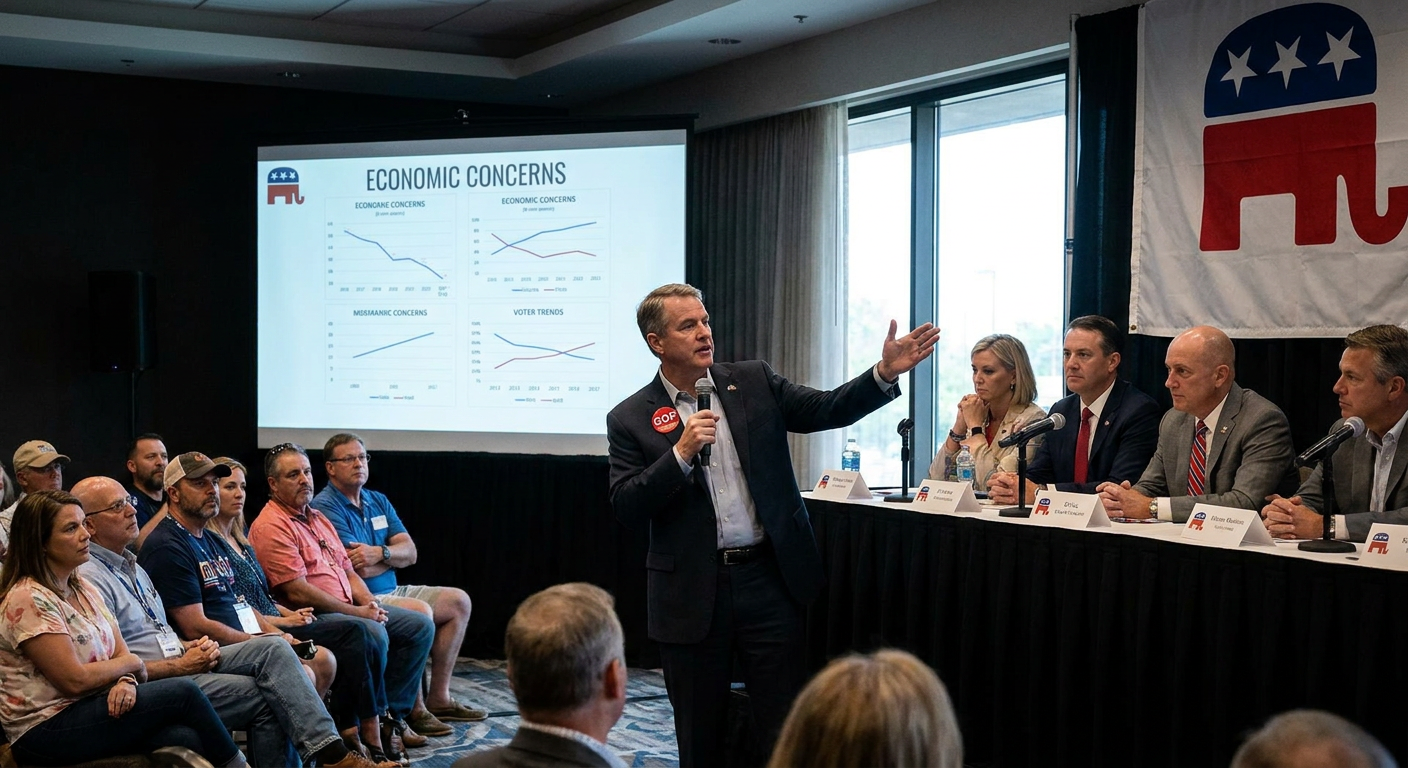
Republican pollster Jim Hobart of Public Opinion Strategies stated that GOP candidates will likely emphasize tax cuts and mobilize voters through presidential appearances as the 2026 midterm elections approach. In an interview with NPR, Hobart noted that the "enthusiasm gap" between Republican and Democratic voters has begun to narrow as the election date nears.
The discussion comes as the Republican party, currently the incumbent party in power, faces challenges related to the high cost of living and rising gas prices. Hobart acknowledged these economic pressures amid a foreign policy decision involving conflict in Iran. The pollster noted that gas prices historically serve as a significant indicator for the success of an incumbent party during elections.
Hobart detailed that Republican candidates intend to highlight the "One Big Beautiful Bill," which included tax cuts on tips and overtime pay. He also stated that party members in Congress may look to pass energy price legislation during their final week in session. Regarding presidential rhetoric at a recent convention—which included promises of $5,000 payments to Americans and calls for voter loyalty—Hobart stated that such language is largely "baked in" to voter perceptions of the president.
The scale of the campaign is reflected in the Republican party's plan to deploy financial resources in states like Texas and Michigan. Hobart noted that these resources will be used to characterize Democratic opponents, such as James Talarico and Abdul El-Sayed, as being "out of touch" with mainstream voters. For the average household, the focus on gas prices is a central concern; Hobart identified high prices as a primary difficulty for any incumbent party.
The knock-on effects of these midterm strategies include potential legislative shifts in energy policy and the continuation of tax-related precedents set by recent bills. If the Republican strategy to close the enthusiasm gap succeeds, it could maintain the party's control over legislative priorities for the coming term. The next phase of the campaign involves a roughly 50-day period leading up to the election. The specific date of the election and the deadline for the proposed energy legislation were not reported.