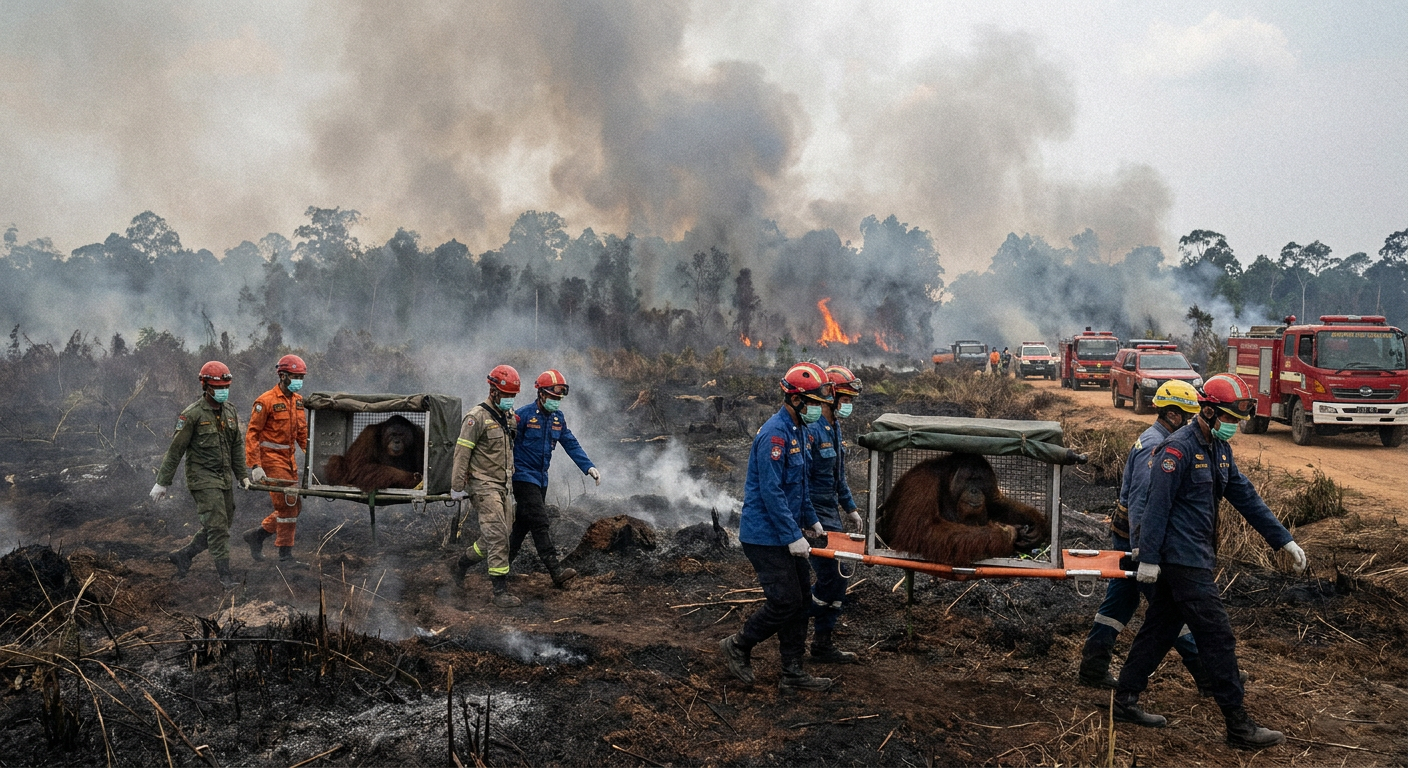
Rescuers in Indonesia have moved dozens of orangutans to safety as wildfires continue to burn across the country's forest and peatland areas. Jamartin Sihite, chairman of the Borneo Orangutan Survival Foundation, stated that satellite mapping suggests 50% to 60% of orangutan habitats have either burned or been impacted by smoke. According to the foundation, the fires, exacerbated by a super El Niño weather pattern, have burned 2.2 million acres of land during the current season. Rescuers have focused on pulling the animals away from active flames and dense smoke that threaten their natural habitats.
The current efforts mirror a similar rescue operation conducted during massive forest fires in 2015. Biological anthropologist Wendy Erb, who observed the 2015 fires, noted that field teams use generators to pump water from beneath the peatland to combat the flames when natural rainfall is absent.
Rescue teams have identified several animals in need of medical intervention, including a 5-year-old female named Novita who was found in a forest canopy surrounded by fire. Novita suffered burns to 20% of her body, including her hands and feet, and required a nebulizer to treat respiratory issues. Other rescued animals include multiple mothers with infants and young males who had become stranded by the encroaching flames.
The fires also present a direct health crisis for both the animal and human populations in the region. Humans exposed to the smoke face increased risks of asthma, heart attacks, and shortened life expectancy. Sihite noted that orangutans suffer from similar medical conditions, specifically acute respiratory infections caused by smoke inhalation. While humans in the area can use masks to mitigate these effects, the orangutan population has no such protection, leaving them dependent on rescue organizations for medical rehabilitation and relocation.
The long-term impact involves the permanent degradation of habitat in a region already struggling with environmental stressors. While researcher Wendy Erb noted that orangutans are intelligent and resourceful enough to survive in "pretty degraded" environments, the scale of the current destruction creates significant pressure on the remaining population. Rescuers are currently monitoring the displaced animals at rehabilitation centers, but there is no reported date for when the fires are expected to be fully contained or when the rescued orangutans can be returned to the wild.