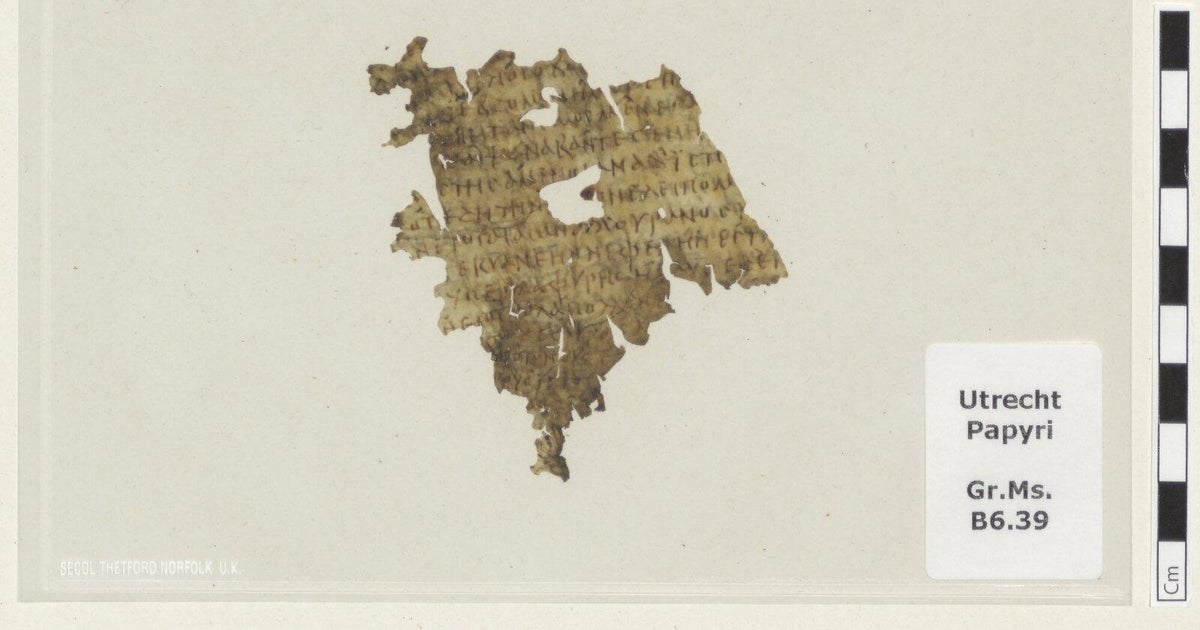
A researcher at Radboud University in the Netherlands identified a fragment of Homer’s "Odyssey" dating back to approximately 300 AD. The artifact was discovered among a collection of early Christian manuscripts held by Utrecht University. While the discovery was made roughly two years ago, the university officially announced the find this week.
The fragment was located by Dr. Mark de Kreij during a project to study and publish ancient manuscripts. The collection containing the fragment was purchased by Utrecht University in the mid-20th century. Researchers initially believed the item was a 7th-century document similar to other Egyptian fragments found in the same collection before De Kreij identified the Greek text.
The fragment is approximately the size of a playing card and contains text on both sides. According to Utrecht University, the paper likely belonged to a pocket edition of the epic poem owned by a resident of Egypt's Faiyum oasis. The artifact shows signs of age, including discoloration and moisture stains. The text corresponds to the 12th book of the "Odyssey," specifically the passage where Odysseus describes his sailors consuming cattle sacred to the Sun God. The artifact is discolored and has moisture stains.
This discovery adds to a limited corpus of ancient physical records. According to Utrecht University, only about 30 such fragments of this specific era and work are known to exist worldwide. For historians and papyrologists, the existence of a 1,700-year-old "pocket edition" provides evidence of how classical literature was packaged, transported, and read by individuals in Roman-era Egypt.
The find consists of a single card-sized fragment, but its age—dating to roughly 300 AD—places it among the rarest surviving copies of Homeric text. De Kreij noted that the fragment's origin in the middle of the poem is consistent with how books wear from the outside in.
The identification of Greek text within a collection previously categorized as Egyptian Christian manuscripts suggests that existing archives may hold additional unrecognized classical works. Following the university's announcement this week, the fragment will remain part of the Utrecht University collection. No specific dates for public exhibition have been reported.