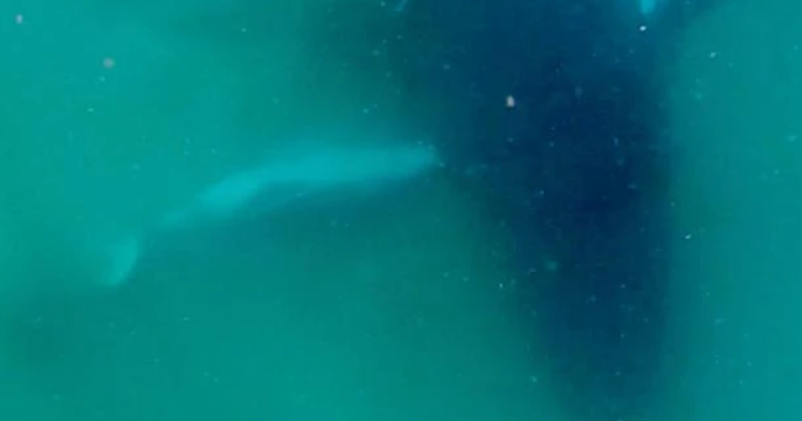
Researchers published a study on Wednesday in the journal Discover Animals detailing rare footage of a female humpback whale interacting with a stillborn calf. The footage, captured off Australia’s Gold Coast last year, shows the whale remaining near the deceased calf on the seafloor, making physical contact with its head and fin. The research team stated that this may represent grief-related behavior, marking what they believe is the first detailed documentation of such an occurrence for this species.
The event was initially observed by Andrew Mulville of the Sea World Foundation, who noted that the whales' behavior was unusual compared to typical patterns at the surface. According to the study, the female whale was accompanied by another companion whale and maintained eye contact with the calf. Researchers observed that the mother did not attempt to bring the calf to the surface, which they suggested could indicate she was aware the calf was dead shortly after birth.
Olaf Meynecke of Griffith University's Whales and Climate Research Program told AFP that the whale stayed with the deceased animal for several hours and possibly days. The study noted that several other deceased whale calves were observed in the same area during that period. Meynecke stated the behavior highlights the emotional stages socially complex mammals may experience following the loss of offspring, drawing parallels to similar documented rituals in elephants and apes.
For the general public, the study illustrates the social bonds of humpback whales. A person observing these animals in the wild would notice prolonged stationary behavior and repeated physical contact, a departure from typical patterns. The documentation of this event, combined with recent drone footage of a humpback birth and data showing a whale traveling over 9,300 miles between breeding grounds, provides a more detailed picture of the humpback lifecycle and their capacity for social interaction.
The findings establish a record for how researchers interpret whale behavior, suggesting that what might appear as simple resting could be a complex response. The researchers did not report a specific date for follow-up studies, but the publication serves as a formal record for future comparative research into marine mammal behavior.