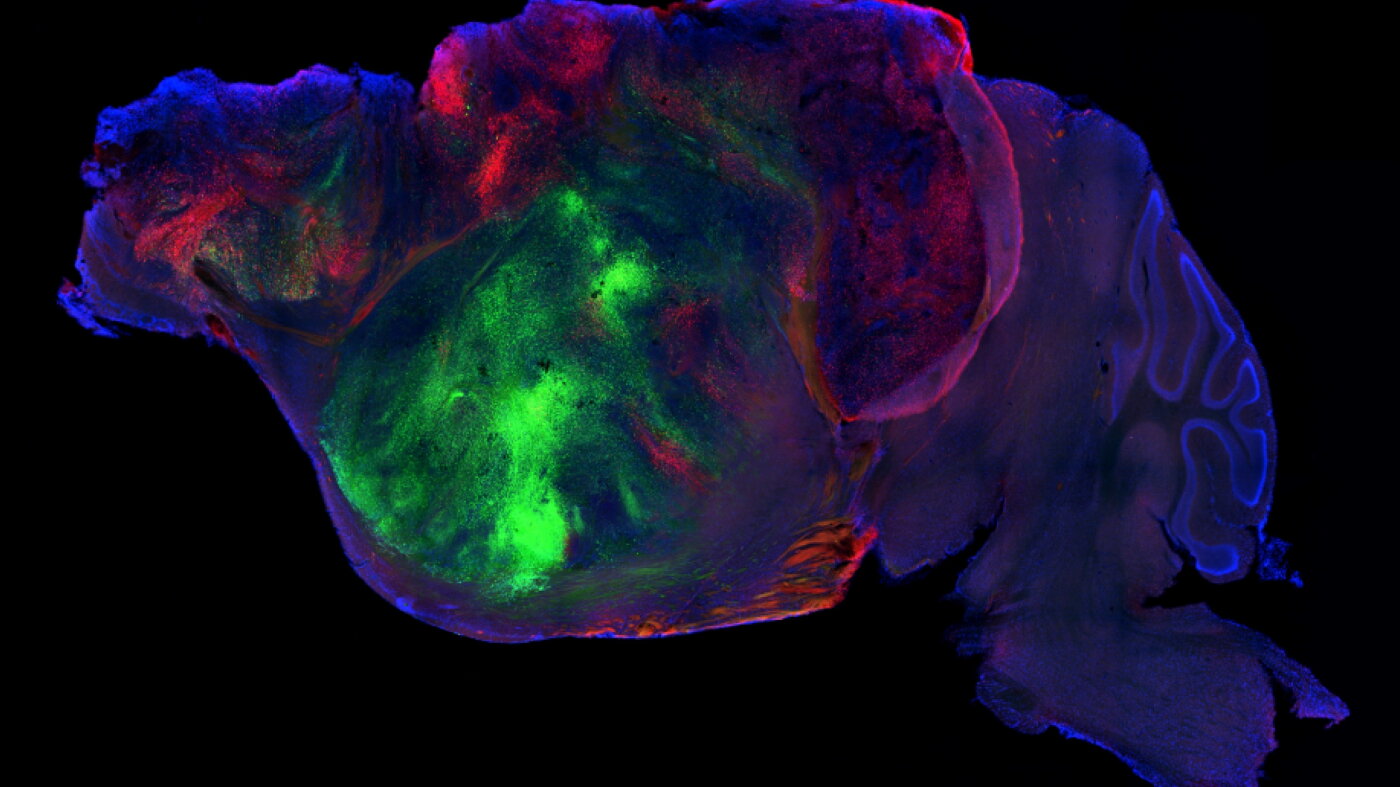
Researchers at Stanford University have developed a method to implant millions of human brain cells into mice to create scientific models for neurodegenerative diseases. The study, published in the journal Nature, involved breeding mice through genetic engineering to lack a significant portion of their cerebral cortex, the area associated with reasoning and memory. These missing mouse cells were then replaced with lab-grown human neurons, which integrated and restored some lost functions in the mice.
Previously, attempts to integrate human neurons into mice were limited by the fact that human cells develop roughly 20 times slower than mouse cells. This difference meant mouse neurons typically formed connections before human cells could establish themselves. To address this, the team led by Sergiu Pașca, a professor of psychiatry and behavioral sciences at Stanford, bred genetically engineered mice missing specific parts of their nervous system to provide the human cells with space and opportunity to grow without competition.
The research team reported that they removed approximately 14 million mouse neurons and added roughly 4 million lab-grown human cortical neurons. While the mice lacking their cortex initially showed deficits in memory tasks, those with the human brain cell grafts demonstrated improved memory and social interaction. Additionally, the mice with human neurons exhibited a sensitivity to oxygen deprivation similar to humans, which regular mice do not show. Pașca noted this makes them potential models for studying cerebral palsy, intellectual disability, and epileptic encephalopathies.
The scale of the experiment involved replacing human cells that were allowed to develop for up to six months. In a research setting, this means a shift from traditional mouse models to animals that react more like humans to specific stressors, such as low oxygen levels. While this provides a more precise environment for testing drugs or studying disease progression, it also raises questions regarding the legal and ethical status of animals that possess human biological characteristics. Nita Farahany, a professor of law and philosophy at Duke Law, noted that these developments lead into ethical "gray areas" where current guidelines may not be sufficient.
The immediate impact is limited to laboratory research, but the precedent sets the stage for potential experiments in larger, longer-living animals like pigs or non-human primates. Hongkui Zeng of the Allen Institute noted that larger animals could allow human neurons to survive longer and form more complex circuits, which may further complicate ethical considerations. The Stanford team chose to end their study before the human cells reached a developmental stage associated with consciousness, but future researchers may face questions about extending these timelines to study late-stage diseases. No specific dates for new regulations or follow-up studies were reported.