The Plain Record

Neutral daily news — clear headlines, complete facts.

Legal

Resistance to Automated License Plate Surveillance Grows Across Multiple States

Residents in at least 36 states have vandalized or blocked Flock surveillance cameras as privacy advocates and police debate the technology's accuracy and oversight.

Published August 20, 2026 at 8:00 PM EDT

The short answer

Residents in at least 36 states have vandalized or blocked Flock surveillance cameras as privacy advocates and police debate the technology's accuracy and oversight. Law enforcement use of automated license plate readers (ALPRs) has faced increasing physical and legal opposition as residents and advocacy groups raise privacy concerns.

Resistance to Automated License Plate Surveillance Grows Across Multiple States

The Facts

Who
Flock Safety, ACLU, DeFlock, and law enforcement agencies.
What
Vandalism and organized opposition to police surveillance cameras.
When
Friday, August 21, 2026
Where
United States
Why
Privacy concerns regarding AI-powered vehicle tracking and data misuse.

Timeline of what happened

Key dates and decisions, in the order they occurred.

  1. 2024

    California department reports high error rate

    A California police department analysis finds a 71% error rate in Flock alerts.

  2. October 16, 2025

    Camera documented in Houston

    A Flock license plate reader is documented in operation in Houston, Texas.

  3. July 7, 2026

    Vandalized camera photographed in Houston

    A camera near Washington Avenue is photographed after being vandalized.

  4. July 27, 2026

    Florida man protests surveillance camera

    A man in Florida uses a pool skimmer to block a Flock camera.

  5. August 2026

    Flock updates privacy guardrails

    Flock Safety updates features to include shorter data storage recommendations.

  6. August 21, 2026

    Flock annual conference held

    Flock Safety holds its annual conference amid ongoing national protests.

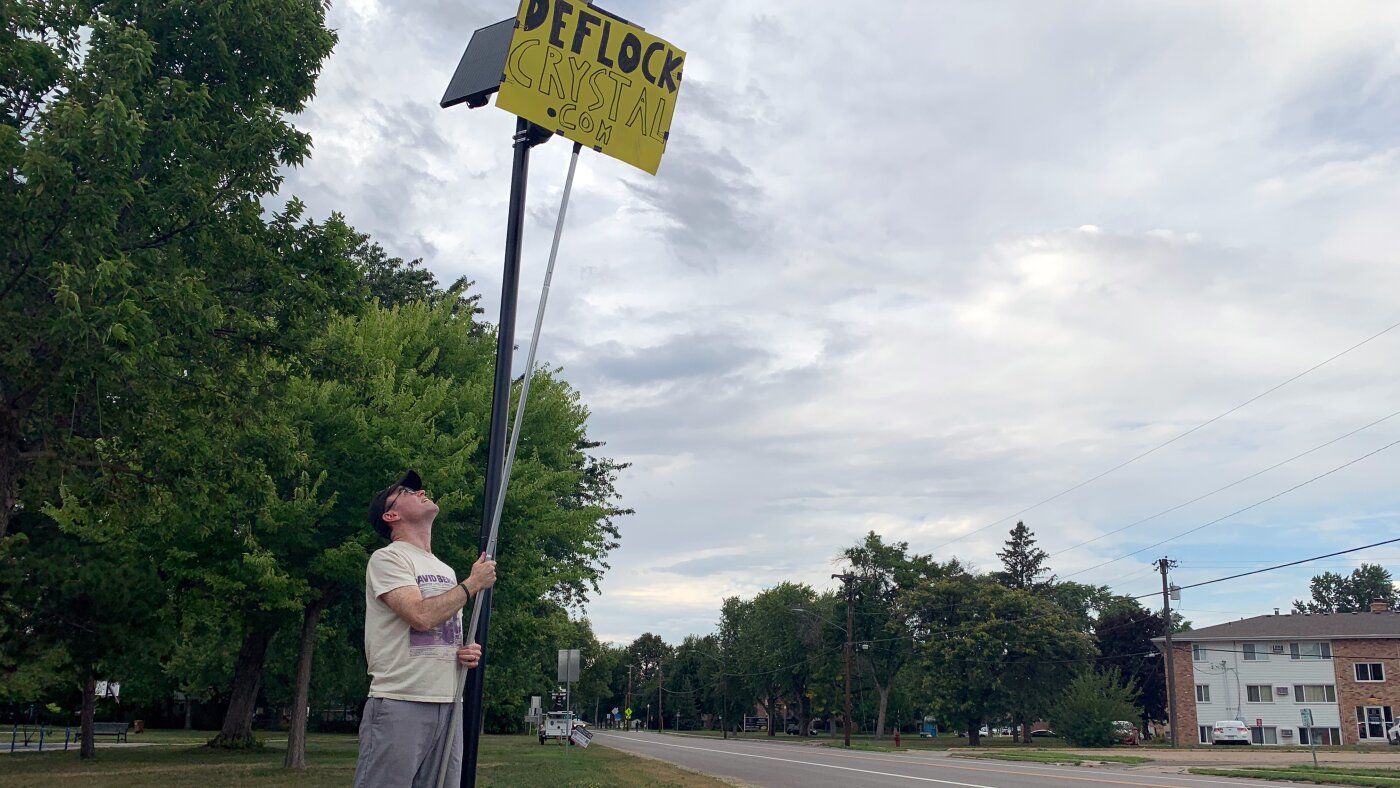
Law enforcement use of automated license plate readers (ALPRs) has faced increasing physical and legal opposition as residents and advocacy groups raise privacy concerns. According to an NPR review of local news reports, Flock Safety cameras—a prominent brand of ALPR technology—have been vandalized in at least 36 states, with incidents ranging from cameras being painted or covered with stickers to poles being sawed down or shot.

Flock Safety, an Atlanta-based technology company, reported that more than 5,000 law enforcement agencies currently use its AI-powered systems to track vehicle movements. The advocacy group DeFlock estimates there are more than 130,000 such readers nationwide, capturing billions of data points monthly. While police officials, including Jeff Potts of the Minnesota Chiefs of Police Association, state the cameras are helpful for locating stolen vehicles and missing persons, critics argue the systems enable unauthorized surveillance and have been subject to documented misuse.

The American Civil Liberties Union (ACLU) and the Policing Project at New York University have highlighted instances where officers used the data to stalk individuals or share information for immigration enforcement without local consent. Additionally, a 2024 analysis by a Roseville, California, police department found that the technology misread license plates in 71% of the alerts sent to officers. In response to these concerns, Flock Safety CEO Garrett Langley stated the company recently updated its software to shorten data storage recommendations and cut off access to officers who appear to be misusing the tool.

For the average citizen, this technology changes the nature of public privacy, as law enforcement can now retrospectively track a vehicle's location history at any given time. While proponents cite a preliminary study suggesting the cameras can deter car theft, the recorded high error rate—71% in one California audit—means individuals may face police stops based on incorrect automated alerts. The pushback has led to concrete policy changes in at least 100 cities, where local governments have either deactivated the cameras or canceled their service contracts with providers like Flock Safety.

The next steps in this debate involve both legislative oversight and continued grassroots activity. DeFlock is currently concluding a National Week of Action, which includes protests and legal advocacy efforts scheduled through Saturday. As more municipalities review their surveillance policies, the precedent for how long data is stored and who can access it remains a central point of contention between privacy advocates and law enforcement agencies. Flock Safety continues to maintain its annual conference this week to address these transparency concerns with its client agencies.

Summaries are written by The Plain Record to state the facts of a story plainly and without political slant. See our editorial standards, or report a correction.

← Back to the front page

Questions readers ask

What happened: Resistance to Automated License Plate Surveillance Grows Across Multiple States?

Law enforcement use of automated license plate readers (ALPRs) has faced increasing physical and legal opposition as residents and advocacy groups raise privacy concerns. According to an NPR review of local news reports, Flock Safety cameras—a prominent brand of ALPR technology—have been vandalized in at least 36 states, with incidents ranging from cameras being painted or covered with stickers to poles being sawed down or shot.

Who is involved?

Flock Safety, ACLU, DeFlock, and law enforcement agencies.

When did this happen?

Friday, August 21, 2026

Where did this happen?

United States

Why does this matter?

Privacy concerns regarding AI-powered vehicle tracking and data misuse.