The Plain Record

Neutral daily news — clear headlines, complete facts.

National

Rising Workplace Violence and Staffing Shortages Lead to Hospital Strikes

Hospital workers across several states are striking to demand improved safety measures and staffing levels following a rise in patient-led workplace violence.

Published August 18, 2026 at 8:00 PM EDT

The short answer

Hospital workers across several states are striking to demand improved safety measures and staffing levels following a rise in patient-led workplace violence. Healthcare workers across several states have engaged in labor strikes, citing patient violence and staffing levels as central concerns alongside traditional pay disputes.

Rising Workplace Violence and Staffing Shortages Lead to Hospital Strikes

The Facts

Who
Hospital workers, nurses, Teamsters, SEIU 1199 New England, and the American Hospital Association.
What
Healthcare worker strikes driven by workplace violence and staffing concerns.
When
August 19, 2026
Where
United States (Michigan, Rhode Island, Pennsylvania, New York, Louisiana)
Why
Healthcare workers are seven times more likely to be injured by workplace violence than the general population, leading to demands for staffing ratios and federal protections.

Timeline of what happened

Key dates and decisions, in the order they occurred.

  1. 2016

    OSHA develops healthcare and social service worker safety guidelines

  2. 2018

    National Nurses United begins pressing for national staffing standards

  3. February 2024

    Mental health worker injured during assault at Butler Hospital

  4. September 1, 2025

    Strike begins at Henry Ford Genesys Hospital in Michigan

  5. January 2026

    Joint Commission national performance goals for staffing take effect

  6. March 17, 2026

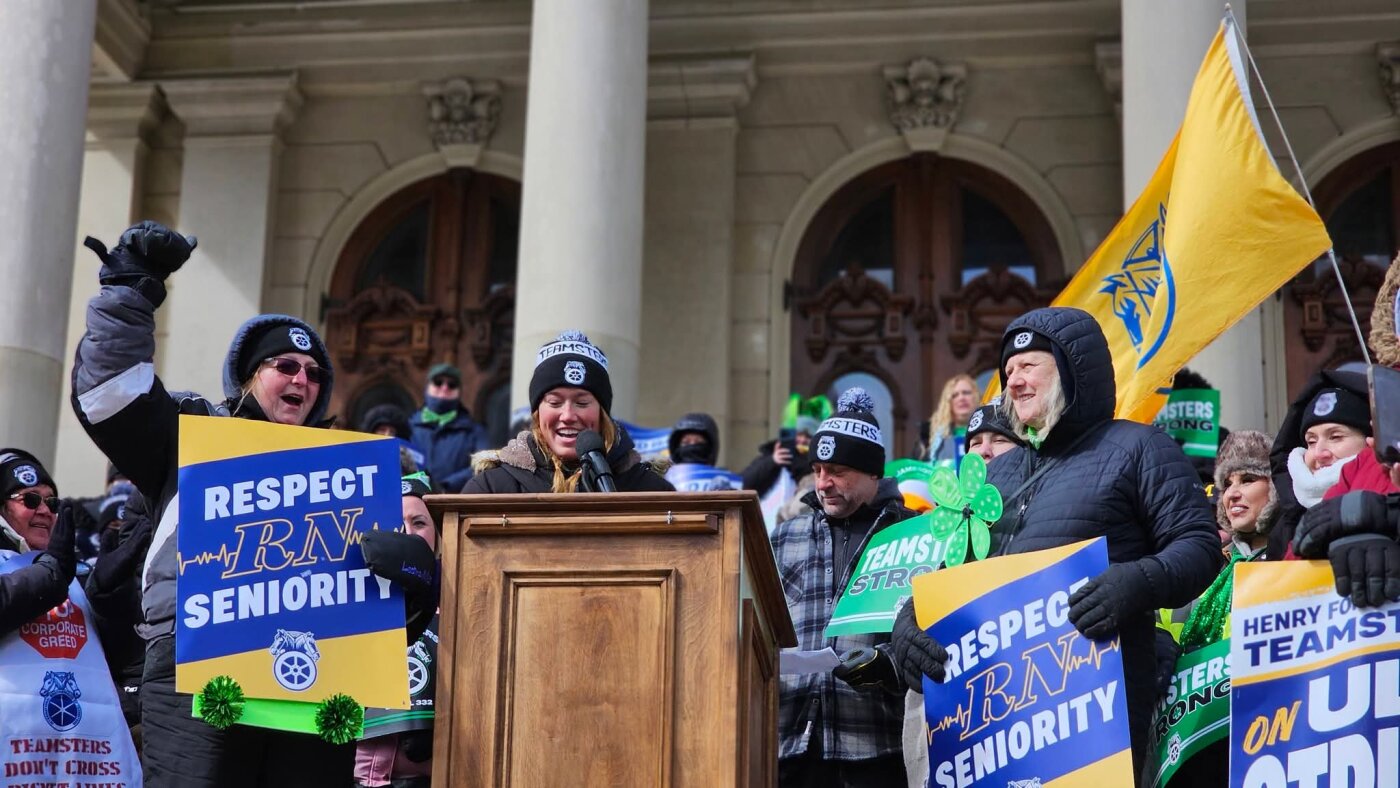
    Nurses hold rally at Michigan State Capitol in Lansing

Healthcare workers across several states have engaged in labor strikes, citing patient violence and staffing levels as central concerns alongside traditional pay disputes. According to data from the Bureau of Labor Statistics, hospital employees are seven times more likely to be injured by violent acts on the job than the general workforce. Unionized workers in Michigan, Rhode Island, Pennsylvania, New York, and Louisiana have highlighted these safety risks as they negotiate new labor contracts.

The focus on workplace safety follows a period of heightened tension in medical facilities. Hospital administrators, such as those at Henry Ford Health, have characterized the current level of violence as a "national epidemic." While hospitals have implemented measures like metal detectors, armed security, and de-escalation training, labor organizers argue that understaffing contributes to patient agitation and increases the risk of unpredictable outbursts, known in the industry as "code grays."

Individual accounts from workers, such as mental health worker Andrew Kimball-Mirzaie and nurse Crystal Dhooghe, describe physical assaults including punches, bites, and scratches. Kimball-Mirzaie reported sustaining a concussion and broken nose while monitoring a patient at Butler Hospital in Rhode Island, an incident documented in the hospital's logs. In response, Henry Ford spokesperson Dana Jay stated that their strike in Michigan is "simply an economic strike" rather than one focused on safety, asserting the health system maintains a zero-tolerance policy for violence.

The debate over how to address this violence carries concrete legal and financial consequences for healthcare providers and the public. The American Hospital Association (AHA) is lobbying Congress to make assaulting a healthcare worker a federal crime punishable by up to 10 years in prison, a move intended to deter attacks. Conversely, worker safety experts and organizations like National Nurses United are advocating for federal staffing laws. While California has enacted mandatory ratios, the AHA argues such mandates would remove clinical flexibility and could force facilities to turn away patients, as reportedly occurred in four California counties following psychiatric staffing mandates.

Looking ahead, the financial environment for these institutions is expected to tighten. According to Georgetown University policy expert Debbie Berkowitz, provisions in a signature tax-and-spending law are expected to reduce hospital funding in the coming years. This potential reduction in revenue may force hospital administrators to choose between maintaining staffing levels and other operational costs. Current legislative efforts to mandate staffing ratios have recently failed to advance in Massachusetts and New Jersey, while the Joint Commission’s new national performance goals for staffing and training took effect in January 2026.

Summaries are written by The Plain Record to state the facts of a story plainly and without political slant. See our editorial standards, or report a correction.

← Back to the front page

Questions readers ask

What happened: Rising Workplace Violence and Staffing Shortages Lead to Hospital Strikes?

Healthcare workers across several states have engaged in labor strikes, citing patient violence and staffing levels as central concerns alongside traditional pay disputes. According to data from the Bureau of Labor Statistics, hospital employees are seven times more likely to be injured by violent acts on the job than the general workforce.

Who is involved?

Hospital workers, nurses, Teamsters, SEIU 1199 New England, and the American Hospital Association.

When did this happen?

August 19, 2026

Where did this happen?

United States (Michigan, Rhode Island, Pennsylvania, New York, Louisiana)

Why does this matter?

Healthcare workers are seven times more likely to be injured by workplace violence than the general population, leading to demands for staffing ratios and federal protections.