The Plain Record

Neutral daily news — clear headlines, complete facts.

General

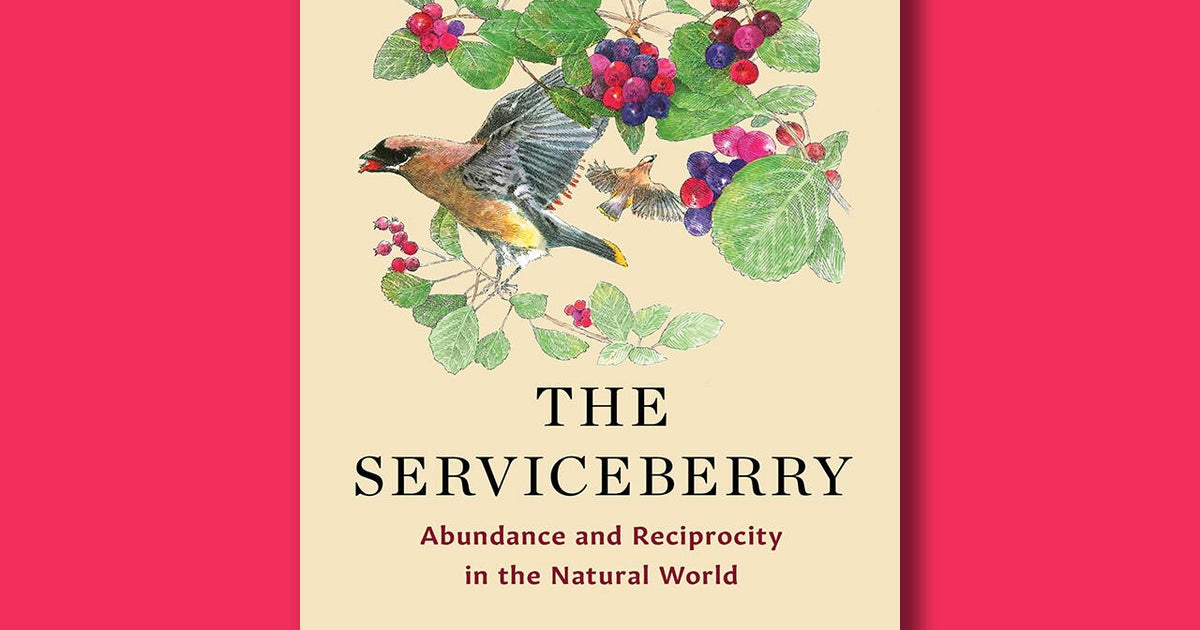
Robin Wall Kimmerer explores Indigenous gift economies in new book 'The Serviceberry'

Botanist Robin Wall Kimmerer releases "The Serviceberry," a book examining how Indigenous concepts of gratitude and reciprocity could inform human economies.

Published August 21, 2026 at 5:20 PM EDT

The short answer

Botanist Robin Wall Kimmerer releases "The Serviceberry," a book examining how Indigenous concepts of gratitude and reciprocity could inform human economies. Robin Wall Kimmerer, an Indigenous botanist and author, has released a new book titled "The Serviceberry: Abundance and Reciprocity in the Natural World." The work follows her 2013 publication, "Braiding Sweetgrass," which focused on the intersection of Western science and Indigenous knowledge.

Robin Wall Kimmerer explores Indigenous gift economies in new book 'The Serviceberry'

The Facts

Who
Robin Wall Kimmerer (author and botanist)
What
Release of a new book titled "The Serviceberry: Abundance and Reciprocity in the Natural World."
When
Not reported (publication date); August 23 (scheduled interview)
Where
United States
Why
The book argues that Indigenous traditions of gratitude and reciprocity can address global issues like starvation and climate change by replacing consumption-based economies with gift-based exchange.

Timeline of what happened

Key dates and decisions, in the order they occurred.

  1. 2013

    Publication of "Braiding Sweetgrass"

  2. August 23, 2026

    Scheduled interview on "CBS Sunday Morning"

Robin Wall Kimmerer, an Indigenous botanist and author, has released a new book titled "The Serviceberry: Abundance and Reciprocity in the Natural World." The work follows her 2013 publication, "Braiding Sweetgrass," which focused on the intersection of Western science and Indigenous knowledge.

The text explores the concept of a "gift economy," drawing on Indigenous traditions such as those of the Anishinaabe and Haudenosaunee. Kimmerer describes how natural systems, like the growth and distribution of serviceberries, function through cycles of mutual exchange rather than bilateral debt or accumulation.

In the book, Kimmerer argues that recognizing "enoughness" serves as a response to economic systems driven by consumption. She cites data stating that global food calories are sufficient to nourish all 8 billion people on Earth, despite the persistence of starvation. The author suggests that applying gratitude and reciprocity to human economies could address environmental issues such as climate change and biodiversity loss.

The scale of this shift involves a complete reassessment of global resource distribution. Kimmerer notes that while there are enough calories for everyone, current systems fail to prevent starvation; a move to a gift-based exchange would require humans to take only what is needed, potentially impacting the supply chains and pricing of food and consumer goods. Indigenous groups, specifically the Anishinaabe and Haudenosaunee, are highlighted as current practitioners of these "cultures of gratitude," providing a model for how these social and economic behaviors function in practice.

The knock-on effects of these ideas could influence future policy regarding land use, carbon footprints, and environmental preservation. Kimmerer suggests that individual actions, such as voting for healthy land or donating to land trusts, are part of this reciprocal system. A broadcast interview between Martha Teichner and Kimmerer regarding these topics is scheduled to air on "CBS Sunday Morning" on August 23. The book is currently available through various retailers, including Scribner and Simon & Schuster.

Summaries are written by The Plain Record to state the facts of a story plainly and without political slant. See our editorial standards, or report a correction.

← Back to the front page

Questions readers ask

What happened: Robin Wall Kimmerer explores Indigenous gift economies in new book 'The Serviceberry'?

Robin Wall Kimmerer, an Indigenous botanist and author, has released a new book titled "The Serviceberry: Abundance and Reciprocity in the Natural World." The work follows her 2013 publication, "Braiding Sweetgrass," which focused on the intersection of Western science and Indigenous knowledge. The text explores the concept of a "gift economy," drawing on Indigenous traditions such as those of the Anishinaabe and Haudenosaunee.

Who is involved?

Robin Wall Kimmerer (author and botanist)

When did this happen?

Not reported (publication date); August 23 (scheduled interview)

Where did this happen?

United States

Why does this matter?

The book argues that Indigenous traditions of gratitude and reciprocity can address global issues like starvation and climate change by replacing consumption-based economies with gift-based exchange.