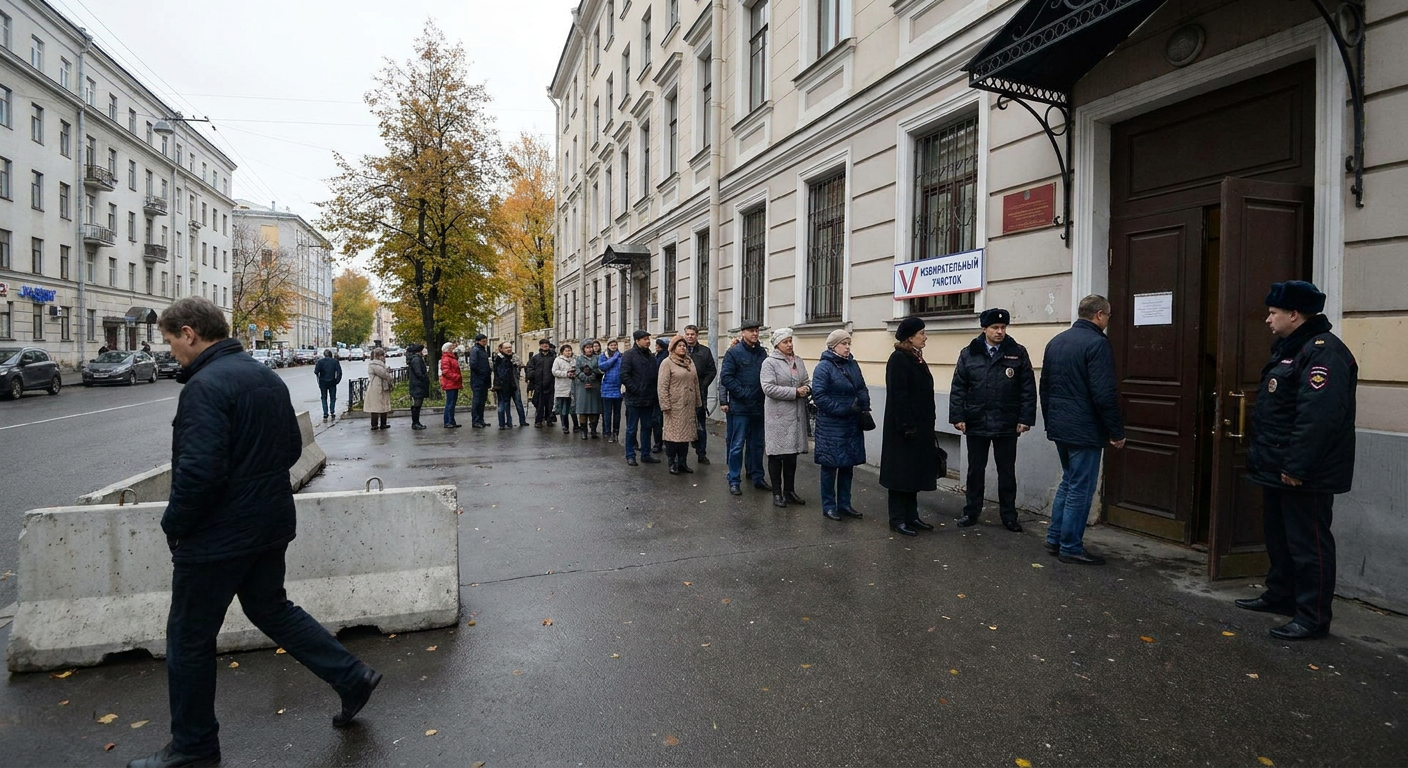
Russian voters began casting ballots for the State Duma, the lower house of parliament, in a nationwide election scheduled to run through the weekend. This represents the first parliamentary contest since the Russian government launched a full-scale invasion of Ukraine more than four and a half years ago. While 10 parties remain on the ballot, President Vladimir Putin has expressed support for the ruling United Russia bloc, stating the vote will demonstrate national unity behind the military effort.
The election takes place under a legal framework where, according to analyst Alexander Kynev, criticizing foreign policy or the situation in Ukraine is forbidden. Kynev noted that the government has utilized various laws, including "foreign agent" designations and anti-extremism statutes, to remove critical voices. Consequently, televised debates have featured candidates who avoided discussing the war, with some participants opting to use their time for silence rather than address sensitive topics.
A significant development prior to the vote was the removal of Yabloko, the only registered party calling for an end to the war in Ukraine, from the ballot. The Russian Supreme Court disqualified the party based on a technicality involving a reported violation of American copyright law. Yabloko leader Nikolay Rybakov characterized the ruling as a farce intended to deny voters a choice. Additionally, state television reported that Russian soldiers are overseeing voting for the first time in occupied parts of Ukraine that Moscow claimed to annex.
The election affects millions of eligible voters across Russia and occupied Ukrainian territories. While the official ballot includes 10 parties, the disqualification of anti-war candidates means that the millions of citizens who, according to Kynev, are anxious about when the war will end and when life will return to "normal" lack a formal political outlet for those concerns. These voters face daily disruptions, including Ukrainian drone strikes on civilian infrastructure and state restrictions on the internet.
The outcome of the vote is linked to the future of military service for hundreds of thousands of Russian men. Despite President Putin dismissing rumors of a new wave of mobilization as "disinformation," Alexey Tabalov of the School of the Conscript reported that forced contract signings are becoming common to replenish the army's ranks. The election features the emergence of war veterans on candidate lists—whom Putin described as a "new elite"—amid what Tabalov describes as quiet recruitment efforts to sustain the conflict.
The election occurs in a political environment where foreign policy and military decisions are excluded from public legislative debate. Following the death of opposition leader Alexei Navalny in prison more than two years ago, his wife Yulia Navalnaya has attempted to continue his anti-war work, yet his name and image remain restricted under anti-extremism laws. The current voting period concludes after the weekend, and the results will determine the composition of the Duma.