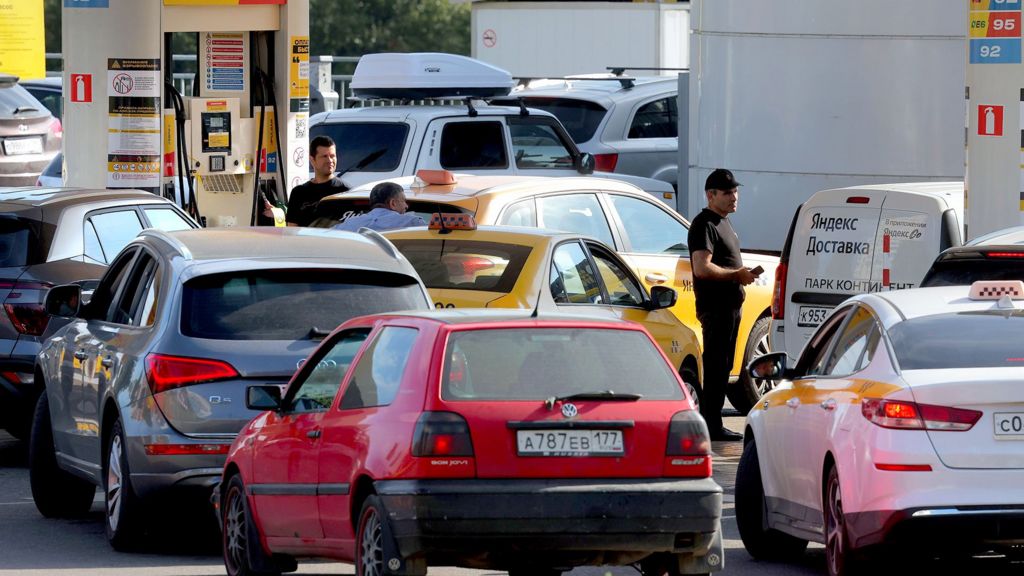
Motorists in Moscow and other Russian regions faced significant fuel shortages this week, resulting in long queues at petrol stations. Drivers reported waiting for hours to refuel, with some stations running out of supplies or closing temporarily. The shortages coincide with public celebrations for Russian Flag Day, where patriotic displays and military hardware demonstrations took place across the capital.
Russian officials attributed the disruption to "unscheduled repairs" at oil refineries. These repairs follow a series of Ukrainian drone strikes targeting Russian oil facilities and infrastructure. While President Vladimir Putin acknowledged that the strikes have inflicted damage, he stated that the consequences were not critical. To manage the supply deficit, the Russian government has begun importing petrol and has temporarily authorized the production and sale of Euro 2, a lower-grade fuel.
Euro 2 petrol, which was banned in Russia in 2013, contains significantly higher sulphur levels than modern Euro 5 fuel. According to the government newspaper Rossiyskaya Gazeta, regular use of this lower-grade fuel can damage modern vehicle components such as fuel injectors, spark plugs, and catalytic converters. In addition to fuel issues, drone strikes on distribution centers for Wildberries, a major online retailer, have caused disruption for Russian shoppers and sellers.
The policy shift allowing lower-grade fuel represents a significant regulatory rollback, as Euro 2 had been prohibited for over a decade. Owners of modern vehicles will notice an immediate change in fuel availability but may face long-term costs associated with reduced engine safety margins and damaged oxygen sensors or soot filters. The reliance on petrol imports marks a notable shift for Russia, which is typically a leading global exporter of crude oil.
The broader impact includes increased public anxiety, as noted by the Public Opinion Foundation and independent analysts who describe a growing disconnect between official government messaging and the daily experiences of citizens. Beyond the fuel pumps, the disruption to logistics networks like Wildberries affects the household economy and the delivery of consumer goods. While the government has not set a specific end date for the use of Euro 2 fuel, the continued drone strikes suggest that the strain on refining capacity and logistics may persist as the conflict continues.