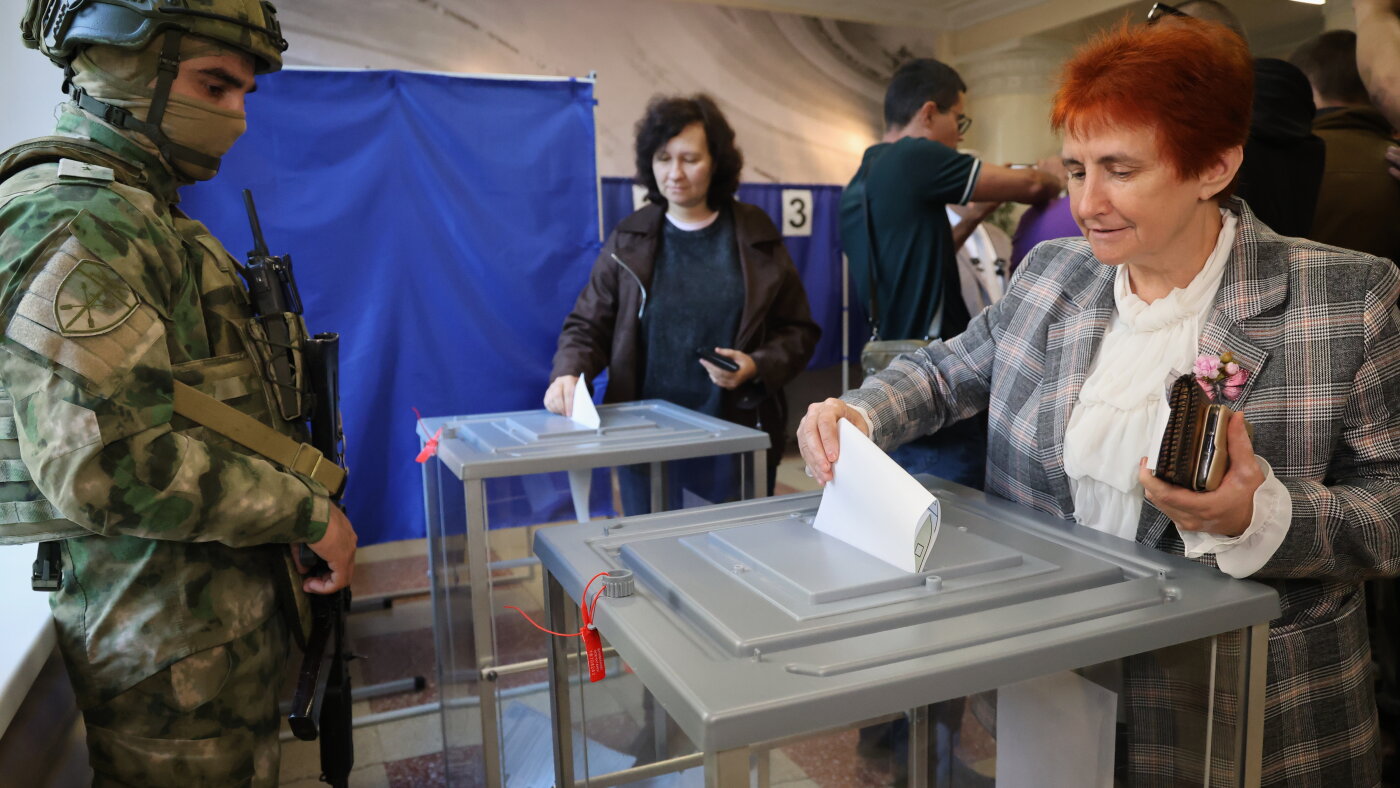
Russia is holding its first parliamentary election that includes residents of Ukrainian territories annexed by Moscow following the 2022 invasion. The balloting for the State Duma, the lower house of Russia's parliament, is occurring in the Donetsk, Luhansk, Kherson, and Zaporizhzhia regions, which Russian authorities refer to as "new regions." While the general vote in Russia runs from Friday to Sunday, officials reported that voting began in the annexed areas and certain border regions late last month for security reasons.
The four regions were annexed by Russia in September 2022, though they remain only partially under Russian military control. This move has not received international recognition. The election also extends to Crimea, the Black Sea peninsula annexed by Russia in 2014. Russian President Vladimir Putin stated in a speech on Wednesday that the vote serves to demonstrate national unity and support for Russian soldiers involved in the conflict.
Ukrainian officials in Kyiv have denounced the elections in these territories as illegal and have urged international organizations and foreign governments to reject the results. A coalition of nine Ukrainian human rights groups advised residents in these areas to avoid the polls for their own safety, characterizing the process as an attempt to legitimize the occupation. European Commission spokesperson Christian Wigand stated that the European Union would not recognize the holding or the results of the elections in these territories, calling them a violation of international law.
Reports from human rights activists indicate that the voting process involves pressure on local residents. Violeta Artemchuk, coordinator of the Donbas SOS human rights group, stated that election commission members, accompanied by Russian troops and security agents, have conducted house-to-house visits to compel participation. Artemchuk noted that public sector workers have been threatened with dismissal, and elderly or disabled residents have been warned that their pensions or social benefits could be withheld if they are deemed "disloyal" by failing to vote.
Russian authorities report that there are more than 3.5 million voters across the four annexed territories. At one polling station in the Donetsk region, voters were observed casting ballots in the presence of an armed Russian soldier. Volodymyr Fesenko, a political analyst at the Penta Center in Kyiv, described the proceedings as a "farce" and a "mockery" of democracy, citing the presence of military force and ongoing hostilities during the electoral process.
The scale of this election is intended by the Kremlin to secure political dominance and indicate public support for the war effort. The outcome will determine the composition of the State Duma, which is the body responsible for passing federal laws in Russia. However, the international community's refusal to recognize the vote creates a situation where the representatives elected from these regions will not be viewed as legitimate by the European Union and other foreign governments.
What happens next depends on the conclusion of the three-day voting period ending this Sunday. While Russian authorities will finalize the count for the State Duma seats, Ukrainian human rights groups continue to monitor the safety of residents in the occupied areas. The European Union has stated it will not recognize the results, suggesting that the election will not alter the current diplomatic standoff regarding the status of the annexed lands.