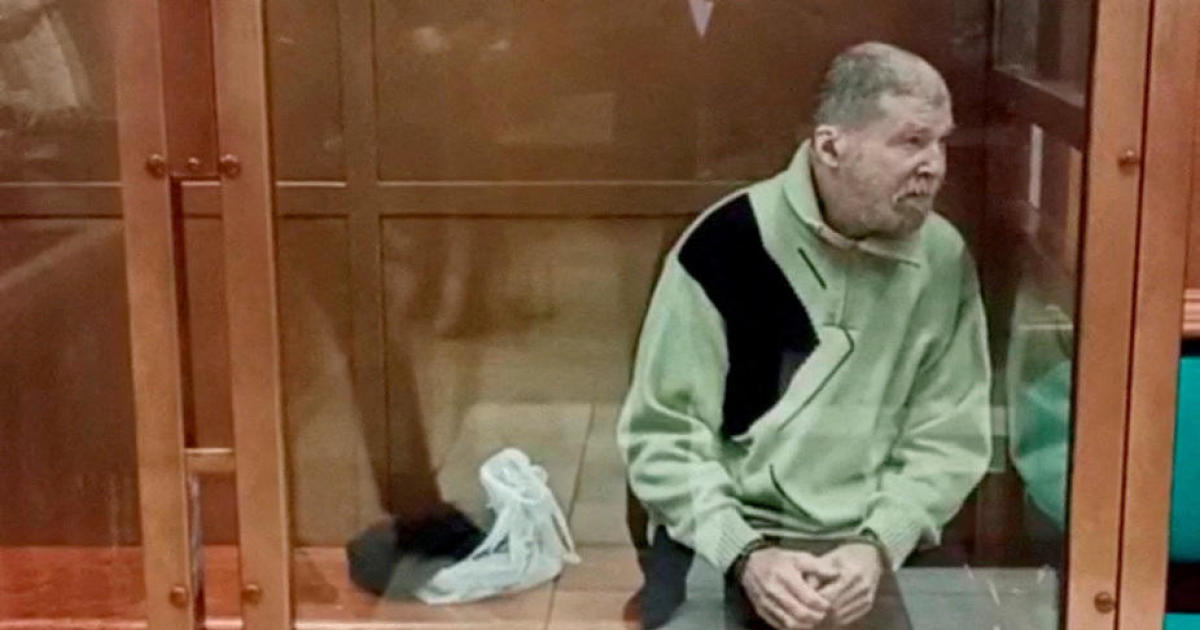
Russian authorities released Stephen Hubbard, a 74-year-old American citizen, from custody on Wednesday, October 21, 2026. U.S. envoy Steve Witkoff confirmed the release during a meeting with Russian President Vladimir Putin at Constantine Palace in St. Petersburg. Hubbard, a retired teacher from Michigan, had been detained for more than four years after being accused of fighting as a mercenary for Ukraine.
Hubbard was captured in Ukraine in early 2022 shortly after the start of the full-scale Russian invasion. Russian prosecutors alleged he had signed a contract with the Ukrainian military and manned a checkpoint. In 2024, he was sentenced to nearly seven years in a penal colony following a trial. The U.S. State Department had formally designated Hubbard as "wrongfully detained," and his family maintained his innocence, with his sister alleging he faced beatings and starvation in custody.
President Donald Trump stated in social media posts that Hubbard was released following a direct telephone request he made to Putin during the previous week. Trump described the release as having "no 'swap' necessary," though he noted the negotiations would have halted if his administration had not stopped new sanctions against Russia from taking effect the prior week. During the meeting in St. Petersburg, Witkoff thanked Putin, calling him a "humanitarian" for his role in the release. Hubbard, reported to be in poor health, was expected to be flown to a military hospital in Texas for medical treatment.
The release affects Hubbard, his family, and at least 10 other Americans, including dual nationals, who remain in Russian custody. Hubbard was the last American in Russia formally designated by the U.S. State Department as "wrongfully detained." While Hubbard is returning to his family, as many as two dozen other Americans remain imprisoned in Russia for various reasons, according to the Foley Foundation. These individuals and their families are directly impacted by the precedent of individual negotiations between the U.S. presidency and the Kremlin, rather than multi-party prisoner swaps.
The diplomatic action involved the waiving of U.S. sanctions that were scheduled to take effect five days prior to the release. The decision affected federal policy and drew criticism from members of Congress, including some Republicans. For the Hubbard family, the release ends a four-year period of limited contact and reported physical deterioration. The U.S. State Department continues to maintain a Level 4 "Do Not Travel" advisory for all U.S. citizens regarding Russia, citing the risk of arbitrary law enforcement and limited consular assistance.
This event follows the August 2026 humanitarian pardon of Robert Gilman, another American who had been imprisoned in Russia for four years. The administration also established a "state sponsor of wrongful detention" designation last year, though it has not applied it to Russia despite doing so for Iran and Afghanistan. Following his arrival at Pulkovo Airport in St. Petersburg on Wednesday, Hubbard is expected to undergo medical evaluation in Texas. The status of other prisoners, such as Aleksandr Antonov, remains unchanged as the State Department continues internal debates over their designations.