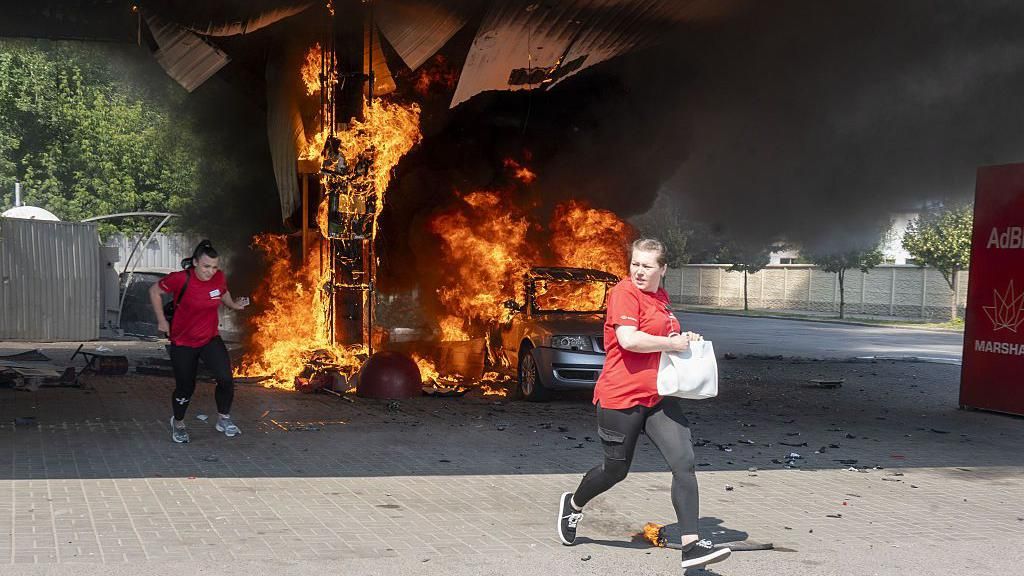
Russian forces have targeted more than 200 petrol stations in Ukraine since April, according to data from the Ukrainian energy think-tank Nafto Rynok. The strikes, which utilize missiles and drones, have led local officials and police to issue safety guidance for motorists. In Kharkiv, Mayor Ihor Terekhov has instructed drivers to fill their tanks quickly and leave, while police in the Dnipropetrovsk region have urged citizens to abandon their vehicles if air raid alerts sound during a stop.
The targeting of civilian fuel infrastructure began in earnest in April and has recently increased in frequency. According to the Centre for Information Resilience, 114 strikes on filling stations were verified in July, an increase from 66 in June. This campaign coincides with Ukrainian drone strikes on Russian oil refineries, which the BBC reports have caused fuel shortages in Russia, where one newspaper reported petrol was available at only 28% of stations last week.
Casualties from recent strikes include two people wounded in Kharkiv on Monday and three people killed in an attack near Kryvyi Rih last week. Oleksandr Sirenko, an analyst at Nafto Rynok, stated that Russia has shifted from using small remote-controlled drones to larger Iranian-made Shahed drones, which cost between $20,000 and $50,000 each. In some instances, multiple drones have been used to strike a single station, exceeding the cost of the facility itself.
The scale of the damage involves at least 246 filling stations nationwide. Despite these numbers, a report by the National Bank of Ukraine indicates that only 4% of the country's total stations have been damaged or destroyed. While specific roads, such as the route between Kharkiv and Dnipro, currently lack functioning stations, the national impact on fuel supply remains limited. Analysts attribute this to Ukraine's reliance on road imports via tanker trucks rather than large, centralized refineries, allowing drivers to typically find fuel by traveling an additional 10 kilometers.
For the average citizen, the immediate change is a shift in daily behavior and safety protocols. Large fuel chains like BRSM Nafta have shortened working hours, reduced staff, and installed concrete shelters and anti-drone nets at forecourts. Customers are observed spending less time at stations, avoiding browsing aisles, and complying with rules that halt operations during air raid alerts. While the market remains saturated enough to prevent panic buying, the persistent strikes require local authorities in villages like Opishnya to maintain decentralized fuel stocks to ensure basic services continue. What happens next depends on the continued frequency of drone deployments and the ability of retailers to rebuild; BRSM Nafta reports it is currently rebuilding two of the eight stations it has lost.