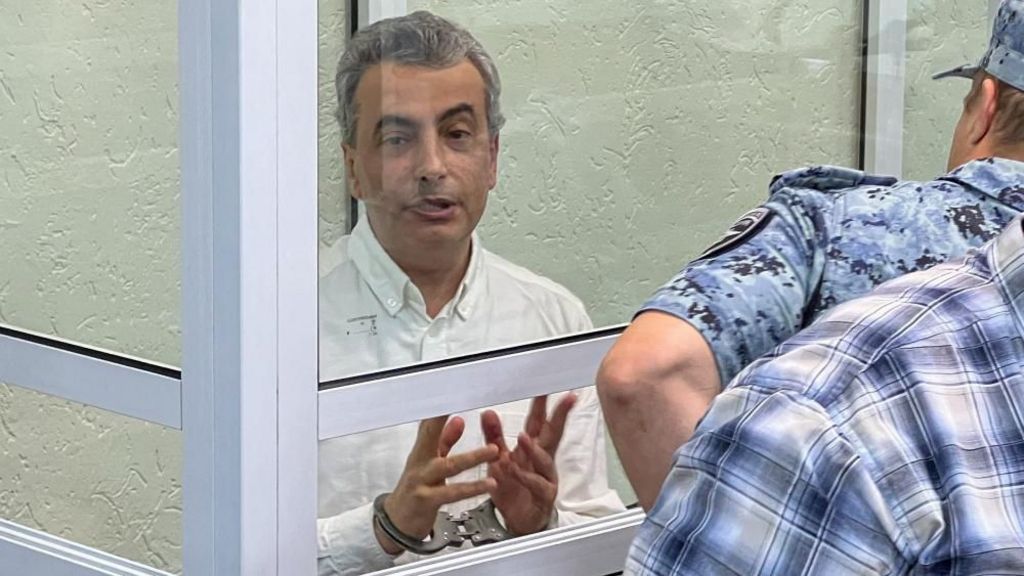
A court in Pskov, Russia, sentenced opposition politician Lev Shlosberg to 11 years and one month in a penal colony on Monday. Shlosberg, 63, was found guilty of "discrediting" the Russian armed forces and "spreading false information" about them. The charges were based on comments the politician published on social media regarding the ongoing conflict in Ukraine.
Shlosberg serves as the deputy head of Yabloko, which is described as the only registered political party in Russia to oppose the 2022 invasion of Ukraine. During his closing speech, Shlosberg rejected the charges and characterized the trial as an "imitation of an investigation" intended to punish his political and civil position. He also repeated his calls for a ceasefire and the initiation of political dialogue.
The sentencing occurred shortly before Russia's Supreme Court dismissed an appeal by the Yabloko party regarding its eligibility for upcoming elections. The party was barred from participating in the September parliamentary elections earlier this month. The disqualification followed accusations that the party supports the "international LGBT movement"—which Russia designates as extremist—and allegations of copyright infringement brought by the Rodina party.
For the Russian electorate, the exclusion of Yabloko means that all 10 remaining parties participating in the September 18-20 elections support the military action in Ukraine. According to the state-owned pollster VCIOM, the ruling United Russia party recently saw its ratings dip to 32.1%, its lowest level since May. However, independent monitors report they have limited ability to challenge or monitor the election process, leaving voters with no anti-war options on the ballot.
The verdict sets a precedent for how social media commentary can lead to decade-long prison sentences under current Russian law. This environment impacts journalists, activists, and ordinary citizens who post political opinions online. While Yabloko has stated it will appeal Shlosberg's sentence, the immediate next steps involve the parliamentary elections scheduled for September 18-20, where the governing party is expected by observers to maintain its position.