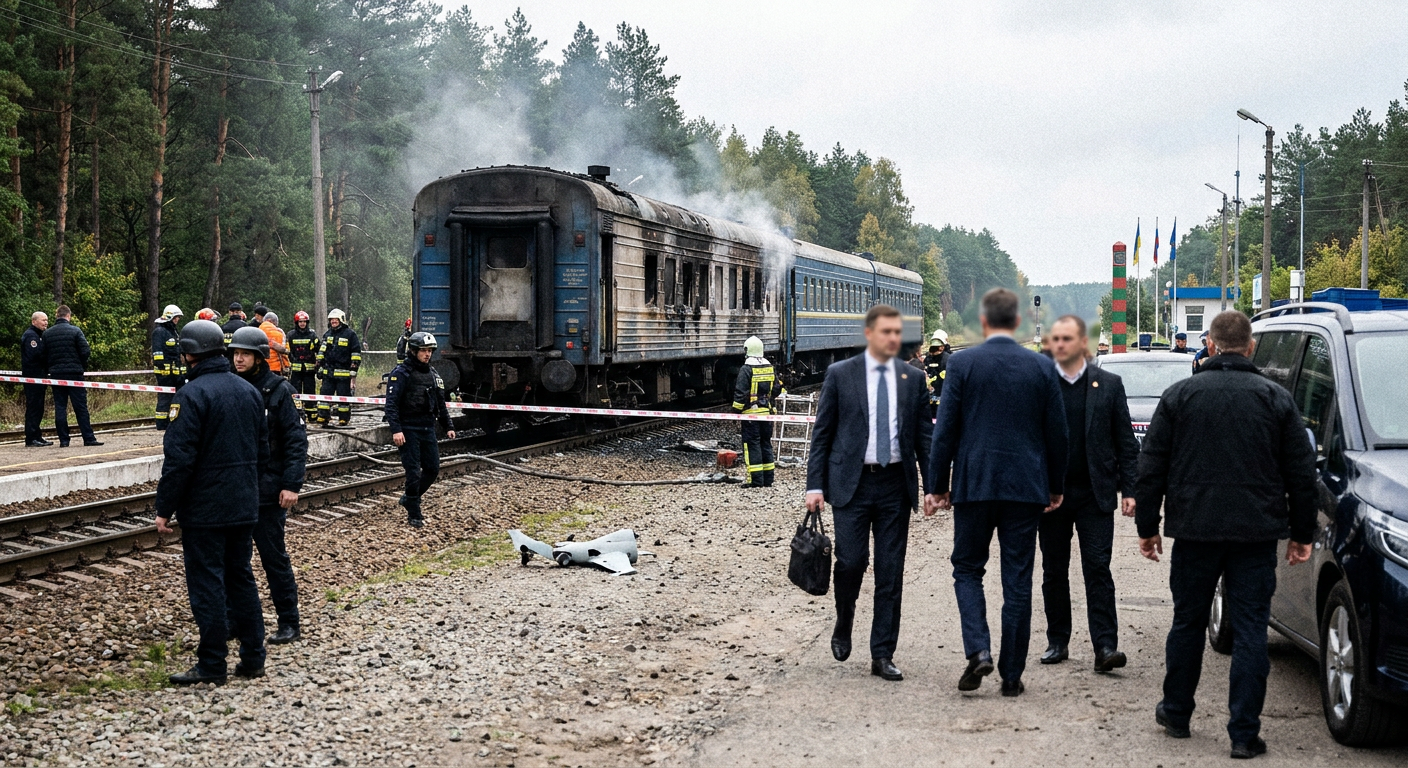
A Russian drone struck the locomotive of a passenger train in Ukraine approximately 2 kilometers (1.2 miles) from the Polish border on Sunday, September 13, 2026. The strike occurred shortly after a separate special train carrying former British Prime Minister Boris Johnson and several European diplomats had traveled along the same line. Ukraine's state railway operator, Ukrzaliznytsia, reported that no casualties occurred in the attack on the Kyiv-Warsaw route, though the train was evacuated as the drone approached.
The incident followed a security conference in Kyiv attended by Western officials, including Günter Sautter, an adviser to German politician Friedrich Merz, as well as diplomats from France, Italy, and Sweden. Ukrzaliznytsia stated that the diplomatic train carrying the officials had its schedule adjusted in real time due to the threat of strikes and departed earlier than originally planned. Ukrainian officials suggested the diplomatic delegation may have been the intended target. Former Swedish Prime Minister Carl Bildt, who was on the special train, said his group was instructed to prepare for evacuation, but the order was canceled after an all-clear was given.
In a separate Sunday morning incident, a drone hit a truck near the Polish border, leading the Dorohusk-Yahodyn crossing point to briefly suspend operations. Russia's Defence Ministry stated its forces targeted infrastructure used to transport European military cargo into western Ukraine. Meanwhile, the mayor of Nizhnekamsk, in the Tatarstan region, reported Ukrainian drone strikes that killed two people and injured several others at civilian and industrial sites. Additionally, Russia’s state nuclear agency Rosatom accused Ukraine of striking fuel trucks near the Zaporizhzhia nuclear power plant, which has been under Russian control since 2022.
The scale of the morning's hostilities involved over 300 attack drones launched by Russian forces, according to Ukrainian reports. The impact reached into Russian territory, as the strike in Nizhnekamsk targeted a region home to major oil refineries. In the Zaporizhzhia region, the reported targeting of fuel trucks near the nuclear plant maintains the risk level for the facility's safety infrastructure. For residents in the Odesa region, continued attacks on Sunday resulted in 24 injuries, including children, according to Ukrainian authorities.
The strikes targeted specific railway and road infrastructure used by foreign delegations and humanitarian or military aid shipments. A person traveling or working near the border would have noticed disruptions, including evacuated trains, halted border processing, and adjusted travel timetables. Moving forward, Polish Prime Minister Donald Tusk has convened a special meeting to discuss the strikes near the border. The Zaporizhzhia plant remains a point of international concern as it stays close to the front line, while both nations have indicated they will continue long-distance strikes against each other's economic and energy infrastructure.