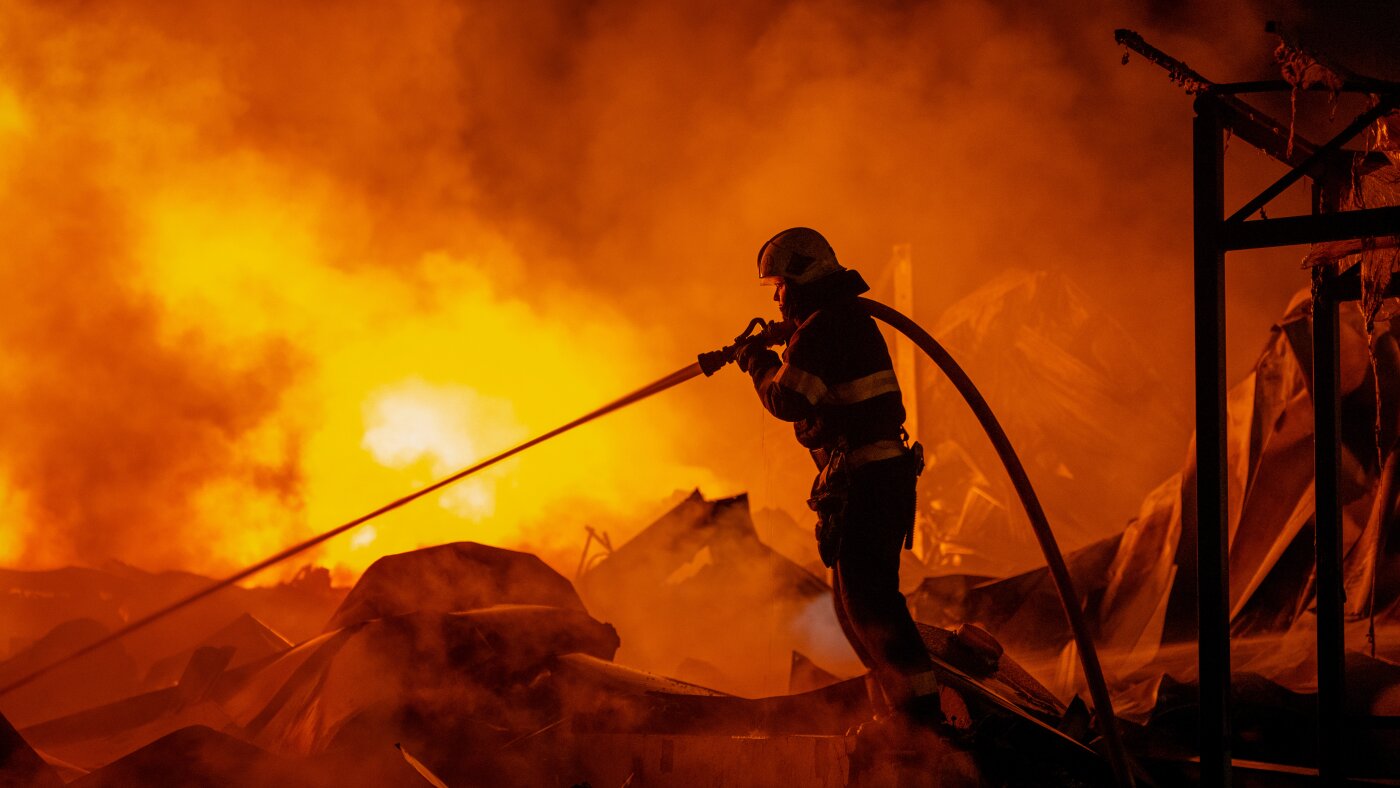
Russian missile and drone strikes on Kyiv and the surrounding region killed 17 people and wounded 44 others overnight into Wednesday. Ukrainian President Volodymyr Zelenskyy reported that the barrage targeted infrastructure, a railway station, and several civilian warehouses, including those belonging to a brewing company and building materials suppliers.
The attacks occur amid a reported shortage of interceptor missiles for Ukraine's U.S.-made Patriot air defense systems. Zelenskyy stated that ballistic interceptors could have prevented the casualties and urged international partners to accelerate the supply of anti-ballistic systems. He noted that the scarcity of these munitions has been exacerbated by the ongoing war in Iran.
Russia's Defense Ministry characterized the operation differently, stating it struck transport, logistics, and distribution centers involved in military activity. Russian officials claimed the sites were storing "dual-use goods" and components for uncrewed aerial vehicles (drones) and electronic warfare systems. Additionally, Russia reported its forces downed 475 Ukrainian drones overnight across 16 Russian regions and the Black Sea.
For residents in the capital region, the lack of interceptor missiles for Patriot systems means a direct change in safety, as these are the only tools in the Ukrainian arsenal capable of stopping ballistic missiles. This shortage translates to a higher likelihood of missiles reaching their targets in civilian or industrial areas. Business operations are also being disrupted on a large scale; Russia's largest online retailer, Wildberries, has seen 14 warehouses catch fire in less than three weeks due to Ukrainian drone strikes, which Ukraine says target goods used by the military.
What happens next depends on international supply chains and stalled diplomatic efforts. While Zelenskyy has accepted a ceasefire proposed by U.S. President Donald Trump, Russian President Vladimir Putin has refused it. The next steps for Ukraine involve continued deep strikes on Russian oil refineries and logistics hubs to pressure negotiations, while the Ukrainian government continues to seek immediate deliveries of air defense ammunition from partner nations. No specific dates for new aid deliveries or peace talks were reported.