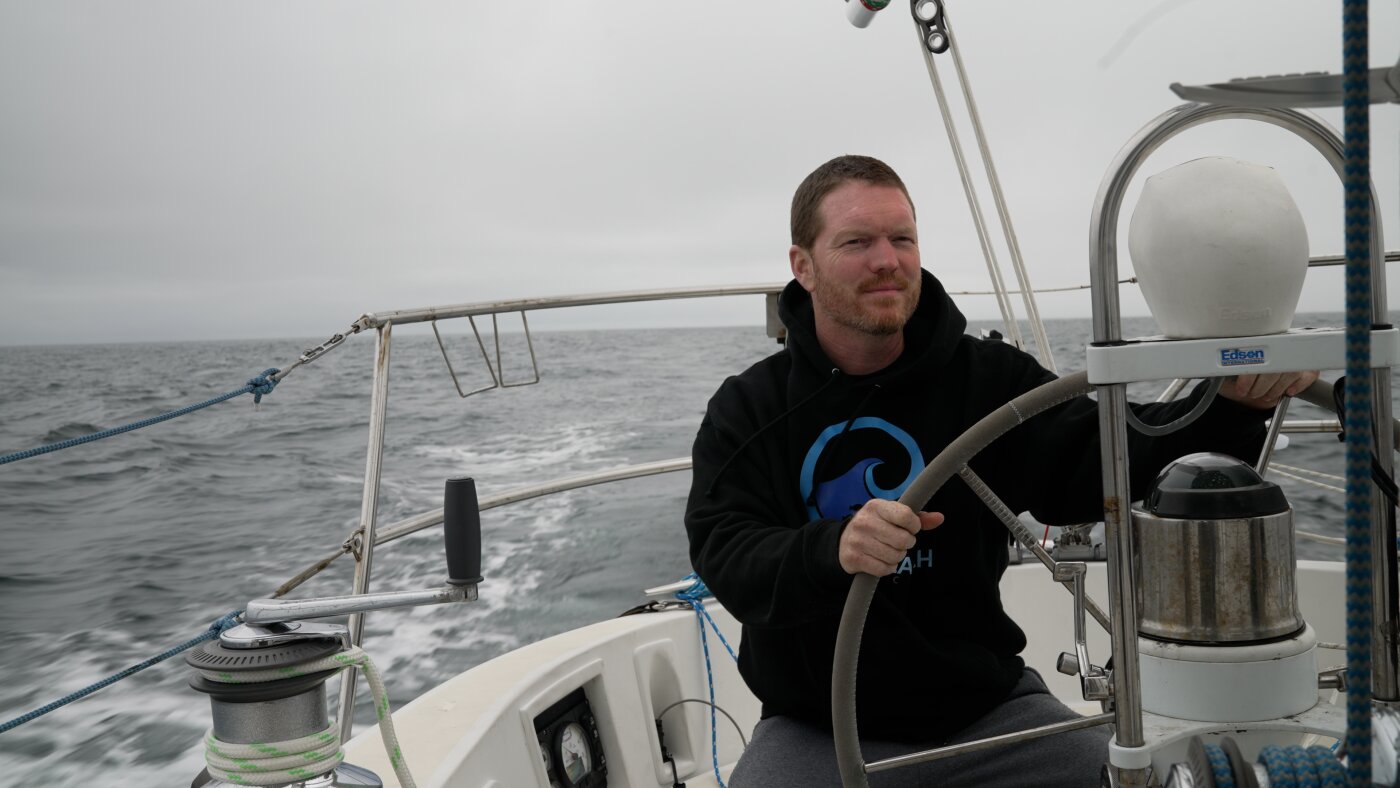
Sailor Matt Rutherford is attempting to become the first person to circumnavigate the Arctic Ocean alone, a journey covering approximately 10,000 nautical miles. Rutherford, a 45-year-old veteran sailor from Annapolis, Maryland, began his voyage on June 25 from the western coast of Greenland. As of this weekend, he has moved through the waters of Norway and Sweden and entered maritime territory controlled by the Russian government.
The expedition serves as a fundraiser for the Ocean Research Project, a climate science nonprofit founded by Rutherford. The organization typically operates a research schooner to study glaciers in Greenland, but Rutherford stated that federal funding cuts for climate science over the last two years led him to undertake this solo voyage to attract new donors. The group seeks funds for repairs, including a new engine for their primary research vessel.
Rutherford is navigating a 42-foot sailboat through the Barents Sea, utilizing radar and thermal binoculars to detect ice floes. The route requires him to traverse the Northern Sea Route along the Russian coast and the Northwest Passage in Canada. To navigate Russian waters, Rutherford obtained a permit for his pleasure craft and must provide daily position reports to Moscow and the FSB, Russia’s security service.
For the maritime and scientific communities, the voyage tests the feasibility of unassisted Arctic circumnavigation in the context of changing environmental conditions. Data from the National Snow and Ice Data Center indicates that Arctic sea ice has decreased by approximately one-third since the early 1980s. While this reduction in ice extent makes certain passages more accessible, Rutherford noted that dense pack ice near eastern Siberia and Alaska remains a significant hazard that could halt the mission.
Rutherford faces a strict seasonal deadline, as he must complete the 10,000-mile journey before the summer season ends. If the transition to fall causes the pack ice to refreeze around his vessel, the boat could become trapped, ending the expedition. Additionally, Rutherford expects to lose communication via his Starlink connection as he moves further into Russian waters, requiring him to navigate without external contact for several weeks. The voyage continues through August, with the final outcome dependent on weather conditions and ice movement in the Canadian and Siberian sectors.