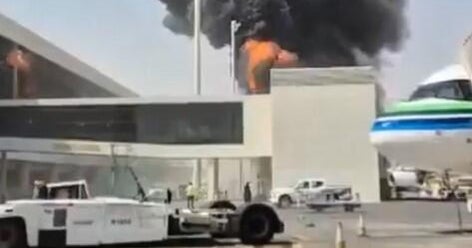
Saudi Arabia is seeking international military support as Houthi militants in Yemen continue to strike infrastructure, including oil refineries and civilian airports, despite the kingdom's multi-billion dollar defense spending. A missile strike on Riyadh’s King Khalid International Airport on October 10 killed 13 people, including one U.S. citizen, according to reporting from CBS and the Associated Press. The Houthis, an Iranian-aligned group, have recently targeted the headquarters of Saudi Aramco and are currently battling Saudi-backed forces for control of the Red Sea coastline.
The kingdom spent $83 billion on its military last year, more than any other Middle East nation, yet it faces geographic challenges and evolving rebel tactics. Analysts from the Washington Institute for Near East Policy and Chatham House noted that Saudi Arabia must defend a vast area roughly one-fifth the size of the U.S. from threats on three sides: Iran-backed groups in Iraq to the north, Iran to the east, and the Houthis to the south. Houthi tactics now involve combining inexpensive drones to distract and exhaust interceptor supplies before launching ballistic and cruise missiles.
A global shortage of interceptor missiles, such as those used in the U.S.-made Patriot system, has further complicated Saudi defense efforts. U.S. Secretary of State Marco Rubio stated on Tuesday, October 13, that demand for these interceptors is stronger than ever, with Saudi Arabia, Israel, and Ukraine all seeking supplies. To bolster its capabilities, Saudi Arabia has invoked a mutual defense pact with Pakistan and Turkey, and has recently secured commitments for defensive air support from the United Kingdom and military assistance from Egypt and France.
The scale of the military effort is significant, involving hundreds of thousands of personnel and billions of dollars in equipment. The Houthis are estimated to have up to 350,000 men under arms and have recently encircled Taiz, a vital logistical hub. While Saudi Arabia has purchased 730 Patriot interceptors from the U.S. since 2020, each unit costs approximately $4 million. In contrast, Houthi drones are often locally made or supplied by Iran at a much lower cost. This financial and material imbalance means that even if Saudi forces intercept the majority of incoming threats, the high cost of defense and the impact of the few missiles that do strike airports or refineries create significant economic and security disruptions.
The immediate focus remains on whether the Houthis can sustain their current pace of attacks or if the surge is a tactic to improve their position for future negotiations. Iran has offered to facilitate talks between Saudi Arabia and Houthi representatives, though Houthi officials claimed they recently rejected short-term truce proposals. The kingdom’s Crown Prince, Mohammed bin Salman, faces the challenge of maintaining his "Vision 2030" goals for tourism and investment amid the threat of renewed strikes. A major milestone is an international investment event in Riyadh scheduled for late October 2026, which will test investor confidence in the region's stability.