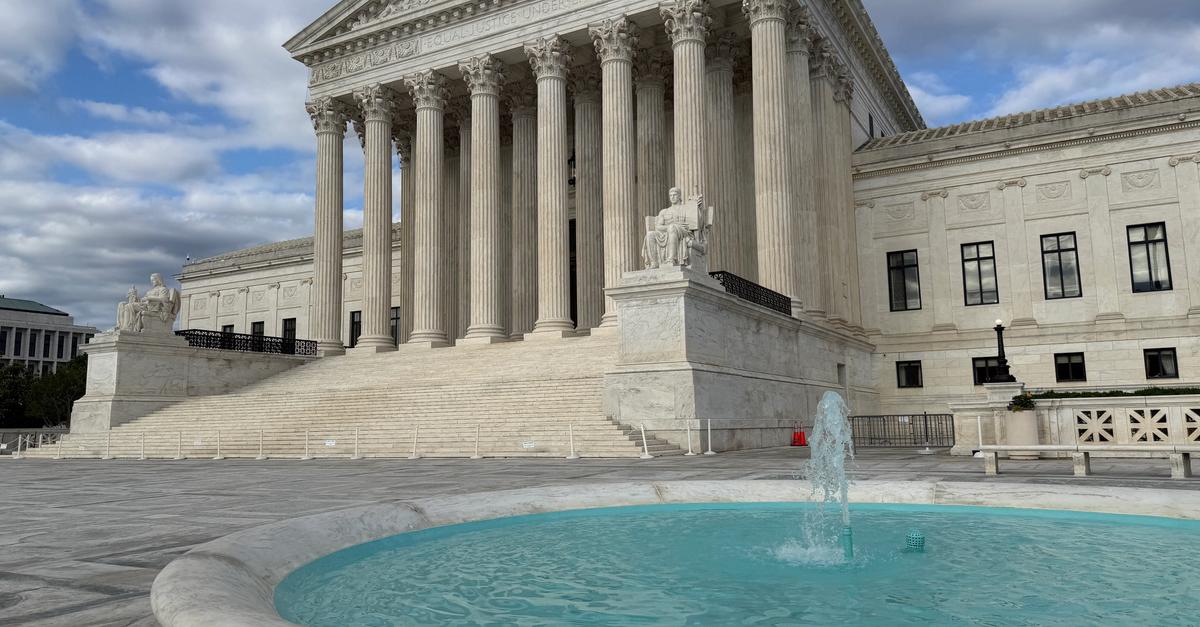
A legal scholar has proposed that the U.S. Supreme Court should hold oral arguments in various locations across the United States rather than strictly at its permanent seat in Washington, D.C. Josh Blackman, a professor at South Texas College of Law Houston, argued in a commentary piece on Tuesday that moving the court's proceedings to different federal circuit courthouses would improve public access to the judiciary and allow the justices to interact with a broader range of citizens.
The Supreme Court has historically followed the seat of government, moving from New York to Philadelphia and then to Washington, D.C. While the court temporarily sat at the U.S. Court of Appeals for the D.C. Circuit during the 2001 anthrax scare, it has largely remained at its One First Street N.E. building. Blackman noted that while the court now live-streams audio of arguments, cameras remain prohibited, and public seating for high-profile cases is limited, often requiring individuals to camp outside for days.
The proposal suggests using existing federal courthouses in cities such as Boston, Manhattan, Philadelphia, Richmond, New Orleans, Cincinnati, Chicago, St. Louis, San Francisco, Denver, and Atlanta. These facilities already contain benches large enough for nine justices and secure space for clerks. Blackman also recommended that justices participate in "goodwill missions" during these trips, such as visiting law schools and holding private, non-recorded meetings with local groups, including police, prosecutors, and civil rights organizations.
For legal professionals, law students, and local civic groups, this change would result in direct, face-to-face engagement with the justices through proposed outreach programs. A person in a city like New Orleans or Cincinnati might see justices visiting their local law schools or participating in community forums. This would mark a shift from the current model where justices typically only appear collectively in the capital or individually during private book tours. The proposal suggests these interactions could help justices hear directly how federal law affects the day-to-day operations of local police departments, public defenders, and government officials.
Implementing such a program would require the U.S. Congress to approve new funding for travel and security logistics. The timeline for these changes is currently undefined, as the proposal is a recommendation from a legal scholar rather than a pending bill or internal court rule. Blackman suggested starting with one outside session per year, which would allow the court to visit every major region of the country over the course of a decade. The next steps would depend on whether members of Congress or the justices themselves choose to formalize the plan into a pilot program.