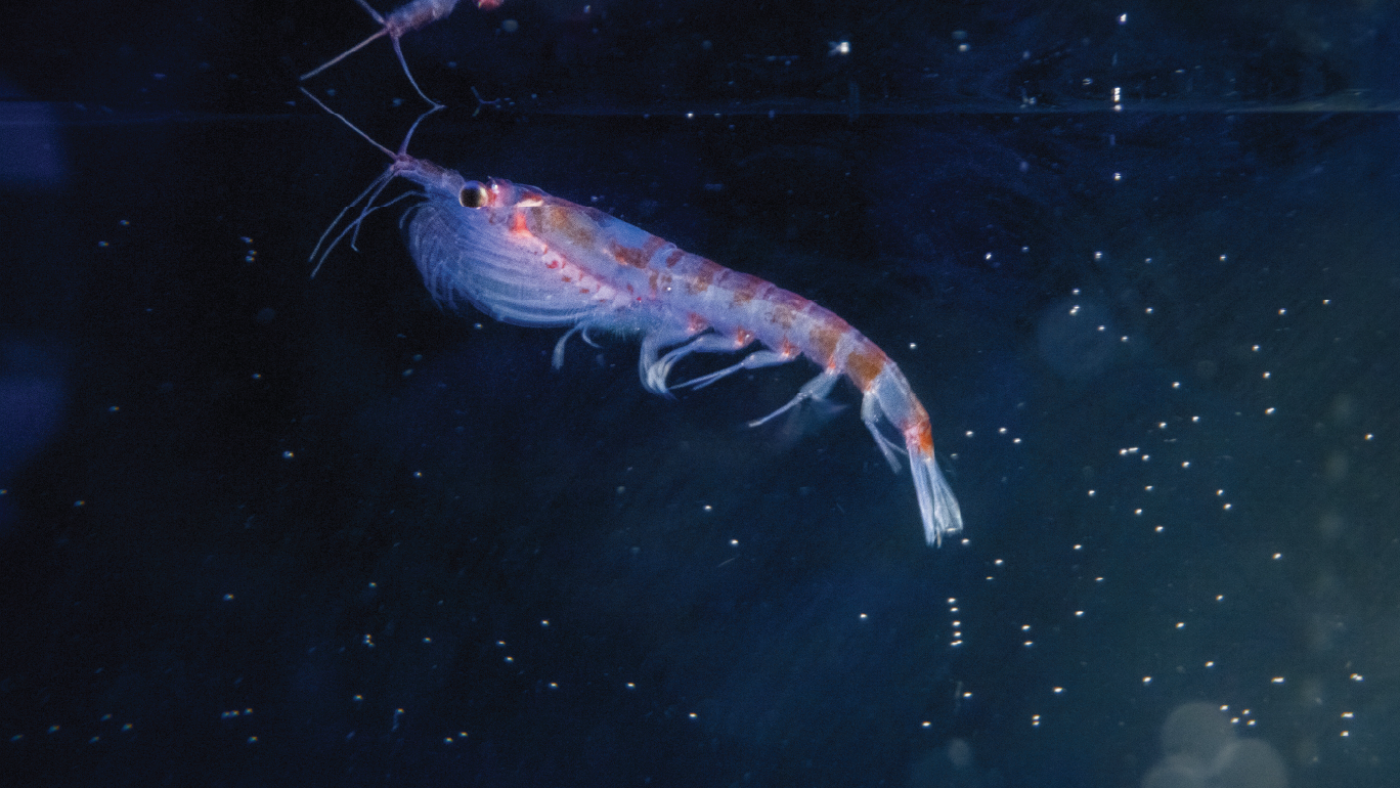
Researchers have identified Antarctic krill living and feeding at deep-sea hydrothermal vents, a discovery that suggests these crustaceans may utilize the seafloor for reproduction. Biological oceanographer Kim Bernard and her colleagues reported the findings in the journal Communications Biology after observing the shrimp-like crustaceans at extreme depths off the Antarctic Peninsula. The discovery occurred during the National Geographic and Rolex Perpetual Planet Southern Ocean Expedition, conducted in collaboration with the Schmidt Ocean Institute.
Antarctic krill typically inhabit the upper layers of the ocean and serve as a primary food source for whales, seals, and penguins. They are also harvested by humans for aquaculture feed and omega-3 supplements. While researchers previously noted krill at various depths, observations at the seafloor were historically sparse and anecdotal. The new research highlights a specific interaction between the species and volcanic vents, which emit hot water, metals, and sulfides from the Earth's crust.
In late 2024, a team using a remotely operated vehicle 3,600 feet below the surface captured video and samples of four female krill at a vent site. Bernard noted that the specimens were carrying eggs and appeared to be feeding on microbes that thrive in the chemical-rich environment. Further analysis of the krill tissue conducted after the expedition showed high levels of manganese, a mineral necessary for crustacean embryo development that is otherwise scarce in the Southern Ocean.
On a concrete level, the research suggests that the deep sea provides year-round microbial food and essential minerals that may speed up embryo development. This means that krill populations might rely on these specific, localized sites on the ocean floor to successfully reproduce. While the exact number of krill utilizing these vents is not yet quantified, the team observed similar activity at a second vent site 1,000 miles away two months after the initial discovery, indicating the behavior is not an isolated event.
The findings have potential implications for international maritime policy and conservation. Simeon Hill, a marine ecologist at the British Antarctic Survey, stated that while the study does not prove krill are dependent on these habitats, it demonstrates their resilience and flexibility. Hill suggested that the discovery supports the development of marine protected area processes that could be updated as new vulnerable habitats are found. Currently, it is not reported when new conservation measures might be proposed or implemented based on this data.
Future research will likely focus on determining the extent to which deep-sea environments are critical to the krill reproductive cycle. Scientists aim to understand the trade-off between the energy required to reach these depths and the benefits of the nutrients found there. The next steps for the research team involve further analysis of how these habitats might buffer the species against the effects of warming surface waters in the Antarctic region.