The Plain Record

Neutral daily news — clear headlines, complete facts.

General

Scientists warn of rising frequency in extreme weather events as global temperatures increase

Climate scientists warn that rising greenhouse gas levels are increasing the frequency of extreme weather events, pointing to recent floods, fires, and record temperatures.

Published August 24, 2026 at 9:08 AM EDT

The short answer

Climate scientists warn that rising greenhouse gas levels are increasing the frequency of extreme weather events, pointing to recent floods, fires, and record temperatures. Climate scientists are cautioning that the frequency and intensity of extreme weather events, including heat waves, storms, and floods, are increasing due to the buildup of greenhouse gases in the atmosphere.

Scientists warn of rising frequency in extreme weather events as global temperatures increase

The Facts

Who
Climate scientists including Daniel Swain, Sarah Perkins-Kirkpatrick, Sonia Seneviratne, and Tim Lenton.
What
Increasing frequency and intensity of extreme weather events due to greenhouse gas buildup.
When
Ongoing; specific data reported through 2025 and 2026.
Where
Global; specific impacts cited in Australia, Pakistan, the United Kingdom, and the United States.
Why
Greenhouse gases from fossil fuels have raised global temperatures by 1.44 degrees Celsius, leading to more frequent storms, floods, and heat waves.

Timeline of what happened

Key dates and decisions, in the order they occurred.

  1. January 1, 1850

    Eunice Newton Foote discovers heat-trapping properties of carbon dioxide

  2. January 1, 2019

    Australia "Black Summer" wildfires begin, eventually scorching 19 million hectares

  3. January 1, 2022

    Flooding leaves one-third of Pakistan underwater

  4. January 1, 2022

    UK Climate Risk Assessment predicts 0.02% chance of 40C heat before 2040

  5. June 1, 2022

    Parts of the United Kingdom record temperatures above 40C

  6. January 1, 2023

    Two-year period begins in which 84% of global corals suffer heat stress

  7. January 1, 2024

    Hurricanes Milton and Helene impact the southern United States

  8. January 1, 2025

    Average global temperature reaches 1.44 degrees Celsius above early 1800s levels

  9. January 1, 2050

    Target year for net-zero emissions set by various countries and companies

Climate scientists are cautioning that the frequency and intensity of extreme weather events, including heat waves, storms, and floods, are increasing due to the buildup of greenhouse gases in the atmosphere. Researchers note that while it is difficult to predict the exact timing of catastrophic weather events, current climate modeling shows the window of time between such occurrences is shrinking.

The relationship between greenhouse gases and temperature was first observed in the 1850s by amateur scientist Eunice Newton Foote, who found that carbon dioxide trapped heat longer than other substances. By 2025, global average temperatures had risen 1.44 degrees Celsius (2.59 degrees Fahrenheit) above levels recorded in the early 1800s. Scientists attribute this rise to the burning of coal, gas, and oil, which releases carbon dioxide and other gases that remain in the atmosphere for centuries.

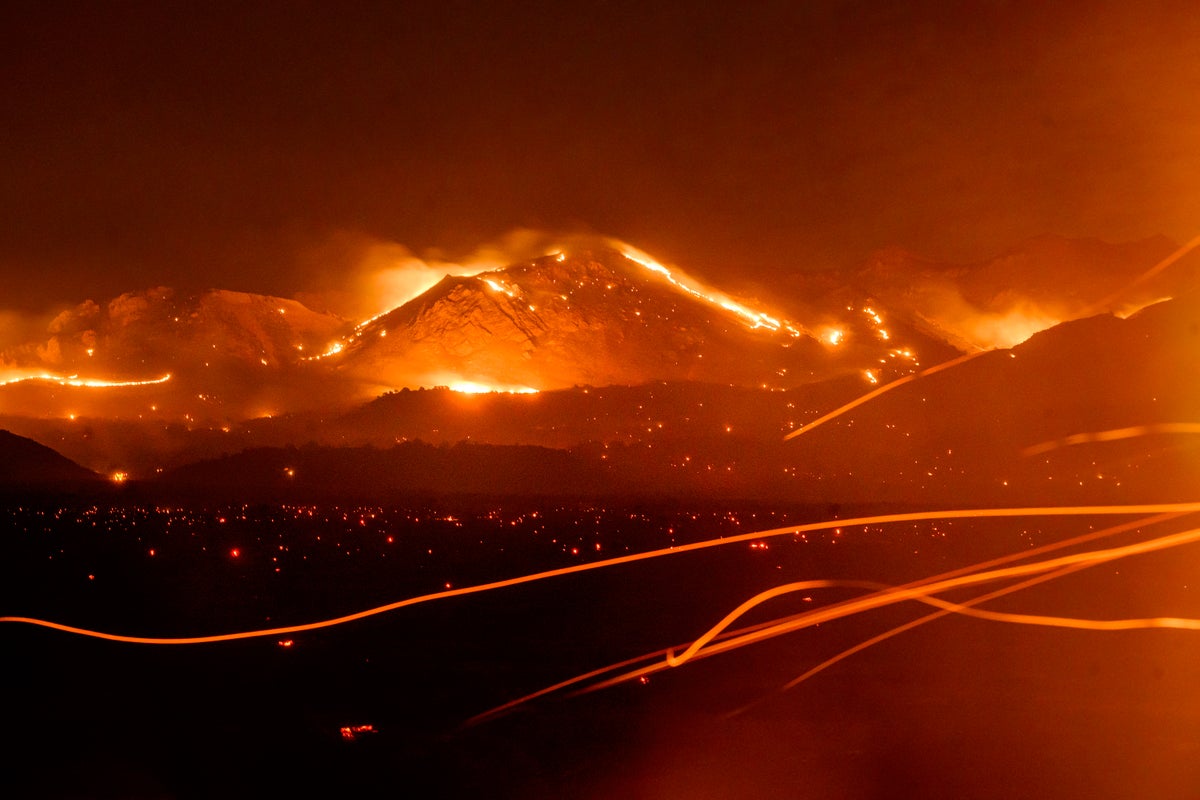
Several recent events serve as examples of this trend, according to data from the National Oceanic and Atmospheric Administration and other agencies. These include Australia’s 2019-2020 "Black Summer" wildfires that burned over 46 million acres, the 2022 flooding in Pakistan that submerged one-third of the country, and Hurricanes Milton and Helene in 2024. Additionally, 84% of global corals experienced heat stress between 2023 and 2025, a condition that often leads to coral death.

For residents in vulnerable areas, such as the southern United States or coastal Southeast Asia, these shifts manifest as more destructive hurricanes, typhoons, and flooding. The report highlights that no country is currently fully prepared for a major climate disaster, though some local initiatives have shown measurable results. In Los Angeles, retrofitting programs led by seismologist Lucy Jones and former Mayor Eric Garcetti have been implemented to prepare for geological disasters, providing a potential template for weather-related infrastructure updates.

The long-term impact involves "tipping points," where planetary systems like the Amazon rainforest or coral reefs may reach a threshold of deterioration from which they cannot recover. Current projections indicate the Amazon may eventually release more carbon dioxide than it absorbs due to drought and deforestation. Future policy decisions regarding the "Green New Scam"—a term used by President Trump to describe climate initiatives—will determine the scale of government-led mitigation efforts as the United States, the largest historical producer of greenhouse gases, navigates its climate strategy.

Next steps for climate monitoring include observations of the current El Niño cycle, which is expected to be the strongest ever recorded and may lead to further record-breaking temperatures. While many countries and corporations have established net-zero targets for 2050, scientists emphasize that current warming of 1.44 degrees Celsius continues to drive immediate changes in global weather patterns.

Summaries are written by The Plain Record to state the facts of a story plainly and without political slant. See our editorial standards, or report a correction.

← Back to the front page

Questions readers ask

What happened: Scientists warn of rising frequency in extreme weather events as global temperatures increase?

Increasing frequency and intensity of extreme weather events due to greenhouse gas buildup.

Who is involved?

Climate scientists including Daniel Swain, Sarah Perkins-Kirkpatrick, Sonia Seneviratne, and Tim Lenton.

When did this happen?

Ongoing; specific data reported through 2025 and 2026.

Where did this happen?

Global; specific impacts cited in Australia, Pakistan, the United Kingdom, and the United States.

Why does this matter?

Greenhouse gases from fossil fuels have raised global temperatures by 1.44 degrees Celsius, leading to more frequent storms, floods, and heat waves.