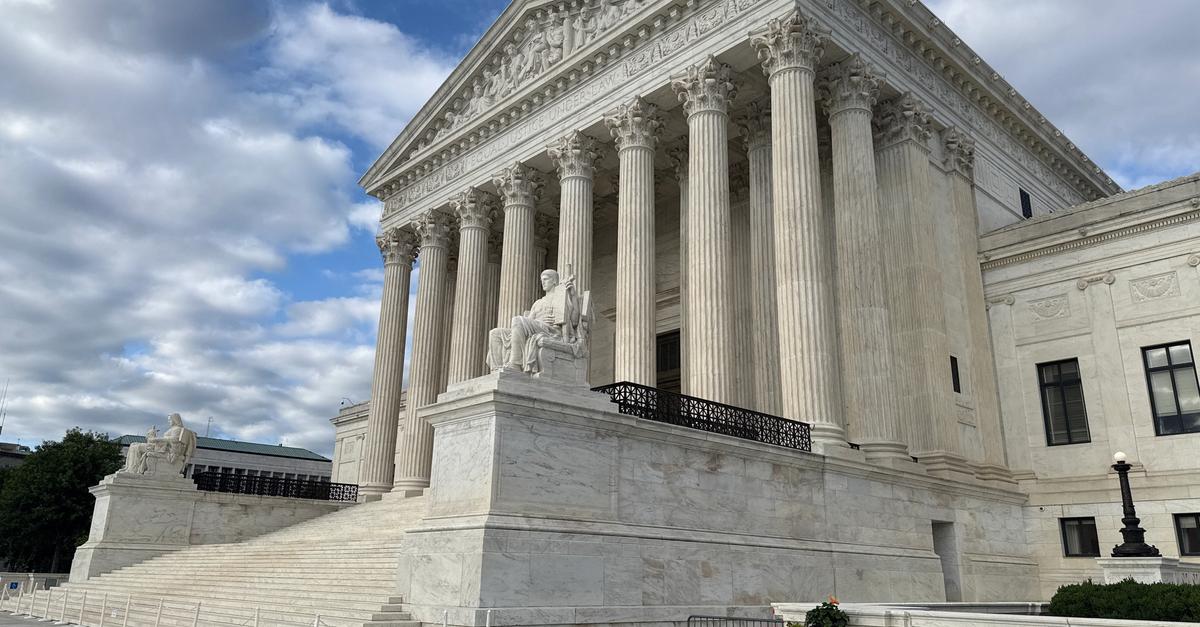
SCOTUSblog and Good Judgment Inc. announced a public forecasting challenge to predict the outcomes of the U.S. Supreme Court’s 2026-27 term. The contest allows participants to test their predictions for significant cases against artificial intelligence models. Participants can register for free on the GJ Open website using an email, Google, or Facebook account.
The project is led by Ryan Adler, a managing director at Good Judgment Inc., who provided tips for analyzing cases. The contest draws on the history of the Good Judgment Project, a 2011 competition launched by the U.S. intelligence community’s IARPA to identify methods for forecasting geopolitical events. That project resulted in methods that outperformed intelligence analysts with access to classified data.
Forecasters in the current challenge are asked to choose the likelihood of a case being decided in a specific direction. According to the organizers, significant cases will be added to the challenge page as the court grants review. The three highest-performing forecasters will be identified on SCOTUSblog in July, with the possibility of receiving promotional items as prizes.
Adler’s guidance for participants includes reviewing the questions presented by the petitioning and responding parties and analyzing the decision from the lower court. He noted that oral arguments are typically the only new information available between the grant of review and a final decision, though he cited potential vacancies or opinion leaks as other relevant factors. He advised participants to forecast based on what they anticipate will happen rather than their personal preferences.
The contest involves potential participants who will analyze cases that determine federal law and constitutional rights. While the current contest is a public challenge, it is preceded by a 2002-2003 study where a statistical model correctly predicted 75% of Supreme Court outcomes, while a group of legal experts correctly predicted 59.1% of the same cases.
For participants, the experience involves monitoring the court's docket and adjusting probability estimates for specific rulings. The project seeks to find out if artificial intelligence models have overtaken humans in predicting the court's outcomes. The results of this 2026-27 challenge are scheduled to be finalized in July 2027, when the winners will be announced. Participants may update their forecasts for specific cases until a decision is officially handed down by the Supreme Court.