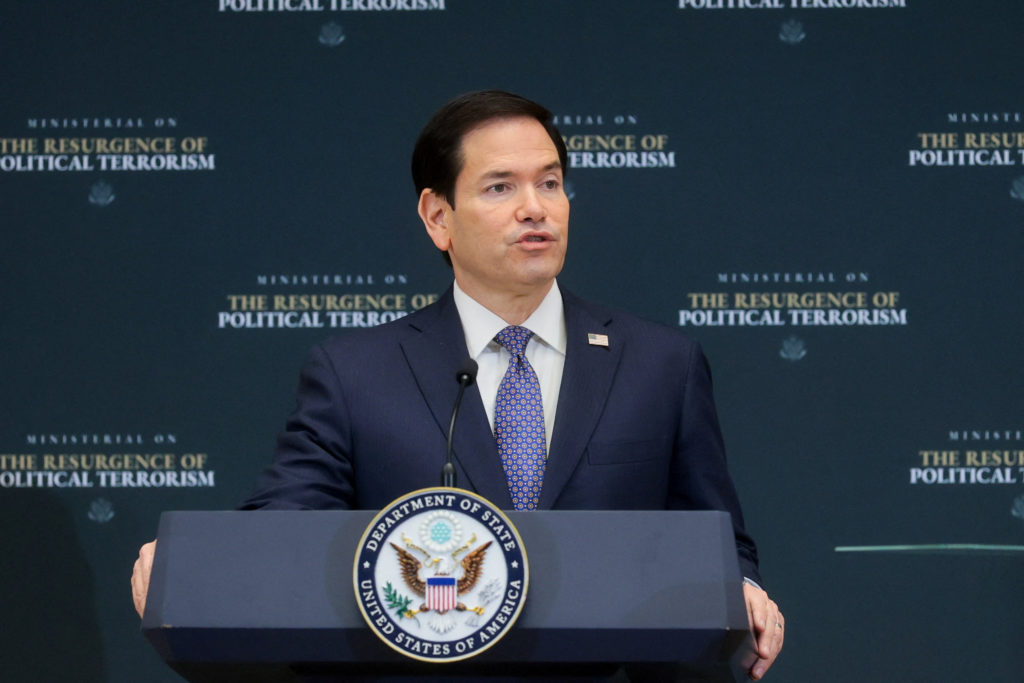
Secretary of State Marco Rubio hosted a conference on Thursday with leaders from more than 60 nations to discuss strategies for addressing what the Trump administration identifies as left-wing political terrorism. During his opening remarks, Rubio stated that violence motivated by Marxist or communist ideologies has historically been treated with more leniency than far-right violence by those in power. He called for international cooperation to address these activities, which he described as a previous "blind spot" in counterterrorism efforts.
The administration’s focus comes as various agencies and officials begin implementing new measures to target these groups. Treasury Secretary Scott Bessent announced that the U.S. is mobilizing financial counterterrorism tools, originally developed for foreign threats, to disrupt the networks of domestic left-wing organizations. In November, the State Department designated four European anti-fascist groups as foreign terrorist organizations. Deputy Chief of Staff Stephen Miller also addressed the conference, arguing that the protection of national institutions requires a high level of urgency and force.
Data regarding the frequency of political violence shows varying trends. A 2025 report from the Center for Strategic and International Studies (CSIS) noted that left-wing incidents surpassed right-wing incidents for the first time in three decades during the first half of 2025. However, the report also highlighted that right-wing violence has historically remained at higher average levels over the last decade. CSIS researchers emphasized that while left-wing incidents saw a recent uptick starting from a low baseline, both ends of the political spectrum require monitoring.
The conference aligns with broader administration rhetoric ahead of the upcoming midterm elections. President Donald Trump and other Republican leaders, including Vice President JD Vance and House Speaker Mike Johnson, have frequently addressed the influence of Marxism and communism in U.S. politics. Critics of the administration's approach have argued that these efforts often conflate democratic socialism and legislative policy goals, such as healthcare reform, with radical ideologies.