The Plain Record

Neutral daily news — clear headlines, complete facts.

National

Secretary of State Rubio Says Venezuela Interim Government Permitted Machado's Return

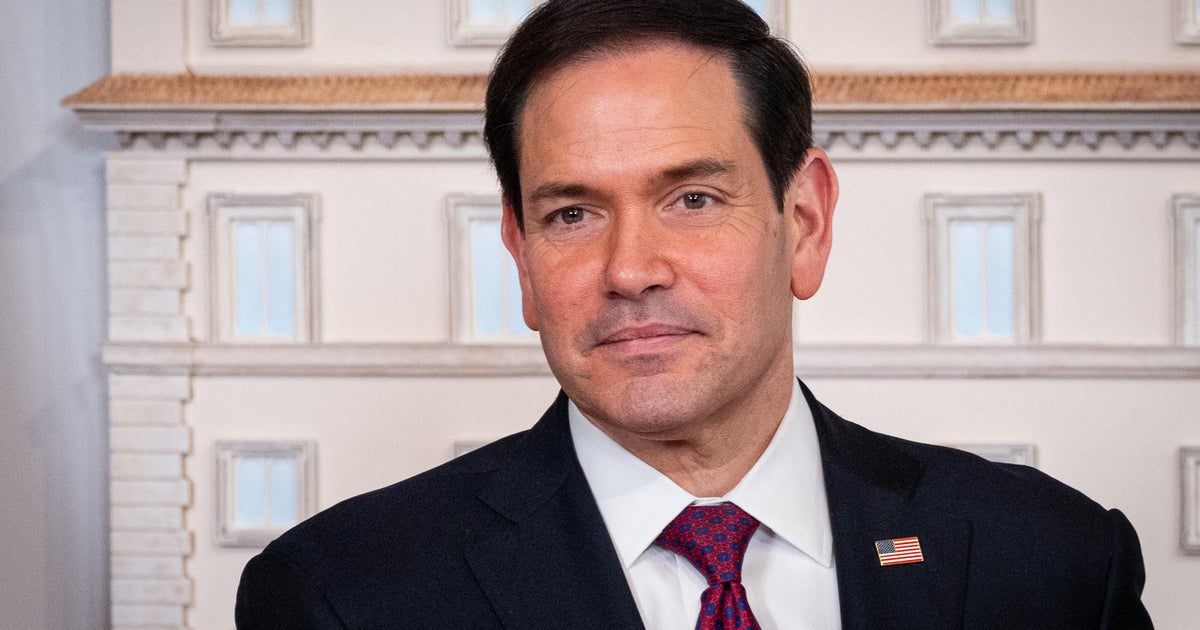
Secretary of State Marco Rubio said Venezuelan interim authorities agreed weeks ago to allow opposition leader María Corina Machado to return to the country.

Background: The Insurrection Act, explained: when a president can deploy troops inside the United States

Published October 26, 2026 at 8:20 PM EDT

The short answer

Secretary of State Marco Rubio said Venezuelan interim authorities agreed weeks ago to allow opposition leader María Corina Machado to return to the country. U.S. Secretary of State Marco Rubio stated on Monday, Oct. 26, 2026, that Venezuela's interim government assured the United States "weeks and weeks" ago that opposition leader María Corina Machado would be permitted to return to the country without interference.

Secretary of State Rubio Says Venezuela Interim Government Permitted Machado's Return

The Facts

Who
Secretary of State Marco Rubio, opposition leader María Corina Machado, and interim President Delcy Rodríguez
What
Secretary of State Marco Rubio announced that Venezuela's interim government had previously agreed to allow opposition leader María Corina Machado to return to the country without interference.
When
Monday, October 26, 2026
Where
Washington, D.C. and Caracas, Venezuela
Why
The return of the opposition leader is a key step in a U.S.-backed political transition aimed at holding presidential elections in 2027 following the capture of Nicolás Maduro.

U.S. Secretary of State Marco Rubio stated on Monday, Oct. 26, 2026, that Venezuela's interim government assured the United States "weeks and weeks" ago that opposition leader María Corina Machado would be permitted to return to the country without interference. Machado returned to Caracas on Sunday, Oct. 25, 2026, marking her first appearance in the country since fleeing nearly a year ago.

Machado had been in hiding for much of 2025 before departing in December 2025 to accept the Nobel Peace Prize in Norway. Following her departure, U.S. military forces captured Nicolás Maduro in January 2026 and brought him to the U.S. to face drug-trafficking charges. Maduro's former vice president, Delcy Rodríguez, assumed control of the interim government and has remained in power beyond the authorized timeframe for a transition, with no new election date yet established.

Secretary Rubio told reporters that the U.S. communicated its expectation to interim authorities that Machado, as a Venezuelan citizen, should be allowed to return "unperturbed." According to Rubio, the Rodríguez government responded that Machado was free to fly into the airport. Rubio noted he had previously discouraged her return only in June 2026, following earthquakes, to ensure humanitarian relief flights had logistical priority.

The U.S. is pushing for a political transition that involves reforming Venezuela's Supreme Court and electoral council. Rubio stated that the interim government has met agreed-upon timelines for these institutional changes, which he described as necessary before holding credible elections. Last week, Venezuelan authorities and opposition figures agreed on a blueprint for electoral reforms intended to facilitate a vote at some point in 2027.

The U.S. involvement includes the capture and extradition of senior figures like Maduro and his associate Alex Saab, alongside the use of U.S. leverage to set reform deadlines. A failure to reach a negotiated transition could lead to armed conflict or a return to an authoritarian system, according to Rubio. Residents would notice these impacts through changes in political rights, such as access to a free press and online media platforms, which Rubio identified as essential for an "election architecture."

The next steps in the transition include the overhaul of the judicial and electoral infrastructure throughout 2026 and 2027. While no specific date for a presidential election has been set, the U.S. expects the process to culminate in a vote in 2027. In the interim, Rubio indicated the U.S. will continue to monitor compliance with national security demands, including the reduction of Iranian and Cuban influence in the region. The Trump administration has also called for political changes in Cuba, though Rubio stated that situation is a separate case from the Venezuelan transition.

Timeline of what happened

Key dates and decisions, in the order they occurred.

  1. December 2025

    Machado leaves Venezuela for Norway to accept Nobel Peace Prize

  2. January 2026

    U.S. forces capture President Maduro; Delcy Rodríguez takes control

  3. June 2026

    Earthquakes in Venezuela; Rubio discourages Machado's return during relief effort

  4. October 25, 2026

    Machado returns to Caracas after 10-month exile

  5. October 26, 2026

    Secretary Rubio discloses prior U.S. communications regarding Machado's return

  6. 2027

    Target year for Venezuelan presidential elections under reform blueprint

Summaries are written by The Plain Record to state the facts of a story plainly and without political slant. Drafted with AI assistance and checked against the source record before publication. See how we report, or report a correction.

← Back to the front page

Questions readers ask

What happened: Secretary of State Rubio Says Venezuela Interim Government Permitted Machado's Return?

Secretary of State Marco Rubio announced that Venezuela's interim government had previously agreed to allow opposition leader María Corina Machado to return to the country without interference.

Who is involved?

Secretary of State Marco Rubio, opposition leader María Corina Machado, and interim President Delcy Rodríguez

When did this happen?

Monday, October 26, 2026

Where did this happen?

Washington, D.C. and Caracas, Venezuela

Why does this matter?

The return of the opposition leader is a key step in a U.S.-backed political transition aimed at holding presidential elections in 2027 following the capture of Nicolás Maduro.