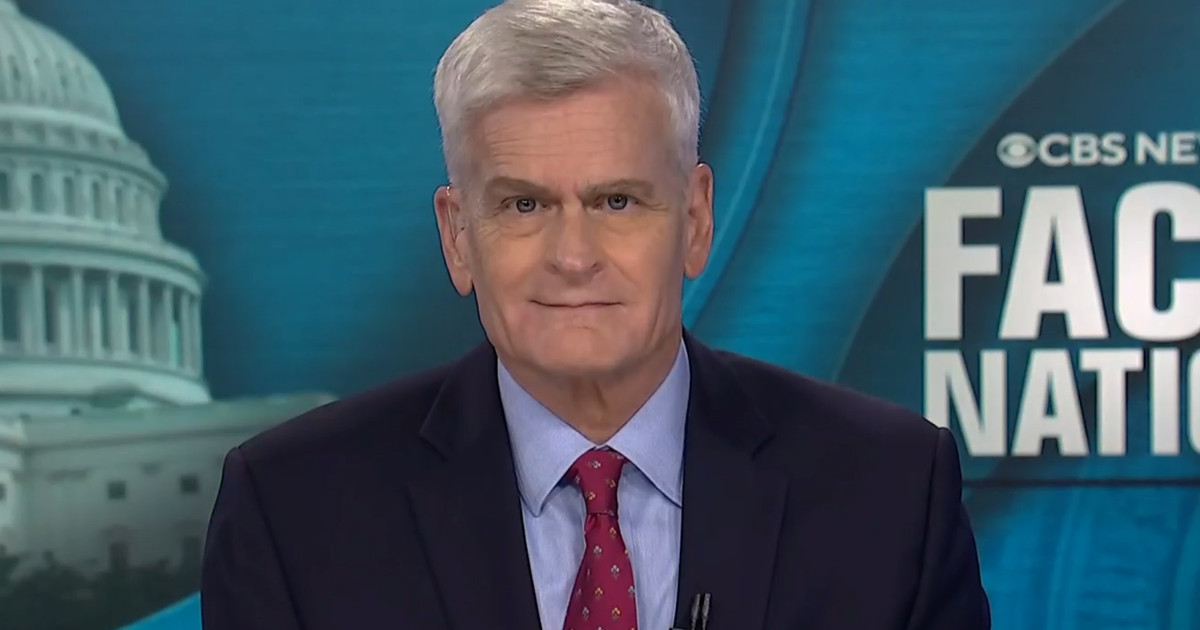
Sen. Bill Cassidy (R-LA) addressed several national issues on Sunday, Sept. 20, 2026, including federal debt and childhood vaccine policy. Cassidy, who chairs the Senate Health, Education, Labor, and Pensions (HELP) Committee, stated that he considers a proposed $5,000 payment to Americans to be "inflationary" and expressed concern over rhetoric from President Donald Trump regarding the safety of vaccines.
The interview followed reports that Donald Trump Jr. repaid Umar Kremlev, a Russian billionaire, for costs related to a wedding in the Bahamas. While the payment was originally described as a gift, Cassidy noted that while repayment "makes a difference," the $250,000 gift should not have been accepted initially due to Kremlev's ties to the Kremlin and the potential for public distrust.
On economic matters, Cassidy criticized a proposal to distribute $5,000 to citizens if Republicans win upcoming midterm elections. He stated that government borrowing for such payments would increase interest rates for mortgages, car loans, and credit cards. Cassidy argued that addressing the national debt, which currently stands at $40 trillion, would serve as a better economic stimulus. He specifically advocated for legislative action to address Social Security insolvency, noting that the program accounts for 20% of national indebtedness.
Regarding public health, Cassidy responded to comments by President Trump, who recently suggested splitting childhood vaccines into five doses to reduce autism and labeled the MMR vaccine "lethal." Cassidy, a physician, stated that vaccines are safe and that the current regimen is designed for parental convenience. He warned that discouraging immunization could lead to more hospitalizations and deaths from diseases like measles. He noted that while one recent death in Pennsylvania was "associated with" measles, coroners have ruled three other deaths—including an 18-year-old and a 40-year-old—were "caused by" the disease.
The Senator also discussed the upcoming confirmation process for health officials. He stated that Dr. Nicole Saphier, the nominee for Surgeon General, earned his vote by testifying that vaccines are safe. However, he described the presence of Dr. Heidi Overton at a signing for an executive order on vaccine schedules as "almost disqualifying" for her nomination to lead the Food and Drug Administration (FDA). Cassidy said he needs to hear Overton acknowledge that calling the measles vaccine lethal is "absurd" before supporting her confirmation.
The economic proposals discussed affect nearly every American household, particularly those seeking to manage debt or qualify for loans. With the national debt at $40 trillion—approximately $120,000 per citizen—Cassidy’s opposition to a $5,000 direct payment highlights a split within the Republican party over fiscal stimulus versus debt reduction. If the $5,000 payment were enacted through borrowing, Cassidy notes that a typical family would face higher monthly bills for their mortgage and credit cards due to inflationary pressure and rising interest rates.
The focus now turns to the Senate HELP Committee, which is scheduled to hold a hearing for FDA nominee Dr. Heidi Overton in the coming week. The committee's decision will determine the leadership of the agency responsible for regulating vaccine manufacturers and ensuring the safety of pharmaceutical products. Furthermore, the CDC is currently working to finalize a formal definition for "measles-related death" to resolve discrepancies between coroners' reports and federal data. These administrative and legislative steps will shape national health policy and fiscal strategy as the country approaches the midterm elections.