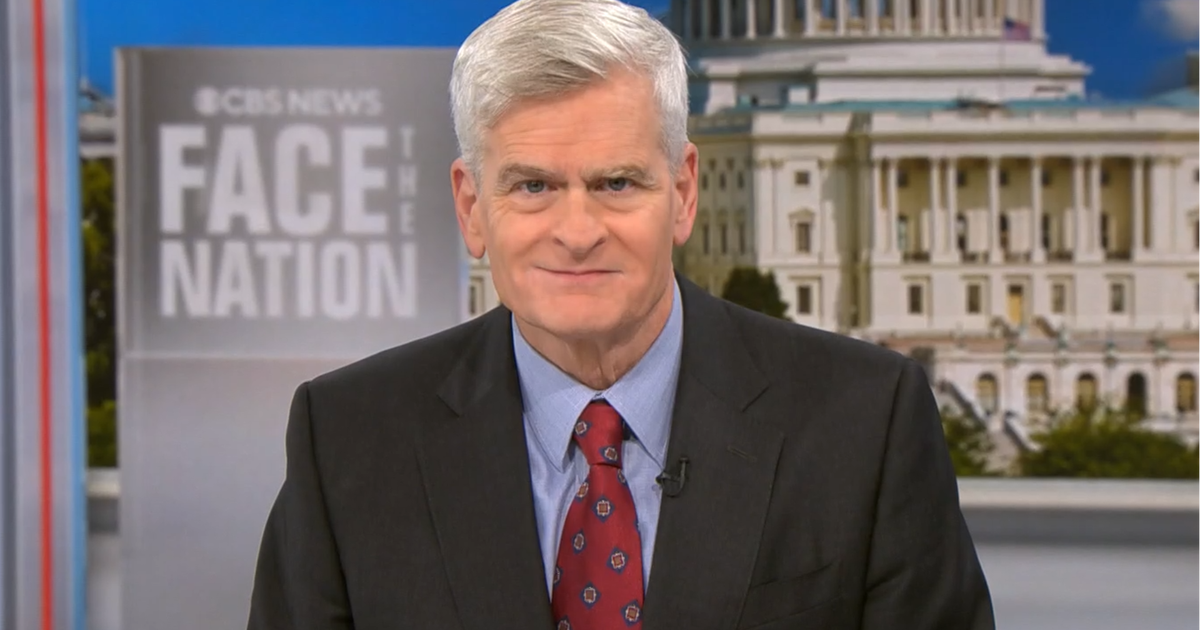
Sen. Bill Cassidy (R-LA) stated on Sunday that his decision to support Todd Blanche for attorney general was not a simple choice, describing it as a "gradation of gray." Cassidy’s vote was the deciding factor in the Senate’s narrow confirmation of Blanche early Saturday morning.
The confirmation followed significant debate within the Republican party regarding a $1.8 billion "anti-weaponization" fund established by the Department of Justice (DOJ). The fund was part of a settlement between the DOJ and the president to resolve a $10 billion civil lawsuit concerning the leak of tax returns. While Sens. Susan Collins (R-ME) and Lisa Murkowski (R-AK) opposed the nomination, other Republicans dropped their opposition after Blanche rescinded the directive for the fund.
Cassidy said that while he found a settlement providing immunity to the president's family "totally wrong," he ultimately supported Blanche to ensure "stable leadership" at the DOJ. He noted that conversations with U.S. attorneys in Louisiana influenced his decision. Cassidy’s support was necessary for confirmation due to the absence of Sen. Mitch McConnell (R-KY) and the 53-seat Republican majority.
On a broader scale, the decision influences how the DOJ handles high-level legal settlements. The $10 billion civil lawsuit settlement involving the president’s tax returns and the resulting immunity for the president’s family members establishes a specific internal precedent for how the DOJ resolves conflicts involving the executive branch. Taxpayers and legal observers will notice how the department balances these settlements against the principle that no individual should be above the law, a concern Cassidy raised during his deliberations.
Looking ahead, Blanche has been sworn in and has formally taken control of the DOJ. His leadership will be tested by upcoming elections and questions regarding constitutional adherence. While Cassidy expressed confidence in the department's future effectiveness, the narrowness of the confirmation and the specific policy concessions required to secure it suggest that DOJ operations will remain under close Senate oversight. No further votes on this matter are scheduled, as the appointment is now final.