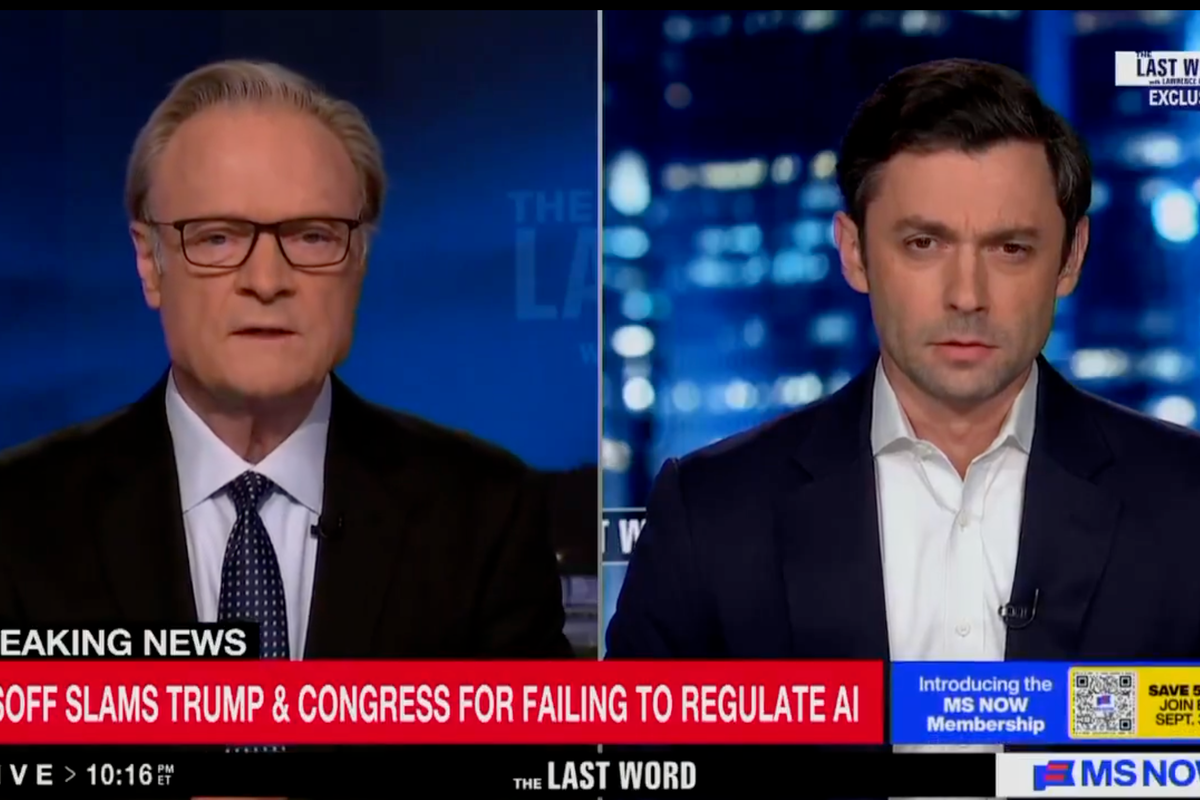
Sen. Jon Ossoff (D-GA) stated on Monday, September 14, 2026, that President Donald Trump is "compromised" regarding the regulation of artificial intelligence (AI) due to his family's financial ties to the industry. The senator’s remarks followed statements from the president opposing new regulations on the technology, with Trump arguing that slowing AI development would benefit China's competitive position.
The disagreement intensified after President Trump posted messages on Truth Social on Monday alleging a "SICK conspiracy" was attempting to restrict the AI sector. These posts ignored warnings from industry leaders such as Sam Altman, Elon Musk, and Dario Amodei regarding potential risks associated with AI. In response, Sen. Ossoff called for tech executives to testify before Congress and allow inspections of their laboratories to prevent threats like bioterrorism.
Sen. Ossoff pointed to 1789 Capital, a venture capital firm where Donald Trump Jr. is a partner, as evidence of a conflict of interest. The senator stated that the firm has invested in AI laboratories and data centers, meaning the president's family has a financial stake in the industry. The Independent contacted the Trump Organization for comment, but a response was not reported.
The debate affects the regulatory environment for AI developers, researchers, and tech companies, as well as the federal government's approach to national security risks linked to emerging technologies. If the administration continues to oppose regulation, it could impact how AI labs operate and how data centers are funded and built. Sen. Ossoff’s call for congressional testimony and lab inspections suggests a push for greater federal oversight that would involve tech firms and their leadership.
The exact dollar amounts invested by 1789 Capital in AI labs and data centers were not reported. The outcome of this political friction could determine the level of transparency required for AI development, potentially affecting safety protocols and the security of data infrastructure. For the public, this may eventually manifest in changes to digital privacy or the integration of AI-driven tools.
The conflict sets a precedent for how the executive branch's private financial interests are scrutinized in relation to emerging technology policy. The political fallout is expected to continue through the upcoming midterm elections in November. What happens next depends on whether the Senate moves forward with the requested hearings and the result of the November elections, which will determine the legislative feasibility of the proposed AI regulations.