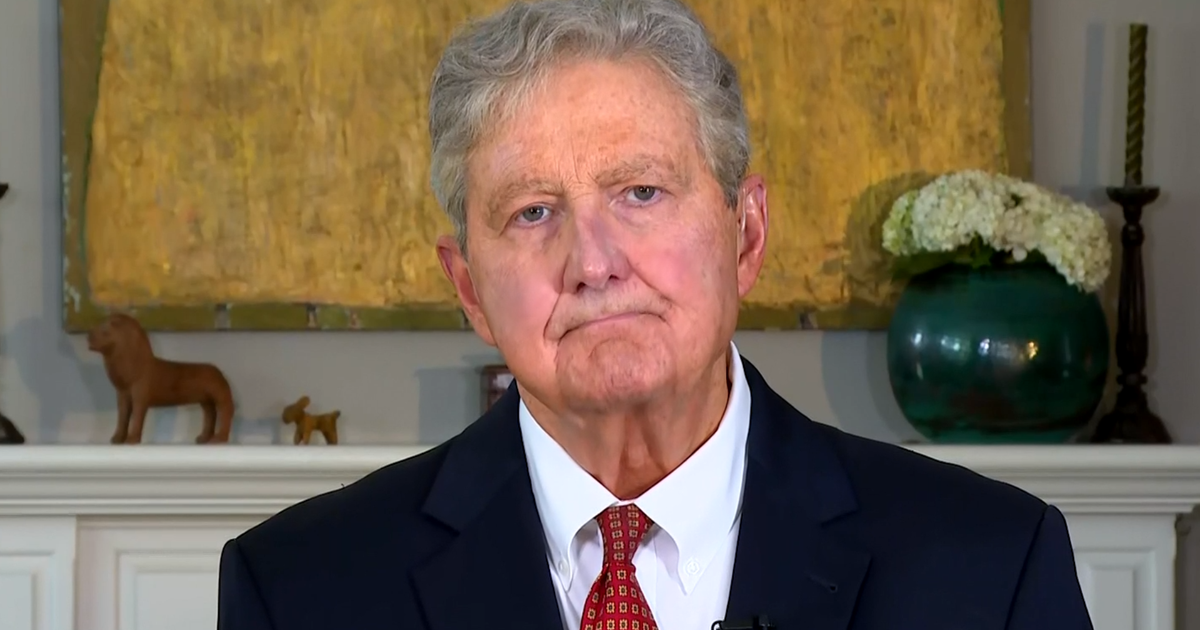
In a televised interview on September 27, 2026, Sen. John Kennedy (R-LA) addressed the U.S. strategy in Iran and the White House's decision to cancel nearly $1 billion in congressionally approved funding. Kennedy advocated for maintaining current diplomatic and economic pressure on Iran, including sanctions and a blockade, while expressing opposition to deploying ground troops to resolve the partial closure of the Strait of Hormuz. He also defended the executive branch's recent spending cuts, characterizing the targeted funds as wasteful.
The interview comes 37 days before the midterm elections and follows reports regarding a potential plan by President Trump to restart bombing campaigns in Iran after the vote. Public and legislative tension over the conflict has grown, with 14 Senate votes objecting to the war and Republican candidates in battleground states calling for its conclusion. Additionally, Senate Appropriations Chair Susan Collins (R-ME) recently criticized the White House's cancellation of $1 billion in funds, labeling the move a violation of the law and an infringement on Congress's constitutional authority.
Kennedy stated that while he has not seen classified intelligence regarding a renewed bombing campaign, he believes Iran's recent diplomatic offers were not serious. He noted that the partial closure of the Strait of Hormuz has increased the cost of gasoline and other goods, creating a choice between diplomatic resolution or military escalation. Regarding the $1 billion funding cut, Kennedy disagreed with Sen. Collins, stating the money was intended for foreign aid and non-governmental organizations (NGOs) that he claims support illegal immigration, rather than programs like National Institutes of Health (NIH) grants. He also addressed a $220 million taxpayer-funded ad campaign by the Department of Homeland Security under former Secretary Kristi Noem, stating that public officials should not use government funds for self-promotional advertising.
The conflict over the "power of the purse" sets a precedent for how much authority the executive branch can exercise over funds already allocated by Congress. If the administration's interpretation of these spending cuts holds, it could change how the federal bureaucracy manages broad-category appropriations.
What happens next depends on the November midterm elections, which Kennedy predicted would be close. In the immediate term, Sen. Collins has indicated she wants to take action against the administration's funding cancellations. The public will also see the continuation of a government-funded ad campaign featuring President Trump, which Kennedy suggested should be restricted by new rules prohibiting politicians from using public money for self-promotion or naming buildings after themselves while in office.