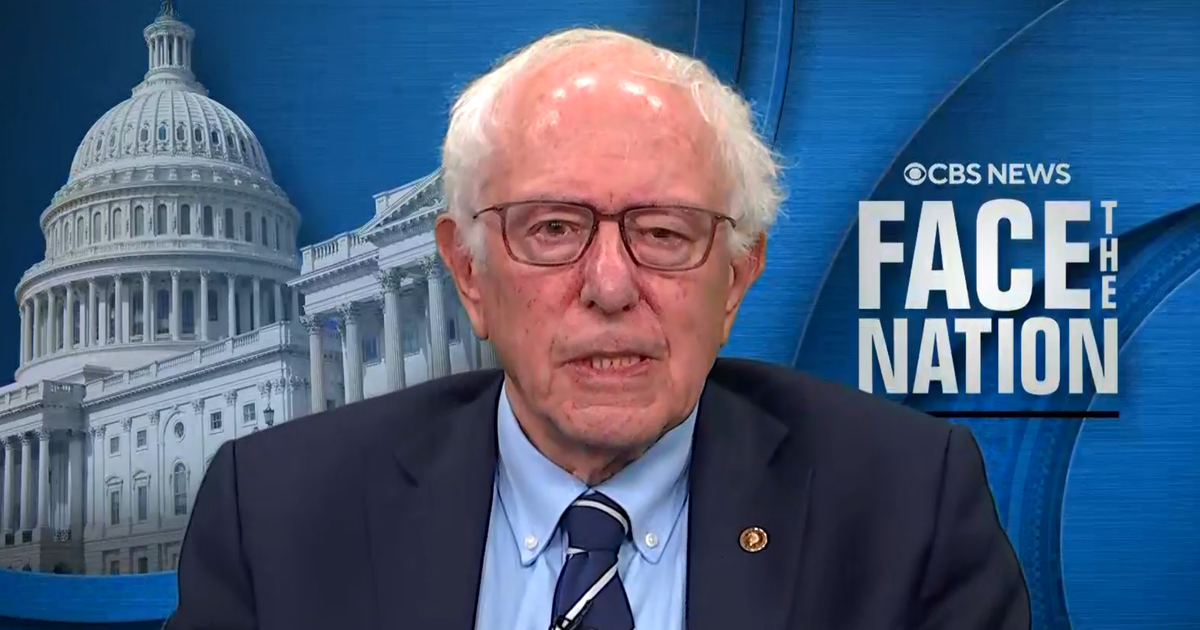
Sen. Bernie Sanders (I-VT) stated Sunday that he has requested Democratic Party leaders prohibit political action committees (PACs) from participating in the party's primary elections. During an interview on CBS News' "Face the Nation," Sanders argued that the current campaign finance system allows special interest groups to influence party nominations through significant spending.
The proposal follows a primary race in Michigan where Dr. Abdul El-Sayed, a candidate endorsed by Sanders, won by one percentage point. Sanders noted that El-Sayed was outspent by approximately nine to one, citing $60 million in spending from super PACs funded by billionaires. A super PAC is a type of independent political action committee which may raise unlimited sums of money from corporations, unions, associations, and individuals, then spend unlimited sums to overtly advocate for or against political candidates.
Sanders specifically identified the American Israel Public Affairs Committee (AIPAC) as a major contributor in the Michigan race, stating the group spent $30 million in the Democratic primary. He noted that after their preferred candidate lost, the group indicated it would support the Republican candidate in the general election. While calling for the removal of PAC money from primaries, Sanders acknowledged that candidates would likely continue to accept such funds in general elections until federal law, specifically the Citizens United court ruling, is changed.
Individual donors and grassroots contributors would see their relative influence increase within the Democratic primary process if large-scale PAC spending is prohibited. However, Democratic leaders, as noted by interviewer Margaret Brennan, face a resource gap compared to Republican war chests. This change could force a shift in how party resources are distributed, potentially leaving primary winners with fewer resources to transition into general election campaigns against candidates who did not face similar spending restrictions.
The knock-on effects could include a shift in legislative priorities as candidates become less reliant on industry-specific PACs from the artificial intelligence, cryptocurrency, or finance sectors mentioned by Sanders. Such a policy would set a new precedent for internal party governance regarding election finance. While Sanders has sent the letter to Democratic leaders, the party has not yet announced a formal vote or timeline for considering these changes to the primary rules. In the immediate term, Sanders predicted a close primary race Tuesday in Minnesota between Peggy Flanagan and Angie Craig, where he stated Flanagan is currently being outspent seven to one.