President Donald Trump hosted Chinese President Xi Jinping for a state visit at the White House on Thursday, September 24, 2026. During the visit, President Trump stated that he and President Xi have developed a "truly great friendship," while President Xi expressed a desire for the two nations to be "partners, not rivals" in a statement on his arrival Wednesday. The visit included a state dinner and discussions focused on international trade, security, and artificial intelligence, which Mr. Trump referred to as "Super Intelligence."
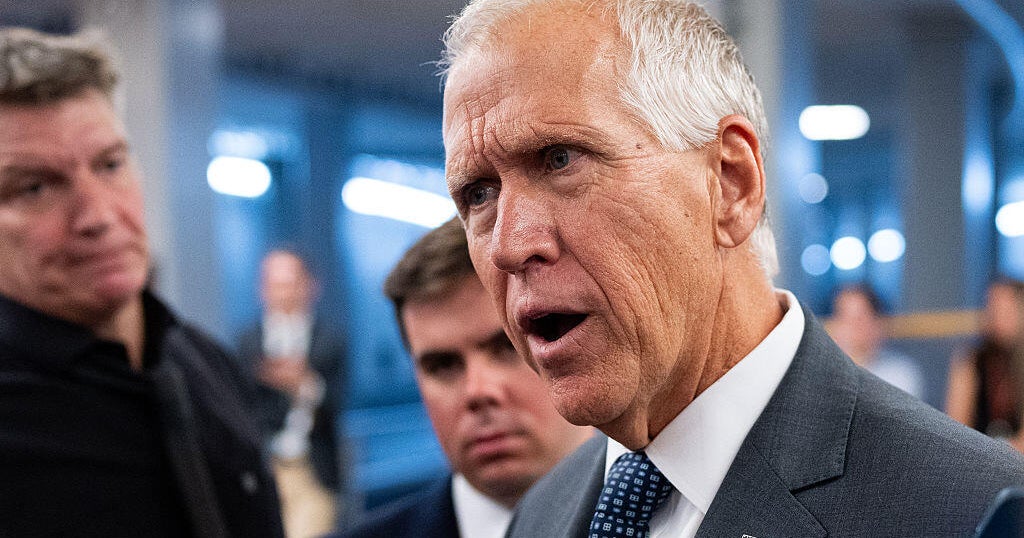
The reception drew criticism from Sen. Thom Tillis (R-NC), who is retiring from the Senate. In an interview with "CBS Evening News," Tillis questioned the president's judgment in hosting the event, contrasting the rollout for the Chinese leader with the reception given to democratic allies such as Ukrainian President Volodymyr Zelenskyy. Tillis characterized the timing of the visit as "bad timing," citing concerns over China’s human rights record, espionage, and alleged access to U.S. voter data.
The diplomatic gathering follows a period of volatile economic relations between the two countries. Shortly after returning to office in 2025, Mr. Trump imposed heavy tariffs on Chinese goods, sparking a trade war where duties briefly reached more than 100%. The two nations reached a tariff truce later that year. Tillis noted that Mr. Trump had previously campaigned on a platform of being tough on China and said he was unaware of any public basis for the current shift in posture.
The state visit involves U.S. manufacturers and consumers who have navigated a trade war involving tariffs that reached more than 100% on various goods during 2025. While a tariff truce was established, high-level talks on "Super Intelligence" and trade were expected to address costs of imported electronics, machinery, and consumer products.
The discussions also involve national security and privacy. Sen. Tillis highlighted reports regarding Chinese access to U.S. voter data and the use of Chinese information by Iran to target U.S. military assets. Tillis also mentioned the administration’s decision to hold up arms shipments to Taiwan.
The White House indicated that the Department of Justice would serve as a "guardrail" for artificial intelligence development. The visit serves as a formal marker for the 2025 tariff truce, but the long-term stability of the "great friendship" described by Mr. Trump remains subject to congressional oversight and military and economic competition.
The meeting took place against a backdrop of concerns regarding technology. Earlier in September 2026, a researcher at Anthropic warned that artificial intelligence could wipe out humanity by the end of the decade. While Mr. Trump has resisted these concerns, citing the need to stay ahead of China in tech development, he noted that AI would be a primary topic of discussion with President Xi, stating that China shares his position on maintaining current development trajectories.