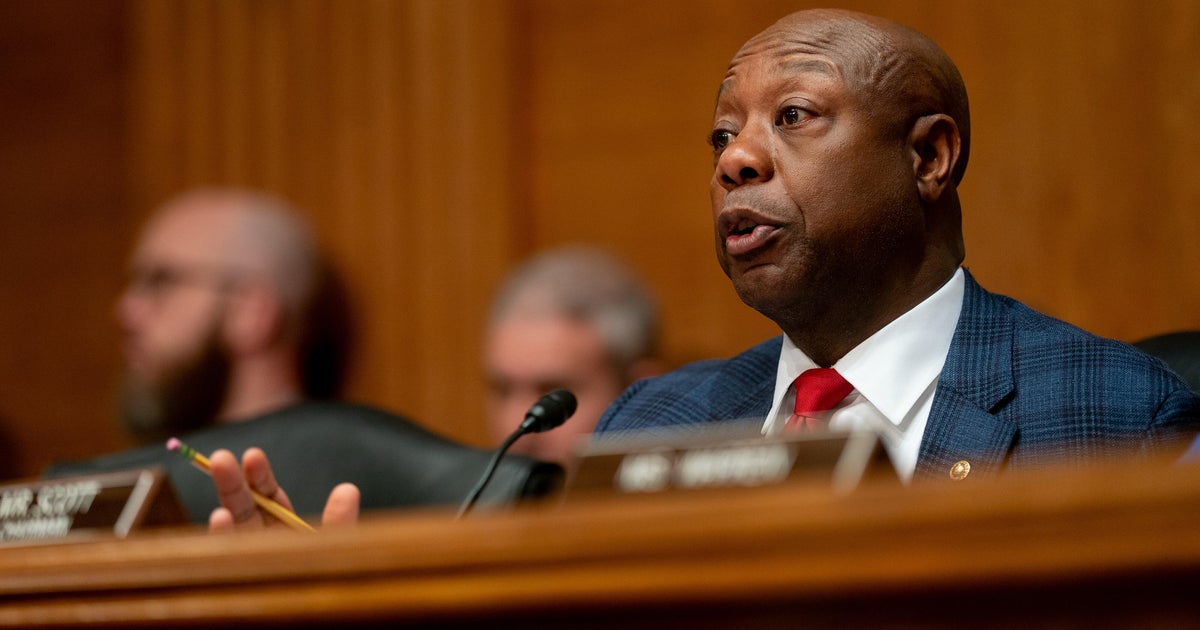
Sen. Tim Scott (SC), chair of the National Republican Senatorial Committee (NRSC), told colleagues in a closed-door meeting that the party is in a "fight for our lives" to maintain control of the Senate in the upcoming midterm elections. Scott stated that the party faces a difficult political environment with a record number of toss-up races but maintained there is a path to holding the majority. The NRSC is the organization responsible for electing Republicans to the U.S. Senate.
The meeting occurred as Republicans defend a narrow 53-47 majority, where they can lose up to three seats and still retain control with Vice President JD Vance serving as a tiebreaker. Historically, the party holding the White House loses ground during midterms. Scott argued that Republicans could mirror the 2022 trajectory of Democrats, who gained a Senate seat despite losing the House and facing low approval ratings for then-President Joe Biden. Current political headwinds for the GOP include voter dissatisfaction with the cost of living and the Iran war.
Scott identified Maine, Texas, Ohio, Iowa, and Alaska as key states where the party is defending seats. He named New Hampshire and Michigan as primary offensive opportunities. The committee plans to utilize a Supreme Court ruling that removed limits on coordinated spending between groups like the NRSC and individual candidates. Internal GOP polling reportedly shows tightening races in North Carolina and Minnesota, while the party is considering scaling back spending in Georgia, where Democratic Sen. Jon Ossoff leads in most polls.
In Maine, Republican Sen. Susan Collins is seeking a sixth term against Democrat Troy Jackson in a state trending leftward. In Texas, Republican Attorney General Ken Paxton, who defeated incumbent Sen. John Cornyn in the primary, faces Democrat James Talarico. Meanwhile, Democrats are attempting to flip seats in North Carolina, where former Gov. Roy Cooper leads Republican Michael Whatley for a retiring GOP seat, and in Minnesota, where Lt. Gov. Peggy Flanagan faces Michele Tafoya for a seat held by a retiring Democrat.
The scale of this effort involves millions of dollars in coordinated campaign spending, now uncapped by recent legal changes, aimed at a voting population across nearly a dozen states. For the individual voter, this shift means a higher volume of political advertisements and direct outreach, particularly in states like Maine and North Carolina where polling is close. Residents in these states will notice these changes immediately through the midterm cycle, while the broader impact on federal taxes and legal rights would follow the seated Congress.
The knock-on effects include a potential shift in how national parties coordinate with local candidates, establishing a precedent for higher-spending, centrally managed campaigns. If Republicans hold the chamber, they maintain the ability to block or advance White House initiatives; if they lose four or more seats, Democrats would take control. The next steps include the final six-week campaign push leading into the November midterm elections, with specific spending decisions finalized by the NRSC based on the toss-up status of the highlighted races.