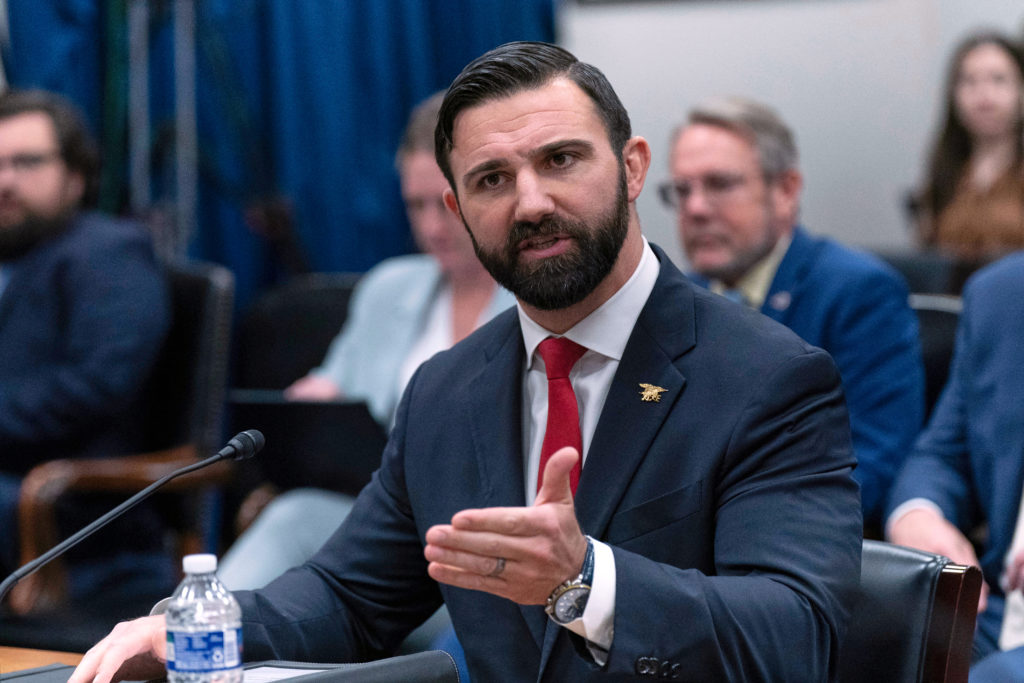
The Senate on Friday confirmed Cameron Hamilton as the permanent administrator of the Federal Emergency Management Agency (FEMA), an agency within the Department of Homeland Security. Hamilton was confirmed as part of a group of 74 nominees approved by the Senate, which also included David Cummins to lead the Transportation Security Administration (TSA) and Daniel Perez as the U.S. ambassador to Brazil.
Hamilton previously served as FEMA's temporary leader starting in January 2025 but was dismissed in May 2025 after testifying to a House panel that he opposed a proposal to eliminate the agency. His confirmation follows a period of transition at the Department of Homeland Security, where former Secretary Kristi Noem was succeeded by former Sen. Markwayne Mullin (R-OK) in March.
During his June confirmation hearing, Hamilton stated that FEMA is burdened by bureaucracy and cannot respond to every disaster, advocating for a "new balance" focused on cost savings. He takes over as the agency manages more than 1,000 open disaster declarations. According to a Government Accountability Office report, more than 4,300 employees left FEMA in the 2025 budget year, including 1,500 through voluntary reductions.
For travelers and airport personnel, the confirmation of David Cummins to lead the TSA comes after a record partial government shutdown that resulted in approximately 1,100 TSA officers quitting after working for weeks without pay. Cummins takes over as the administration seeks to cut thousands of TSA jobs and expand private airport screening programs. A person working for or interacting with these agencies would notice these shifts through changes in staffing levels, grant availability, or the speed and scope of federal disaster claims processing.
The diplomatic appointment of Daniel Perez to Brazil follows a dispute where the State Department revoked the visa of Brazil’s ambassador to the U.S. because the Brazilian government had not yet accepted Perez's appointment. While Hamilton is set to begin his role upon being sworn in, many of the broader recommended changes to FEMA’s disaster support framework, such as those proposed by a FEMA Review Council in May, will require future congressional action to take effect. Twenty-five states and the District of Columbia are currently litigating against the administration over new requirements for state counterterrorism grants.