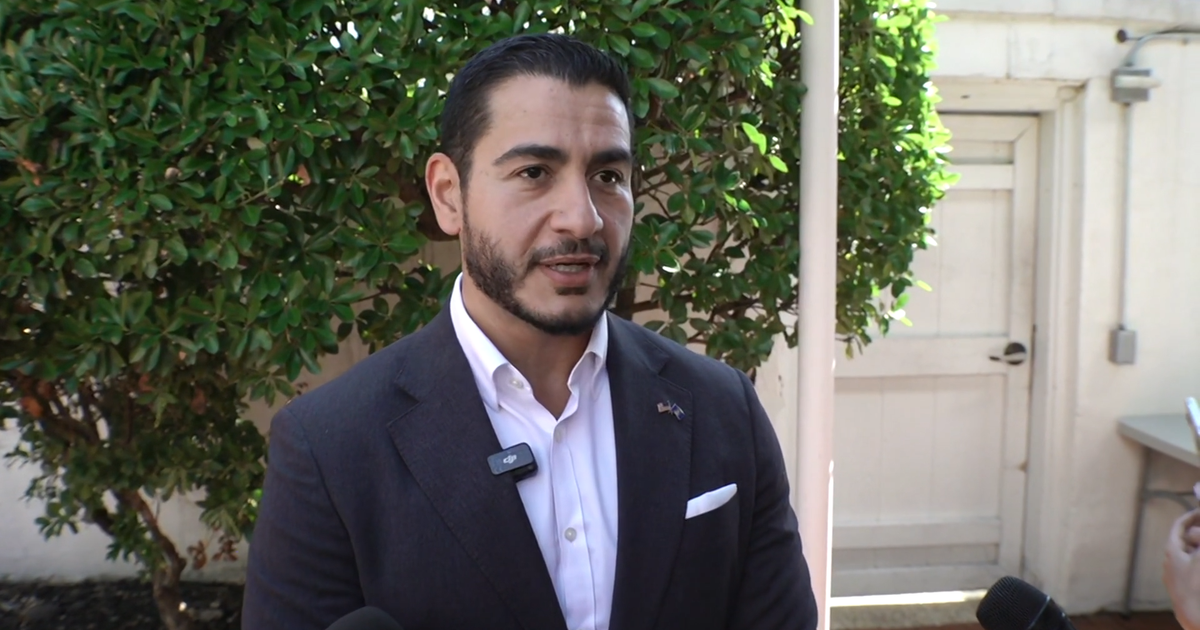
Democratic Senate candidate Abdul El-Sayed met with Senate Democrats on Wednesday at the Democratic Senatorial Campaign Committee (DSCC) headquarters in Washington. The meeting served as an effort to unify the party behind El-Sayed’s candidacy following a primary election in which he defeated a candidate recruited by Senate Minority Leader Chuck Schumer.
El-Sayed, a former Michigan health official, secured the Democratic nomination last month for the seat currently held by Sen. Gary Peters (D-MI), who is not seeking reelection. While El-Sayed was supported in the primary by Sens. Bernie Sanders (I-VT) and Elizabeth Warren (D-MA), his victory over a more moderate opponent has prompted internal party discussions regarding ideological divisions and electability in the general election.
During the meeting, El-Sayed emphasized shared Democratic priorities, including healthcare access, labor issues, and reproductive rights. Sen. Kirsten Gillibrand (D-NY), chair of the DSCC, described the party as "all united" behind his campaign. Sen. Mark Kelly (D-AZ) stated he intends to campaign for El-Sayed in Michigan, while Sen. Chris Murphy (D-CT) expressed support for El-Sayed’s focus on reforming the economy and addressing political corruption.
Republicans have criticized El-Sayed’s primary campaign associations, specifically highlighting his appearance with streamer Hasan Piker to argue he is out of step with Michigan voters. When asked about the association, El-Sayed said the issue was "far removed" from voter concerns regarding affordability. He also noted he was engaged in "productive conversations" regarding potential investment from Schumer’s political action committee.
For Michigan voters, the choice in November between El-Sayed and Republican Mike Rogers—a former U.S. Representative—will determine the state's representation for a six-year term. A victory for either candidate would impact which party controls the Senate majority, influencing whether Democrats can, as El-Sayed stated, "hold Donald Trump accountable" or if Republicans can block Democratic legislative priorities. The source does not report specific dates for when these legislative changes would take effect following the election.
The race also serves as a test for the Democratic Party’s national strategy. By backing a candidate who identifies with progressive insurgents rather than centrist recruits, the party is testing whether a platform of "big ideas" rather than "incremental solutions" can win a competitive state like Michigan. The final results will be determined on Election Day in November, with El-Sayed expected to continue coordinating with Senate leadership on campaign resources in the intervening weeks.