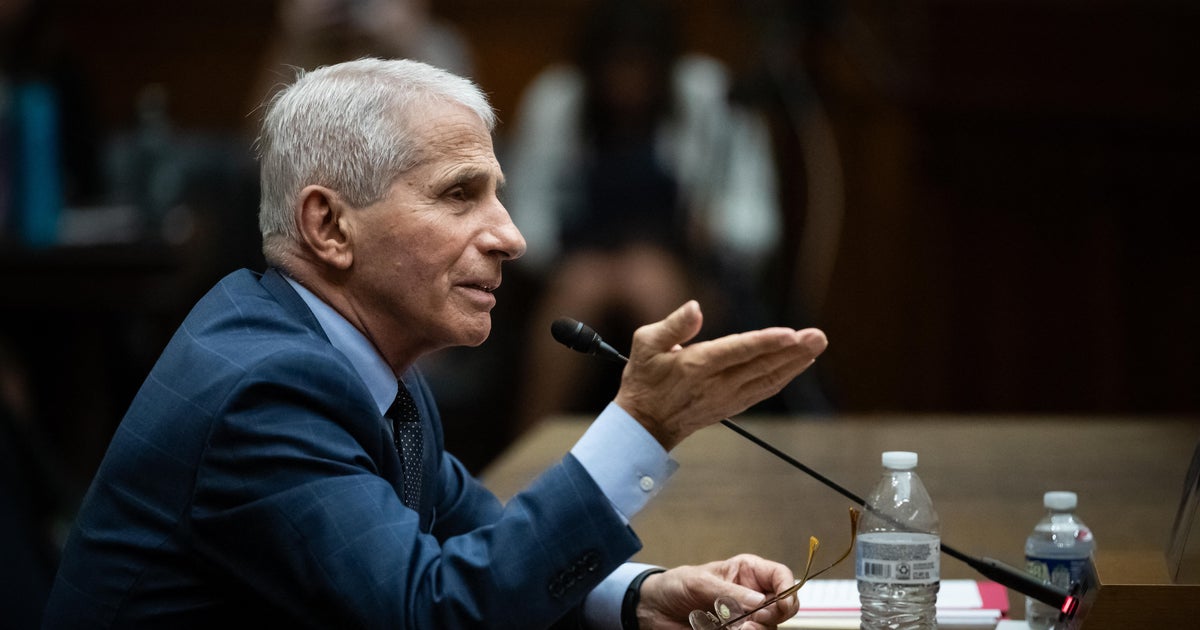
A Senate panel was scheduled to vote Thursday on whether to recommend holding Dr. Anthony Fauci in contempt of Congress. The vote follows a hearing before the Senate Homeland Security Committee where Fauci, the former director of the National Institute of Allergy and Infectious Diseases (NIAID), invoked his Fifth Amendment right against self-incrimination in response to every question. Sen. Rand Paul (R-KY) has pursued the contempt charge, arguing that Fauci is insulated from prosecution by a presidential pardon and therefore cannot claim Fifth Amendment protections.
The dispute is the latest in a multi-year disagreement between Paul and Fauci regarding the origins of COVID-19 and federally funded research at the Wuhan Institute of Virology in China. Paul has accused Fauci of lying about whether the U.S. government funded "gain-of-function" research—experiments that modify viruses to study their evolution—at the lab. Fauci has denied these allegations, stating that the research did not meet the federal definition of gain-of-function and that the viruses studied were molecularly distinct from SARS-CoV-2.
The U.S. intelligence community and international health organizations have reached varying conclusions regarding the virus's origin. The FBI and Department of Energy reported a likely lab incident, while the National Intelligence Council and four other agencies favored natural exposure to an animal. A 2023 World Health Organization panel found the "weight of available evidence" suggested a natural origin but could not rule out a lab leak. Fauci has stated that while he believes evidence supports a natural origin, he remains open to all possibilities.
For the public, this investigation centers on the transparency of approximately $600,000 in U.S. taxpayer funds sent to the Wuhan Institute of Virology through a nonprofit subgrant. The debate over gain-of-function research impacts federal funding policy for scientific laboratories nationwide. A change in definitions or oversight could alter how researchers study potential pandemic pathogens, which proponents say is necessary for pandemic preparedness and opponents argue carries inherent risks of accidental release.
The conflict also highlights the ongoing disagreement over the origins of a pandemic that caused global disruption. While scientists and intelligence agencies remain divided, the congressional record now includes Fauci's 2020 diary entries, which noted that the Wuhan market may have been an "amplifier" rather than the source. What happens next depends on the panel's vote and subsequent Senate actions; however, the final decision on whether to prosecute Fauci for contempt rests with the Department of Justice.