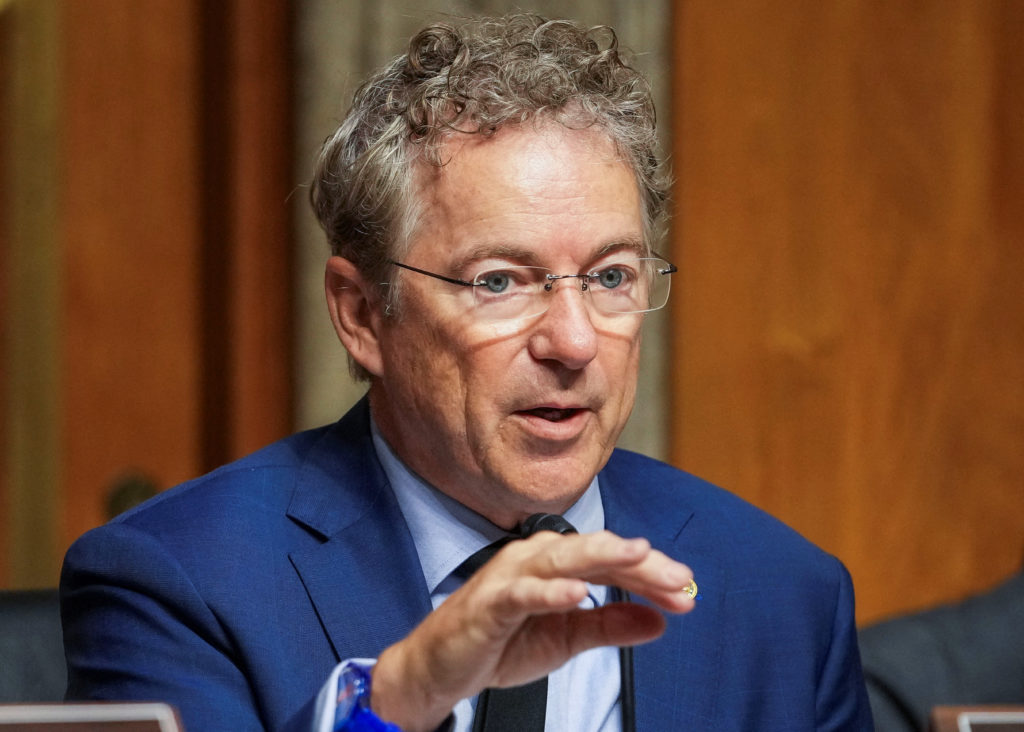
The Senate Committee on Homeland Security and Governmental Affairs voted on Thursday to hold Dr. Anthony Fauci in contempt of Congress. The committee also moved to refer the former health official to the Justice Department for potential criminal prosecution following his refusal to testify about his handling of the COVID-19 pandemic.
The decision follows a hearing last week where Fauci invoked his Fifth Amendment right against self-incrimination more than 100 times. Committee Chairman Rand Paul (R-KY) argued that Fauci’s constitutional protections are limited because President Biden issued him a pardon in January 2025. Fauci and several committee Democrats disagreed, stating that the risk of self-incrimination remains a concern.
The contempt resolution passed along party lines. Chairman Paul stated the vote was not about Fauci’s past policies or opinions, but rather whether a witness who has received a pardon can be compelled by a committee to answer questions. Fauci stated in response that he feared the chairman was determined to secure statements that would lead to his imprisonment.
A person in a similar situation would notice the impact through their legal rights and potential court costs. While President Biden’s pardon covers federal acts from 2014 through January 2025, it does not protect Fauci from state-level prosecutions or investigations into whether any testimony he did provide was false. This means a witness in this position remains subject to legal scrutiny and potential bills for legal defense at the state level despite federal clemency.
The knock-on effects of this vote could change how future administrations and Congress interact. Chairman Paul noted that he did not intend to bring the resolution to the full Senate, where it would likely fail to reach the 60 votes required to advance. This highlights a strategy where a single committee takes independent action to refer a witness for prosecution. The outcome of the referral to the Justice Department is not yet known, as the U.S. attorney's office has not announced a timeline for its decision.
What happens next is the delivery of the referral to the U.S. attorney’s office in Washington. No specific date for a decision on prosecution was reported. The legal outcome could also affect future aides who may receive pardons from outgoing presidents, potentially establishing whether they can be forced to testify about their government service.