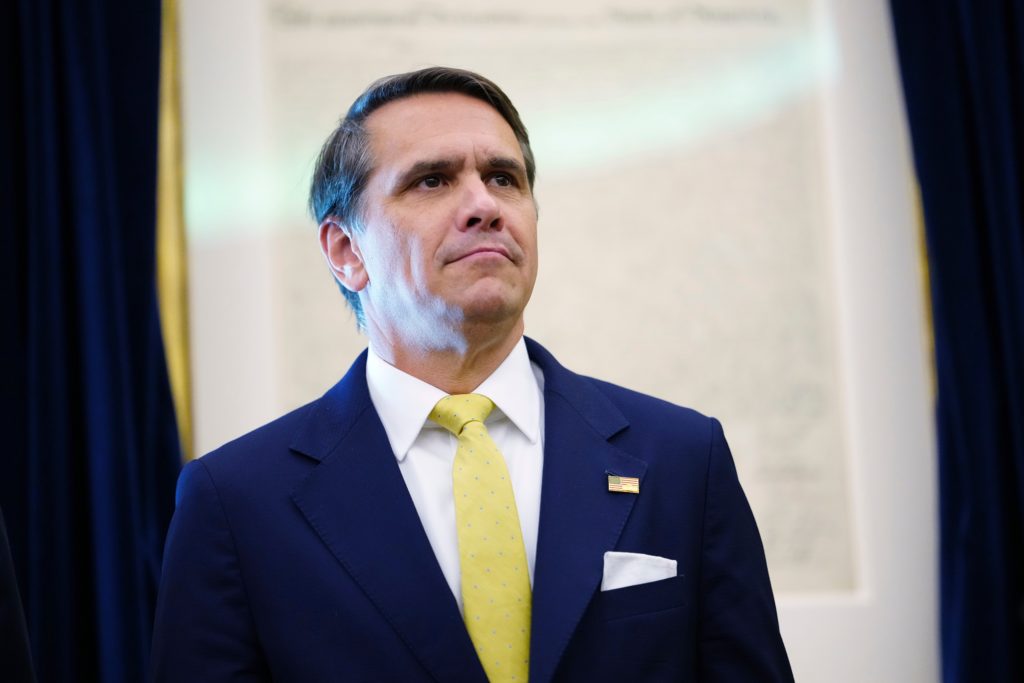
The U.S. Senate passed a significant Russia sanctions bill on Friday and moved toward the confirmation of Todd Blanche as attorney general. While these two items advanced, other high-priority legislative matters remained stalled due to disagreements within the Republican caucus.
The progress on the attorney general nomination followed an announcement by Sen. Bill Cassidy (R-LA) that he would support Blanche. Cassidy, who lost his primary two months ago after opposition from President Trump, described Blanche as an imperfect candidate but argued the alternative would be an acting attorney general who might be less effective.
The confirmation vote for Blanche is expected to be narrow, with the tally currently dependent on every Republican vote. Sens. Susan Collins (R-ME) and Lisa Murkowski (R-AK) have indicated they will vote no, while Sen. Mitch McConnell (R-KY) was absent for the procedural steps. The final vote could occur as early as Friday night.
The Senate also approved the Lindsey Graham Russia Sanctions Bill, which now moves to the House. The legislation allows for 100 percent tariffs on the five largest buyers of Russian energy, imposes personal sanctions on President Vladimir Putin and his associates, and extends sanctions on Iran. The bill is intended to close loopholes Russia has used to bypass previous restrictions.
The Russia sanctions bill specifically targets energy markets, which could lead to shifts in global oil and gas prices. By authorizing 100 percent tariffs on major Russian energy buyers, the bill creates a mechanism that could change the costs for international energy firms and, potentially, the consumer prices in nations that continue to purchase Russian fuel. The bill also grants President Trump significant discretionary power to implement these economic penalties, shifting the balance of foreign policy authority between the executive and legislative branches.
Congressional action now faces a deadline as government funding is set to expire on September 30. Lawmakers are currently debating a funding extension through December, but the measure is stalled over a proposed ban on hemp products. With the Senate scheduled to be in recess from this weekend until September 14, only a short window remains for House and Senate members to reach an agreement and avoid a government shutdown. Other items, such as a college athlete reform package, remain pending as the August recess begins.