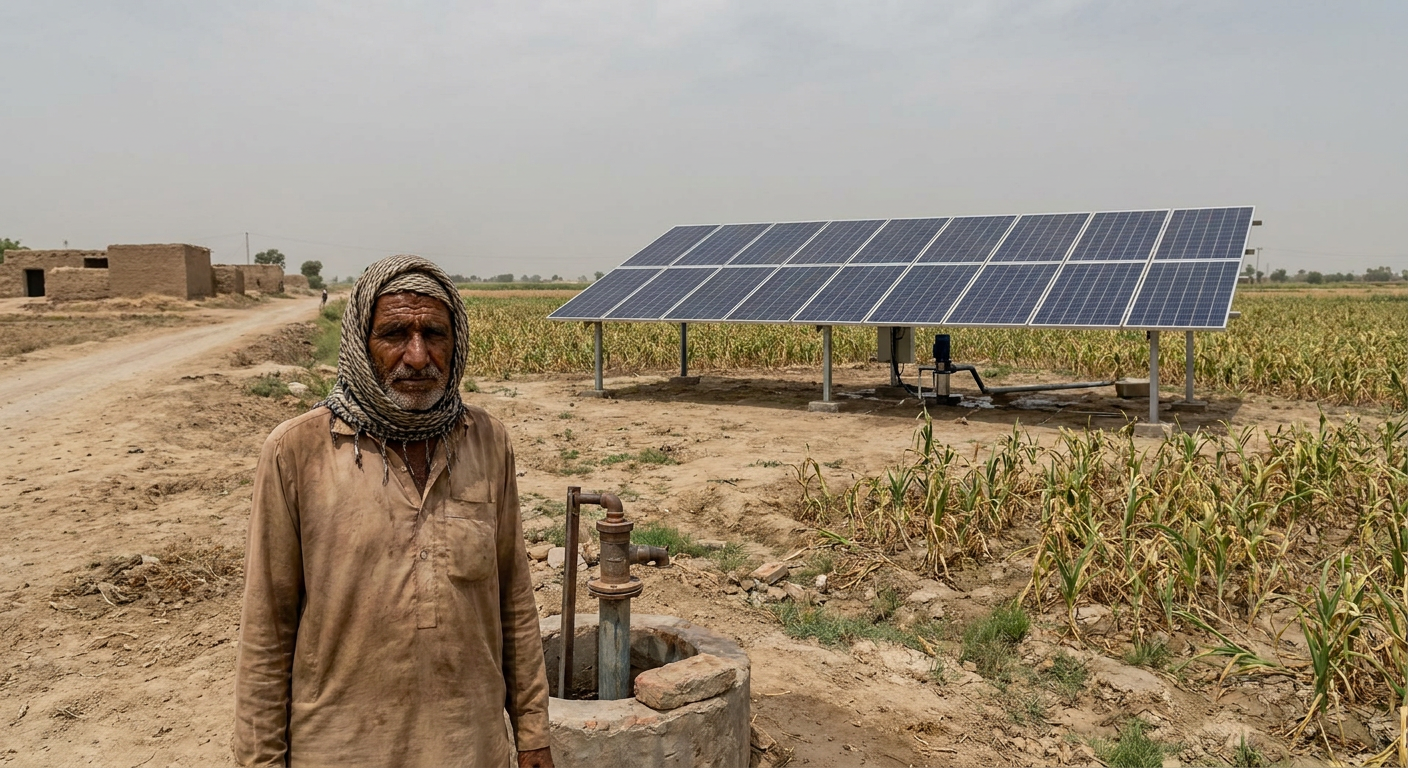
Farmers in Pakistan are increasingly adopting solar-powered pumps to extract groundwater for irrigation and aquaculture, a shift that has lowered energy costs for individual producers. While the technology has allowed for expanded production in arid regions, researchers and water experts have reported concerns regarding the potential for unregulated over-extraction of the country's groundwater supplies.
The transition to solar energy follows decades of increasing reliance on groundwater as Pakistan’s river-fed canal system faced growing pressure. Traditional diesel-powered pumps, which carry high fuel costs, are being replaced by solar arrays that can operate for approximately 11 hours a day during the summer months. This shift is supported in part by the Green Pakistan Initiative, an army-backed program launched in 2023 that promotes large-scale corporate farming and solar irrigation in barren or arid regions such as Balochistan.
Individual farmers, such as Muhammad Abdullah in Punjab province, reported that solar power has reduced energy bills by roughly 50%. Abdullah, who helps run a fish farm in Sallhoke Chatha, stated that the technology makes aquaculture viable in areas where traditional crops like wheat and corn failed. However, research published in the Journal of Agriculture and Food Research by Khalid Jamil found that in 77% of surveyed cases, farmers using solar power extracted more groundwater than those using diesel. Jamil attributed this to human behavior, noting that if people get something for free, they do not feel the need to save it.
A person living in these regions may notice a short-term increase in local food production and lower operating costs for farms, but water experts like Bashir Ahmad of the Pakistan Agricultural Research Council warn of risks to water security, particularly in areas otherwise unfit for farming. The day-to-day change for farmers is the removal of fuel costs as a barrier to irrigation, which encourages longer pumping hours. If groundwater levels drop significantly due to this increased extraction, it could eventually lead to the failure of wells.
The knock-on effects extend to national policy and environmental stability. The Green Pakistan Initiative’s focus on developing barren land depends on these solar pumps, setting a precedent for large-scale industrial farming in water-scarce zones. This creates a policy tension between immediate food security goals and the sustainability of the underlying water supply. The source did not report specific upcoming legislative deadlines or court dates regarding water regulation. Instead, the situation remains a conflict between the immediate financial benefits for farmers and the documented increase in groundwater depletion rates.