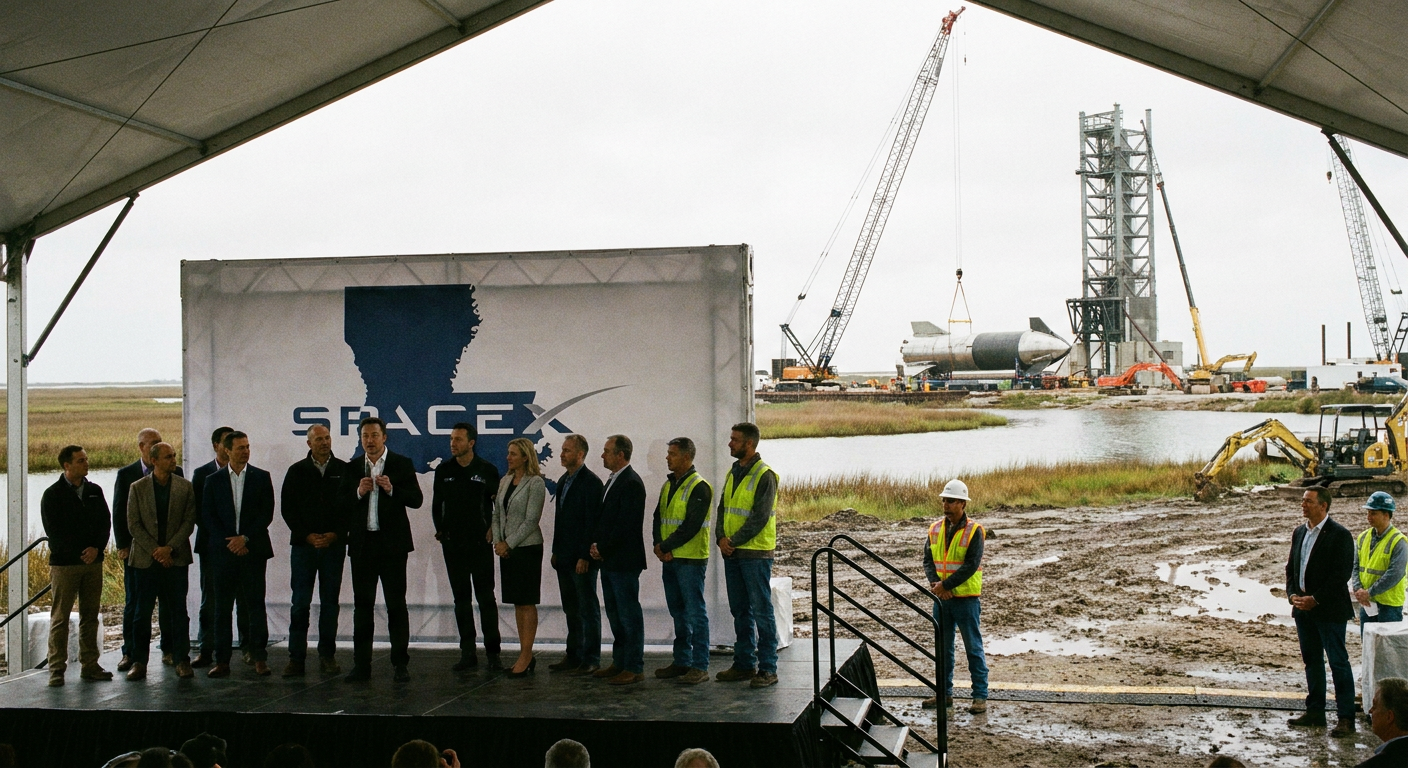
SpaceX has announced plans to build a $100 billion launch base, referred to as "Starbase Louisiana," in the coastal marshes of Pecan Island. The project, previously known by the code name "Project Osprey," is intended to support the company’s satellite internet business and the development of data centers in space. Louisiana Governor Jeff Landry (R) joined SpaceX owner Elon Musk for the announcement, which followed a period of private negotiations involving state officials.
To facilitate the project, the Louisiana legislature passed new laws providing aerospace facilities with exemptions from property taxes, similar to other industries in the state. Additionally, lawmakers established legal protections for aerospace companies against liability and nuisance claims related to noise and sonic booms. Governor Landry noted that many state lawmakers signed nondisclosure agreements (NDAs) during the planning phases, a move he defended as necessary to prevent other states from competing for the deal.
The development is expected to result in the creation of 3,000 new jobs in Louisiana over the next ten years. SpaceX officials stated that the site will eventually launch Starship, the largest rocket ever constructed, potentially up to 30 times per day. The company intends to begin construction by the end of next year, with the first launch scheduled for 2029.
Some local residents and environmental advocates have expressed concerns regarding the transparency of the deal and its potential impact on the region's ecology. Gabe Giffin, a local outdoor educator, noted that the site sits on the Mississippi flyway, a critical migratory path for birds traveling to Central and South America. While SpaceX officials stated that rockets might initially displace birds but that they would return, residents like Brooke Broussard expressed skepticism about the impact on local wildlife and the traditional hunting and fishing culture of the area.
The legal changes enacted by the state legislature establish a new precedent for the aerospace industry in Louisiana. By exempting these facilities from property taxes and providing legal immunity against noise-related nuisance claims, the state has lowered the operational costs and legal risks for SpaceX. However, these tax exemptions mean that local municipalities may not receive the property tax revenue typically associated with large-scale industrial developments. The use of NDAs for public projects also marks a specific administrative approach by the Landry administration that limits public disclosure until deals are finalized.
What happens next: Construction at the Pecan Island site is scheduled to begin by the end of next year. The project timeline leads toward a first launch date currently set for 2029. As the project moves into the construction phase, the impact on the Mississippi flyway and local bird populations will likely remain a point of observation for environmental groups and residents who rely on the marshes for their livelihood and culture. The specific dates for regulatory reviews or additional public hearings were not reported.