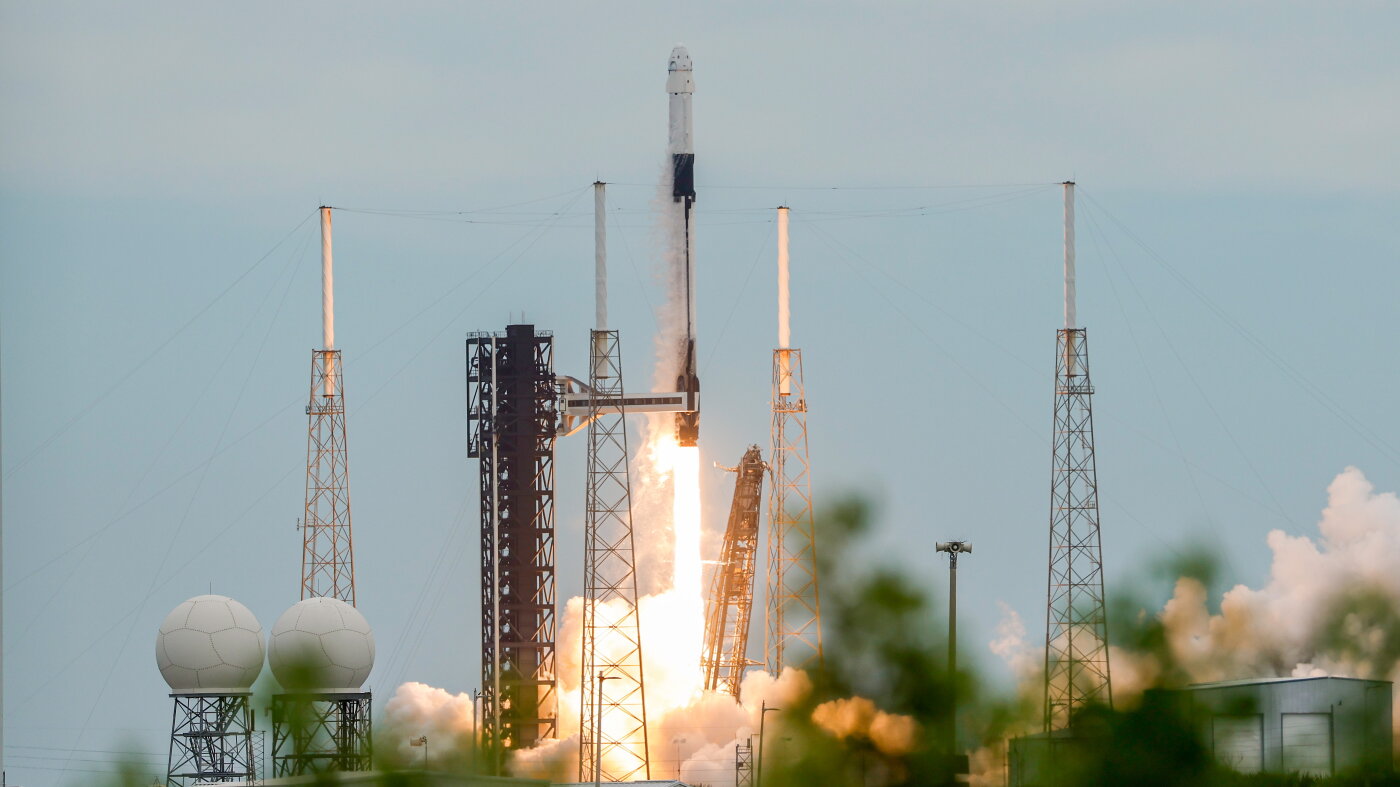
A SpaceX Falcon 9 rocket launched four crew members toward the International Space Station (ISS) on Thursday, October 1, from Cape Canaveral Space Force Station in Florida. The Crew-13 mission, managed by NASA, includes two American astronauts, one Canadian astronaut, and one Russian cosmonaut. The Dragon capsule, named Grace, is expected to dock at the station’s Harmony module at approximately 7 p.m. EDT following an eight-hour transit.
The mission was originally scheduled for mid-September but faced delays to address a leak of oxidizer in the Dragon capsule's propulsion system. NASA and SpaceX replaced a valve and conducted troubleshooting before clearing the vehicle for flight. This mission marks SpaceX’s 13th operational flight for NASA and the second trip for the capsule Grace, which previously flew the private Axiom Ax-4 mission.
The crew consists of Commander Jessica Watkins, a NASA geologist making her second trip to space, and Pilot Luke Delaney, a former naval aviator on his first flight. They are joined by mission specialists Joshua Kutryk of the Canadian Space Agency and Sergey Teteryatnikov of Roscosmos, both of whom are space rookies. The mission patch for Crew-13 includes a reference to Apollo 13 to honor the ingenuity displayed during that 1970 mission.
For the Crew-13 members, the six-month stay involves conducting scores of experiments across various scientific fields. A primary focus is on medical research, including a stem cell investigation to assist in developing treatments for Parkinson’s and heart disease, and a study on blood flow abnormalities caused by microgravity. The crew will also test new diagnostic medical equipment and investigate crop production methods intended for future long-duration space exploration. The Canadian astronaut Joshua Kutryk is also notable as one of a small number of people to have a child born while off-planet, as his wife is expected to give birth around Thanksgiving.
The mission schedule includes several logistics and maintenance tasks involving external vehicles and equipment. Following the arrival of Crew-13, the station is scheduled to receive a SpaceX Cargo Dragon on October 13, carrying supplies and two new roll-out solar array panels. The crew will perform spacewalks (EVAs) in late October and early November to install these arrays, completing a power system upgrade that began in 2021. Additional cargo deliveries from Russian Progress freighters and a Northrop Grumman ship are expected between November 2026 and February 2027. Crew-13 is scheduled to remain on the station until approximately April 2027.