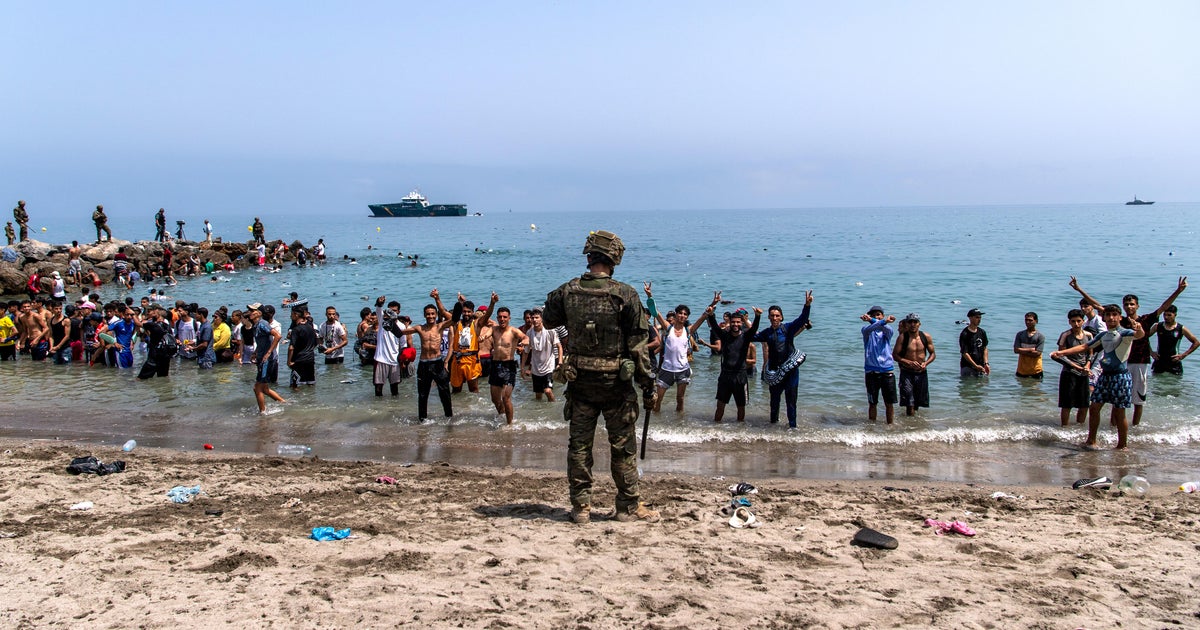
Spanish Prime Minister Pedro Sánchez stated in a Monday interview with the radio network Cadena SER that networks linked to Russia and Israel spread rumors and disinformation regarding a migrant surge in the Spanish territory of Ceuta. Sánchez said these efforts were intended to divide Europe and retaliate against Spain’s foreign policy positions regarding the conflict in Ukraine and the war in Gaza. Both the Israeli and Russian governments have denied these allegations.
The accusations follow a mass crossing event between July 30 and July 31, 2026, when more than 72,000 migrants attempted to enter Ceuta from Morocco. According to the Spanish news agency EFE, at least 70 people died during these attempts. While the majority were returned to Morocco, Sánchez noted that approximately 5,000 migrants remained in the territory at the end of August, including 1,200 minors.
Sánchez cited research from the European External Action Service (EEAS) as the basis for his claims, though he did not provide specific details. He characterized Spain's stance on what he called the "genocide in Gaza" and the "invasion of Ukraine" as the motivation for the alleged disinformation. The EEAS did not immediately respond to requests for comment.
Israeli Foreign Minister Gideon Saar responded to the allegations on Monday, calling them "brazen lies" and asserting that the Spanish leader was attempting to distract from domestic failures. Separately, Danny Danon, Israel's Ambassador to the United Nations, criticized Spain’s migration policy and its possession of territories in Africa. Anonymous Kremlin officials cited by the Russian newspaper RBC and the Spanish agency Europa Press also rejected the claims, stating that accusations of involvement must be proven.
The border crisis has also led to internal and European debate over Spain's migration laws. On August 1, leaders from 22 of the 27 EU member states, including German Chancellor Friedrich Merz and Italian Prime Minister Giorgia Meloni, signed a joint letter urging for stronger external borders and the deterrence of "pull factors." The letter specifically referenced the regularization of large numbers of irregular migrants, a policy Spain implemented earlier this year that received over 1.1 million applications.
Sánchez’s refusal to blame Moroccan authorities, despite claims from Ceuta’s Mayor-President Juan Jesús Vivas that Morocco permitted the crossings, indicates a policy of maintaining cooperation with neighboring North African states. Spain has announced plans to install a containment fence around Ceuta. Applicants for the regularization program must prove they have no criminal record and were present in Spain before January 1, 2026.