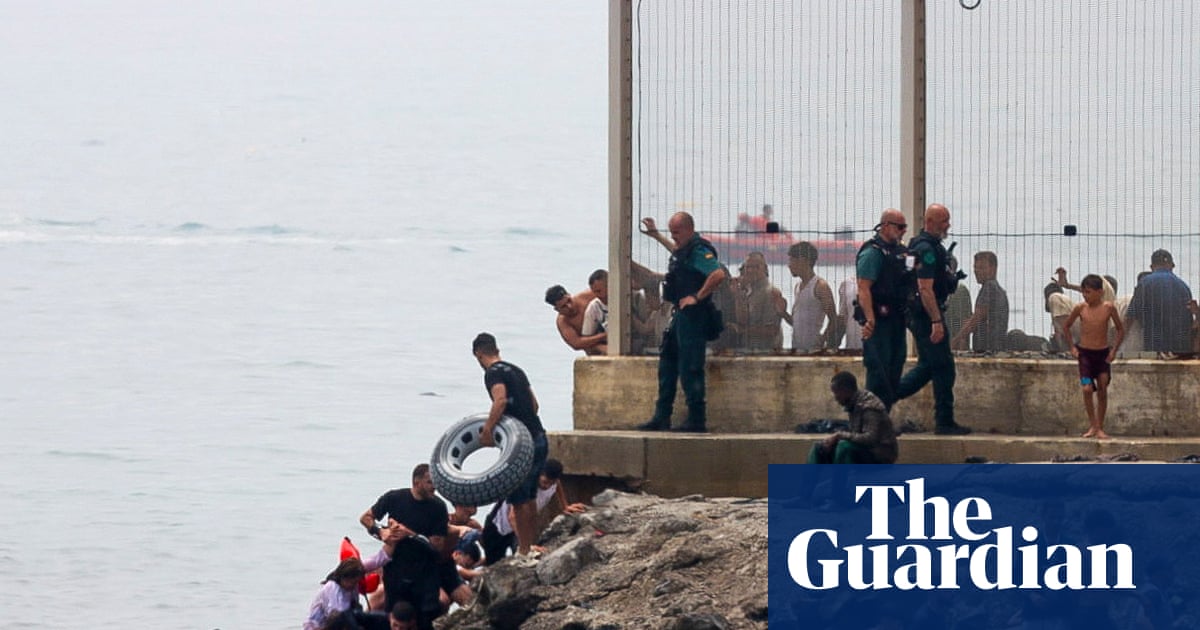
The Spanish government began deploying additional military and police forces to the North African enclave of Ceuta on Thursday after thousands of people crossed the border from Morocco. The influx occurred over several hours, with individuals swimming around breakwaters or scaling border fences to reach the Spanish territory. In response to the arrivals, Spain's interior ministry announced the immediate dispatch of 60 soldiers and 30 additional Civil Guard officers to reinforce local security.
The event follows a period of increased activity at the border. Earlier this month, the Spanish Supreme Court ruled that migrants intercepted at sea while traveling toward Ceuta or Melilla could no longer be summarily returned under previous border rejection regulations. Local officials reported that while arrivals had been gradual following that ruling, the volume of people entering the territory increased sharply on Thursday, leading the President of Ceuta, Juan Jesús Vivas, to describe the border as overwhelmed.
Reporting from the border indicated that the majority of those crossing were young men, though families with women and children were also present. State broadcaster TVE estimated that between 2,000 and 3,000 people entered the territory, while Agence France-Presse reported that nine individuals died during the attempt. Moroccan government sources attributed the surge to the activities of criminal smuggling organizations and stated that security cooperation with Spanish authorities remains active.
For the migrants, many of whom originate from sub-Saharan Africa or Morocco, the move reflects a pursuit of economic opportunity or escape from political instability and localized droughts in the region. Under the recent Supreme Court ruling, these individuals will now enter a formal legal process rather than facing immediate expulsion. This change in policy means individuals will notice a transition from maritime interception to placement in processing centers, where they will interact with Spanish legal and social services. Residents of Ceuta will see a heightened military and police presence on Tarajal beach and city streets, with the interior ministry emphasizing that these forces are there to maintain public order.
The situation sets a precedent for how Spain manages its land borders in Africa following judicial changes to its "pushback" policies. If the high volume of arrivals continues, it may strain diplomatic relations between Madrid and Rabat, similar to the 2021 border crisis involving 8,000 arrivals. At that time, diplomatic friction over Western Sahara was cited as a factor in relaxed border controls. What happens next depends on the visit of Prime Minister Pedro Sánchez and Interior Minister Fernando Grande-Marlaska to Ceuta on Friday. They are expected to meet with local leaders to determine if further resources or a formal emergency declaration—currently rejected by the central government—will be issued.