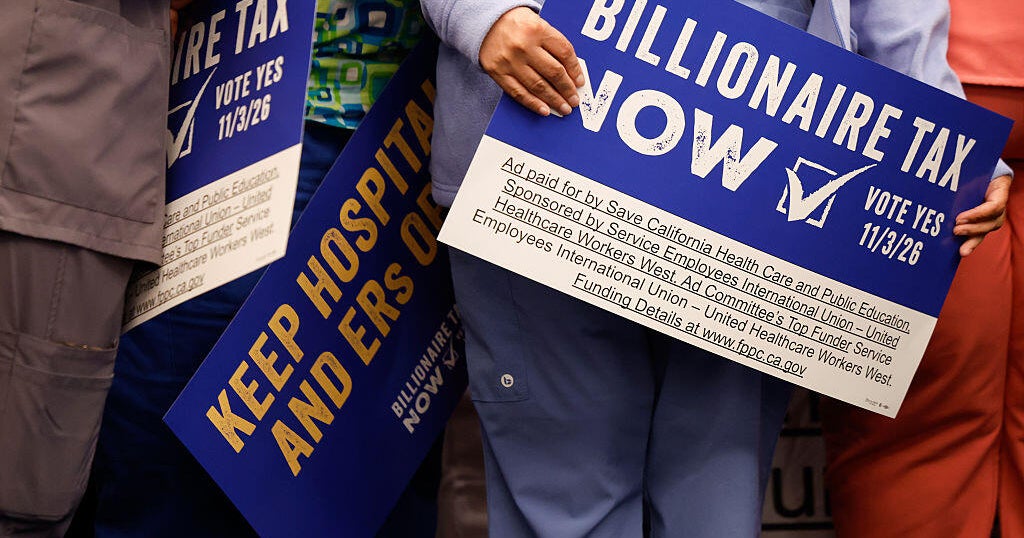
California voters next month will decide on Proposition 40, a ballot measure that would impose a one-time 5% state tax on the wealth of billionaires. The proposal, introduced by the Service Employees International Union-United Healthcare Workers West (SEIU-UHW), is intended to generate revenue to support the state's healthcare system.
A new working paper published by the National Bureau of Economic Research and authored by Stanford University economists Benjamin Jaros and Joshua Rauh suggests the measure may generate less revenue than anticipated. The study reports that seven billionaires, including venture capitalist Peter Thiel and Google co-founders Larry Page and Sergey Brin, have already moved out of California. According to the researchers, these departures removed approximately $540 billion, or 30%, of the state’s total billionaire wealth from the potential tax base.
Proponents of the measure initially estimated it would generate $100 billion. However, Jaros and Rauh calculated that due to known and likely quiet departures, the tax might only collect about $30 billion. The economists further estimated that California could lose between $1 billion and $3.5 billion annually in future income tax revenue because of the shrinking billionaire population. If these losses persist, the authors wrote that the long-term cost to the state in today's dollars could exceed the one-time wealth tax proceeds by approximately $39 billion.
In a September letter of support, other economists, including Nobel Prize winners Daron Acemoglu and Joseph Stiglitz, disagreed with the assessment of the tax's impact. They argued that California has attracted increased venture funding since the wealth tax was announced and stated that public spending on health, education, and infrastructure is essential for economic growth. Dave Regan, leader of the SEIU-UHW, described the proposal as a "novel idea" and expressed confidence that it would pass, citing a state "emergency."
The immediate impact will be determined by California voters next month. Recent polling from Citrin-Politico indicates a narrow margin of support, with 46% of likely voters in favor and 43% opposed. If passed, the one-time 5% tax would be assessed on billionaire wealth. The SEIU-UHW did not immediately respond to a request for comment on the Stanford findings.