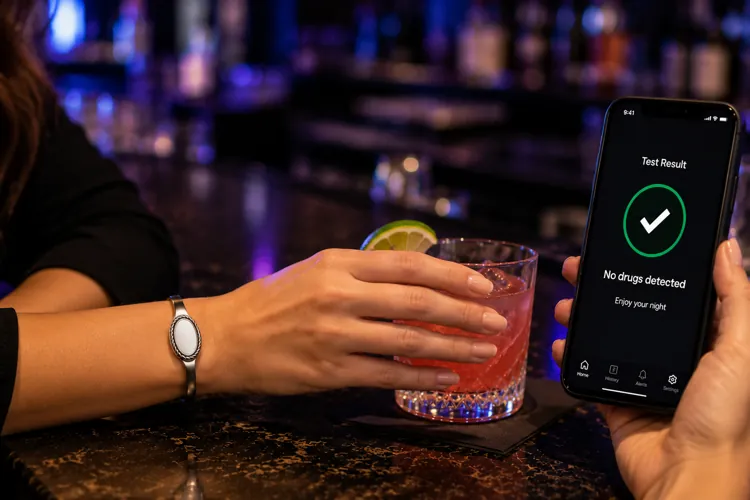
A startup company named Elora Armor is developing a wearable sensor designed to detect certain drugs used in drink spiking. The technology, which is currently being built into a bracelet, is intended to alert users through a smartphone application if a beverage sample contains specific substances.
The device is still in the development phase and is not yet available for purchase by consumers. While the current prototype is a bracelet, the company reported plans to expand the technology into other wearable forms, including pendants and keychains.
To use the device, a person places a drop of their drink onto the sensor. The connected app analyzes the liquid for benzodiazepines, a class of drugs often linked to drink tampering. If the sensor detects a substance, the app notifies the user and can transmit their live location to designated emergency contacts.
A person using the bracelet would notice a change in how they interact with their beverage, as they would need to manually test a sample of the liquid before consumption. The scale of the impact is currently limited by the device's technical scope; safety experts noted that no single device can detect all possible substances or completely eliminate risks. Users would still be required to maintain traditional safety habits, such as watching their drinks being prepared and staying with friends, to account for substances the sensor might not identify.
The introduction of such a device could influence how security and safety are handled at large venues and university campuses. If widely adopted, it sets a precedent for using personal wearable technology to monitor for environmental or chemical risks in real-time. What happens next depends on the completion of the development phase. There is currently no reported date for when the product will be commercially available or undergo final testing.